


Aggregate Weighing Systems: The Complete Guide to Accuracy and Compliance
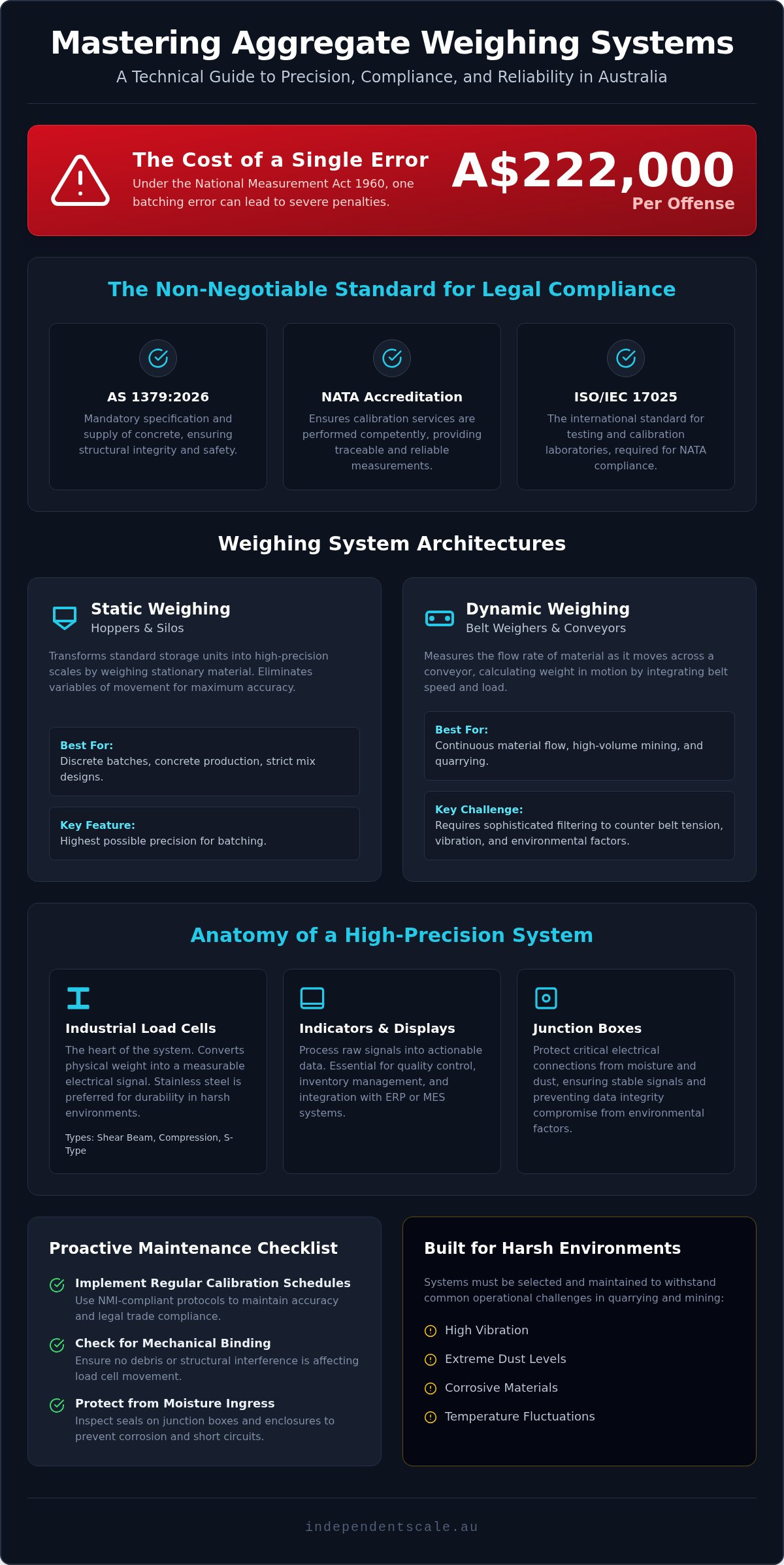
A single batching error doesn't just waste material; under the National Measurement Act 1960, it can cost your corporation up to A$222,000 per offense. You understand that high-precision aggregate weighing systems are essential for the technical viability of any concrete or construction plant. Yet, the necessity of meeting production targets often results in neglected calibration, leading to material waste and non-compliance with AS 1379:2026. This vulnerability creates significant legal and operational risks that demand immediate attention from facility managers and plant operators who cannot afford unplanned downtime.
This guide provides the technical roadmap to mastering Australian standards, NATA-accredited calibration requirements, and equipment selection to ensure your operations remain both precise and legally compliant in 2026. We'll examine the critical role of ISO/IEC 17025 accreditation, the specific load cell hardware demands for modern batching plants, and proactive strategies to reduce maintenance costs. By the end of this analysis, you'll have the expertise needed to eliminate the risk of plant shutdowns and ensure every load meets the stringent requirements of the National Measurement Institute.
Key Takeaways
- Understand the mandatory requirements of AS 1379:2026 and why NATA-accredited calibration is the non-negotiable standard for legal trade and safety compliance.
- Identify the critical hardware components, including precision load cells and industrial-grade junction boxes, required to maintain accuracy in harsh quarrying and mining environments.
- Implement proactive maintenance and calibration schedules for aggregate weighing systems to mitigate common failure points like mechanical binding and moisture ingress.
- Evaluate specific environmental variables, such as high vibration and dust levels, to select weighing solutions that match your plant's required capacity and precision.
- Minimize unplanned downtime and operational costs by utilizing specialized repair services and NMI-compliant calibration protocols.
Understanding Aggregate Weighing Systems: Types and Applications
Aggregate weighing systems are precision-engineered solutions designed for the high-capacity measurement of bulk materials. In industrial environments like concrete production, quarrying, and mining, these systems act as the primary control mechanism for material management. Accuracy isn't a luxury; it's a technical requirement. The primary objective of these systems is to maintain consistent material ratios, which is essential for the structural integrity of finished concrete and compliance with AS 1379:2026. Without precise measurement, the chemical properties of batching mixes fail, leading to safety risks and significant financial loss from rejected loads.
Operators generally choose between static and dynamic weighing methods based on plant throughput requirements. Static weighing provides high-level accuracy for discrete batches, while dynamic systems allow for continuous material flow. Both methods rely on specialized hardware to translate physical force into digital data that operators use to manage inventory and quality control.
Static Weighing: Hoppers and Silos
Static systems utilize tank and silo weighing assemblies to transform standard storage units into high-precision scales. These assemblies typically feature multi-cell configurations to ensure balanced load distribution across the structure's support points. In a concrete batching plant, this setup is critical for measuring sand, stone, and cement additives. By weighing the material while it's stationary, these systems eliminate the variables of movement, providing the highest possible precision for batching. This method is the standard for plants that require strict adherence to exact mix designs where every kilogram counts toward the final product's strength rating.
Dynamic Weighing: Belt Weighers and Conveyors
Dynamic weighing systems measure the flow rate of material as it moves across a conveyor belt. This technology is often categorized under Weigh-in-motion (WIM) systems, which calculate weight by integrating the speed of the belt with the load detected on a weigh frame. Key hardware components include high-resolution speed sensors, robust weigh frames, and digital indicators that process raw signals into actionable data for ERP or MES integration.
Dynamic weighing presents specific technical challenges that static methods don't face. Belt tension, material vibration, and environmental factors like wind can influence the reading. To maintain accuracy, these systems require sophisticated signal filtering and regular calibration to account for belt wear and tracking issues. Despite these complexities, dynamic systems are indispensable for high-volume mining and quarrying operations where stopping the flow for static measurement would cause unacceptable production delays.
Core Components of High-Precision Weighing Systems
High-precision aggregate weighing systems rely on a synchronized architecture of electronic and mechanical components. In the abrasive environments of Australian concrete plants, each part must withstand extreme dust, vibration, and temperature fluctuations. This applies to both the weighing sensors and the heavy machinery used for material handling; sourcing high-quality parts from Storm Parts Australia helps prevent mechanical failures in the loaders and excavators that feed these systems. Failure in a single component doesn't just halt production; it compromises the data integrity required for NATA compliance and ISO 17025 standards. Reliability starts with selecting industrial-grade hardware that maintains signal stability under heavy mechanical stress.
The load cell is the functional heart of the system, responsible for converting physical weight into a measurable electrical signal. For aggregate applications, three primary designs are utilized: shear beam, compression, and S-type load cells. Material choice is critical for durability. While alloy steel is common, stainless steel is preferred for Australian sites exposed to corrosive materials or high humidity. Rated capacity is the maximum load a cell is designed to measure while maintaining its specified performance characteristics; exceeding this limit causes permanent deformation and system failure. To ensure these components meet global performance benchmarks, many operators look to the ASTM E1318 Standard for guidance on performance and testing requirements.
Indicators, Displays, and Signal Conditioners
Raw signals from load cells are often too weak for direct PLC integration, especially over long cable runs typical in large batching plants. This is where conditioners and transmitters become essential. They amplify and convert millivolt signals into standard industrial protocols like 4-20mA or Modbus, preventing signal loss and interference. High-visibility indicators and displays then provide operators with real-time data. These are fundamental for manual overrides and safety monitoring during the batching process. Modern systems must communicate with Programmable Logic Controllers (PLCs) to automate the sequence. This digital handshake requires transmitters that handle high-speed data processing to ensure gate-closing signals are sent at the exact millisecond the target weight is reached.
Reliability in harsh environments also requires specialized protection. Junction boxes act as the central nervous system, summing signals from multiple load cells into a single output. Without high-quality sealing (IP67 or higher), moisture ingress leads to signal drift and erratic batching results. Surge arrestors provide a critical layer of defense against electrical transients, which frequently occur in heavy industrial settings where large motors cycle constantly. Integrating these components correctly allows for a robust data stream that feeds directly into automated batching software, ensuring every load remains within the tolerances defined by AS 1379. For plants looking to upgrade their hardware, choosing professionally sourced weighing components is the first step toward minimizing unplanned downtime.
Compliance Standards: AS 1379 and NATA Accreditation
In Australia, the operation of aggregate weighing systems is strictly regulated by the National Measurement Act 1960 and the AS 1379:2026 standard. Compliance isn't a voluntary quality measure; it's a legal requirement for any facility involved in the specification and supply of concrete. Using non-compliant equipment exposes corporations to fines of up to A$222,000 per offense under current National Measurement Institute (NMI) guidelines. Beyond financial penalties, inaccurate batching compromises the structural integrity of civil projects, creating significant liability risks for plant operators and engineers who oversee high-risk infrastructure.
AS 1379 Requirements for Weighing Accuracy
AS 1379:2026 defines the precise tolerances allowed for each component of a concrete mix, including cement, water, and aggregates. These requirements ensure that the chemical and physical properties of the concrete remain consistent across different batches. To maintain these standards, concrete batching plants must adhere to a mandatory calibration schedule, typically performed every six months or following any major equipment repair. A compliant calibration report must be NATA-endorsed and include technical data on scale linearity, repeatability, and uncertainty of measurement. This documentation serves as the primary evidence of quality assurance during third-party audits or site inspections.
The Value of ISO/IEC 17025 Accreditation
For calibration to hold legal weight, it must be performed by a facility accredited to ISO/IEC 17025. This international standard specifies the general requirements for the competence of testing and calibration laboratories. There's a critical technical difference between a standard "service check" and a NATA-accredited calibration. While a check might confirm a scale is functioning, only an accredited calibration service provides the metrological traceability required for legal trade and safety compliance.
Independent Scale Service provides NATA-accredited concrete batching plant calibration across major hubs including Sydney and Melbourne. This level of accreditation ensures that all measurements are traceable to national standards, protecting your business from the risks associated with non-compliant data. Regular audits of your weighing systems don't just prevent fines; they provide the technical validation necessary to secure high-profile infrastructure contracts that demand strict adherence to Australian regulatory frameworks. Proactive compliance remains the most effective strategy for minimizing long-term operational risk and ensuring project success.
Maintenance, Calibration, and Repair Strategies
A proactive maintenance schedule is the only way to prevent catastrophic failure in aggregate weighing systems. In harsh Australian environments, systems face constant exposure to abrasive dust and extreme heat. Mechanical binding remains a primary cause of inaccuracy; even small amounts of debris trapped in hopper mounts can create significant weight bypass. Moisture ingress is another critical threat, often leading to signal drift or total sensor failure if IP ratings aren't maintained. Electrical interference from nearby high-voltage motors can also corrupt digital signals, necessitating shielded cabling and proper grounding.
Routine hopper calibration service using NATA-certified test weights is the industry standard for verifying accuracy. This process involves applying known loads across the full scale capacity to check for linearity and repeatability errors. Diagnosing these issues early prevents small inaccuracies from compounding into batching errors that could lead to rejected concrete loads or regulatory fines.
Load Cell Testing and Repair
Technicians diagnose load cell health by measuring insulation resistance and bridge balance with a high-precision multimeter. If the zero-balance shift exceeds the manufacturer's tolerances, the cell has likely suffered permanent deformation or moisture contamination. Plant managers must decide whether to repair or replace based on the severity of the fault. While cable damage is often repairable, internal strain gauge failure usually requires a full replacement to maintain system integrity. In heavy-duty applications, using special purpose and shackle pins ensures that the mechanical interface remains robust during and after the repair process.
Concrete Plant Calibration and Optimization
Optimizing a facility requires specialized concrete batching plant calibration that aligns with AS 1379:2026. This standard mandates rigorous testing of all weighing instruments to ensure structural concrete meets its design strength. Modern on-site services in 2026 focus on minimizing downtime by using high-capacity mobile test units. Total batch accuracy also depends on verifying liquid flowmeters alongside weighing systems, as water-to-cement ratios are just as critical as aggregate weights. Ensuring these systems work in unison is the only way to achieve full plant optimization and compliance.
If your facility is experiencing signal drift or batching errors, professional intervention is required to restore NATA-compliant accuracy. Contact Independent Scale Service for expert concrete batching plant calibration and repair services to secure your operations.
Selecting the Right Aggregate Weighing Solution
Selecting high-performance aggregate weighing systems requires a technical evaluation of specific site conditions and production requirements. In Australia, hardware must withstand ambient temperatures exceeding 40°C and constant vibration from heavy machinery. Precision levels must be matched to the material density; while high-capacity systems are standard for coarse aggregates, finer additives require higher resolution sensors to maintain mix integrity. Determining the required capacity involves calculating the maximum live load plus the dead weight of the hopper or silo. Over-specifying capacity often leads to a loss of resolution, while under-specifying results in mechanical deformation and system failure. For those looking to optimize their material handling equipment and system integration, you can learn more about Quintec Conveyors and their industrial solutions.
Quarry and batching environments are inherently abrasive. Selecting appropriate options and accessories, such as specialized mounting kits and protective covers, is necessary to shield sensors from physical impact. If the site handles corrosive materials or requires frequent washdowns, hardware must meet IP68 or IP69K ingress protection ratings. Stainless steel load cells are the technical standard for these areas to prevent oxidation and signal failure. Ensuring that all mechanical interfaces are designed for the specific dust and moisture levels of your site is the only way to maintain the reliability of your aggregate weighing systems over a multi-year service life.
Partnering for Compliance and Reliability
Modern plants in 2026 increasingly rely on 'smart' features like remote monitoring and automated data logging. These systems allow managers to track batch accuracy in real-time and identify signal drift before it violates AS 1379:2026 tolerances. Remote diagnostics facilitate predictive maintenance, triggering alerts when load cell balance shifts beyond a set threshold. Choosing a single-source provider for load cell supply and ongoing service ensures that the hardware is perfectly matched to the calibration requirements. This integration eliminates the technical gaps often found when using mismatched components from multiple vendors.
Independent Scale Service provides the expert technical knowledge required to navigate these complex selections. Investing in a NATA-accredited partner guarantees that your equipment isn't just functional, but remains legally compliant for the duration of its service life. This approach reduces long-term operational costs by ensuring that every system component is optimized for the specific demands of the Australian construction industry. Expert selection today prevents the costly retrofitting and compliance failures of tomorrow.
Request a consultation for your aggregate weighing system today to ensure your facility meets the highest standards of accuracy and compliance.
Optimising Plant Performance and Regulatory Compliance
Maintaining high-precision aggregate weighing systems is a continuous technical requirement that directly impacts your facility's operational viability. As Australian standards like AS 1379:2026 evolve, the margin for error in batching accuracy narrows. Ensuring your load cells, indicators, and transmitters are calibrated to NATA standards isn't just about avoiding NMI fines; it's about protecting the structural integrity of your projects. Implementing proactive maintenance and choosing hardware designed for harsh industrial environments reduces the risk of unplanned shutdowns and material waste.
Independent Scale Service provides the specialized expertise needed to maintain these complex systems. As NATA-accredited specialists (ISO/IEC 17025), we deliver expert on-site calibration and repair services tailored to the specific demands of concrete batching plants. We ensure your equipment remains compliant with the National Measurement Act and AS 1379, providing the technical assurance required for high-stakes infrastructure work. Secure Your Plant's Accuracy with Independent Scale Service and ensure your operations remain precise throughout 2026 and beyond.
Frequently Asked Questions
What is the accuracy requirement for aggregate weighing under AS 1379?
AS 1379:2026 requires aggregate weighing systems to maintain strict tolerances to ensure the structural integrity of the concrete. For aggregates, the standard generally mandates an accuracy within plus or minus 2% of the required batch weight. These tolerances are tighter for cement and water, often requiring plus or minus 1%. Compliance ensures the chemical properties of the mix remain consistent, which is a legal necessity for all commercial concrete supply in Australia.
How often should a concrete batching plant be calibrated?
Under AS 1379:2026, concrete batching plants must undergo calibration at least every six months. You should also perform recalibration after any major mechanical repair, structural modification, or if you suspect measurement drift. Regular intervals are essential to satisfy NATA and ISO/IEC 17025 requirements. Proactive scheduling prevents the legal risks associated with non-compliant batching and ensures that your facility remains operational without the threat of NMI-imposed fines.
Can a damaged load cell be repaired, or must it be replaced?
Repair viability depends on the nature of the fault. You can often repair external damage, such as frayed cables or moisture-compromised junction boxes, to restore system functionality. However, if the internal strain gauge is deformed or the bridge balance is permanently shifted, replacement is the only technically sound option. Independent Scale Service provides diagnostic testing to determine if a repair is sufficient or if a new industrial load cell is required to maintain accuracy.
What is the difference between NATA-accredited and standard calibration?
NATA-accredited calibration provides metrological traceability to national standards and complies with ISO/IEC 17025. This is the gold standard required for legal trade and safety compliance in Australia. A standard calibration check might verify that a scale is functional, but it lacks the formal endorsement and technical rigour required for AS 1379 compliance. Only NATA-endorsed reports provide the legal protection necessary during government audits or project failure investigations.
How does moisture in aggregate affect weighing system accuracy?
Moisture directly increases the weight of the bulk material, which can lead to incorrect aggregate-to-cement ratios if not compensated. While aggregate weighing systems measure the total mass, the actual dry weight of the aggregate is what matters for the mix design. If your system doesn't account for moisture content, the final concrete strength might be compromised. Accurate weighing must be paired with moisture probes and flowmeter verification to ensure total batch precision.
What are the signs that my aggregate hopper needs recalibration?
Common indicators include inconsistent batch weights, a zero reading that drifts over time, or visible mechanical binding in the mounting assemblies. If your aggregate weighing systems show a zero-balance shift beyond the manufacturer's specified tolerance, recalibration is immediate. You might also notice that the gate-closing speed doesn't align with the displayed weight, suggesting a lag in signal processing. Frequent rejected loads are a clear signal that the system requires professional NATA-accredited calibration.
Do I need a separate transmitter for every load cell in my system?
You don't need a separate transmitter for every individual load cell. Instead, multiple load cells are typically connected to a summing junction box, which combines the signals into a single output. This combined signal is then sent to a single conditioner or transmitter for processing and PLC integration. This configuration ensures balanced load distribution data is accurately reflected as a single weight reading, simplifying the architecture while maintaining high-precision measurement across the entire hopper.
How do I choose between a tension and compression load cell for my silo?
Your choice depends on the structural mounting of the silo. Tension load cells, such as S-type models, are used for suspended hoppers where the weight is pulled downward. Compression load cells are the standard for silos that sit on a foundation or support frame. Compression cells are generally more robust for high-capacity weighing and offer better stability against lateral forces. You must evaluate the silo's centre of gravity and potential wind loads before selecting the appropriate hardware.
