


Water Damage Load Cell Repair: A Guide to Recovery and Compliance
Moisture is the leading cause of load cell failure, accounting for more system breakdowns than any other environmental factor in industrial weighing. You've likely seen the symptoms: erratic readings, zero drift, or a total loss of signal following a washdown or heavy rain. When production stops, the pressure to restore accuracy while maintaining compliance with AS 1379 or NATA standards is immediate. Dealing with water damage load cell repair requires a methodical approach to determine if the internal strain gauges are permanently corroded or if the unit can be successfully dried and recalibrated.
It's understandable to feel uncertain about whether to invest in a repair or commit to a full replacement. This guide provides the technical expertise you need to diagnose moisture ingress and assess the structural integrity of your sensors. We'll examine the critical 50 MΩ insulation resistance threshold, the differences between IP68 and NEMA 4X sealing, and the diagnostic procedures required to restore your system to peak performance. You'll learn how to identify terminal damage quickly and implement better waterproofing strategies to prevent future downtime.
Key Takeaways
- Identify the specific IP ratings (IP67, IP68, IP69K) required for your environment to differentiate between moisture-resistant and hermetically sealed load cells.
- Recognize early symptoms of moisture ingress, such as zero drift and erratic weight fluctuations, to address failures before they become terminal.
- Learn how to conduct professional diagnostic procedures, including visual inspections and insulation resistance tests, to assess water damage load cell repair feasibility.
- Apply a repair-versus-replace decision matrix based on repair costs, equipment age, and the likelihood of recurring system drift.
- Establish preventative maintenance protocols, including moisture barriers in junction boxes, to protect NATA-accredited weighing accuracy in harsh conditions.
Understanding Water Ingress and IP Ratings in Industrial Load Cells
Industrial weighing environments are inherently hostile to precision electronics. A Load cell operates by measuring minute changes in electrical resistance, making the internal strain gauge circuit highly sensitive to even trace amounts of moisture. Ingress Protection (IP) ratings provide the technical standard for how well a housing prevents foreign matter from entering. When diagnosing the need for water damage load cell repair, technicians must first identify if the unit was correctly specified for its environment.
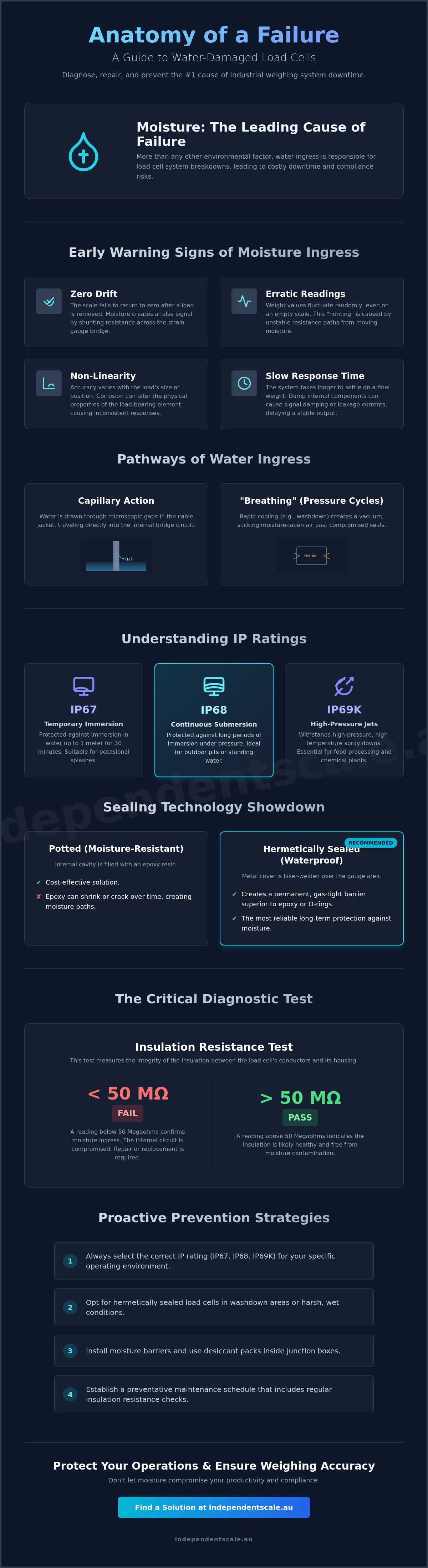
Moisture doesn't always enter through a catastrophic seal failure. It often moves through more subtle pathways. Capillary action is a frequent culprit; water can be drawn through the small gaps between the cable's internal conductors and the outer jacket. Once inside the cable, it travels directly into the internal bridge circuit. Another common mechanism is "breathing." As a load cell operates, internal components generate heat, causing the air inside to expand. When the unit is suddenly cooled, such as during a cold-water washdown, the air contracts and creates a vacuum. This pressure differential sucks moisture-laden air through entry glands or compromised O-rings.
IP67 vs IP68: Why Submergence Ratings Matter
The distinction between IP67 and IP68 is critical for operational longevity. An IP67 rating signifies protection against temporary immersion, typically up to 30 minutes at a depth of one metre. This is sufficient for occasional splashes but fails in outdoor pits or facilities with standing water. IP68 units are designed for continuous submersion under conditions defined by the manufacturer. In food processing or chemical plants where high-pressure cleaning is standard, an IP69K rating is required to resist high-temperature jets. Selecting the wrong rating often leads to recurring water damage load cell repair costs that could have been avoided with proper specification.
The Role of Hermetic Sealing in Moisture Prevention
The method used to seal the internal electronics determines a unit's long-term reliability. Moisture-resistant cells are often "potted," meaning the internal cavity is filled with an epoxy resin. While cost-effective, epoxy can eventually shrink or crack, creating microscopic paths for moisture. True hermetic sealing involves laser-welding a metal cover over the gauge area. This creates a permanent, gas-tight barrier that is far superior to epoxy or O-ring seals. Stainless steel is the preferred material for these applications because it doesn't suffer from the porosity issues found in aluminium. You can view high-IP rated options in our load cell collection to ensure your next installation is built for your specific environmental challenges.
Telltale Signs: How Moisture Impacts Weighing Accuracy and Stability
When moisture penetrates the protective housing of a sensor, the degradation of weighing accuracy is rarely immediate or total. Instead, it manifests as subtle performance issues that can compromise compliance with NATA or AS 1379 standards. Recognising these early indicators is essential to determine the feasibility of water damage load cell repair before the internal circuitry suffers permanent electrolytic failure. If left unaddressed, these faults lead to significant production drift and potential safety risks in high-capacity applications.
- Zero Drift: The digital indicator fails to return to zero after a load is removed. This happens because moisture creates a shunt resistance across the strain gauge bridge, causing a constant, false signal.
- Erratic Readings: Random fluctuations occur even on an empty scale. This "hunting" behaviour is often the result of moisture moving within the cable or junction box, which creates unstable resistance paths.
- Non-linearity: Weight accuracy varies depending on the load's position or magnitude. Moisture-induced corrosion can alter the physical properties of the load-bearing element, preventing it from returning to its original shape.
- Slow Response Time: The system takes longer to settle on a final weight. Damp internal components can cause signal damping or leakage currents that delay the stable output from reaching the indicator.
- System Errors: The display shows "Overload" or "Error" messages despite no weight being present. This indicates a total bridge imbalance where the output voltage exceeds the indicator's input range.
The Chemistry of Ingress: How Water Short-Circuits the Bridge
Moisture acts as an unintended conductor, significantly lowering the insulation resistance between the Wheatstone bridge circuit and the load cell body. This leakage current creates "phantom" weight readings that cannot be calibrated out. According to the Weigh-In-Motion Pocket Guide, proper drainage and sealing are paramount because even minimal water accumulation leads to signal degradation in high-precision environments. Electrolysis is another critical risk; when power is applied to a wet bridge, the metallic foil of the strain gauge can physically dissolve over time. If your system exhibits these symptoms, you should consider a professional load cell calibration to assess the extent of the damage.
Corrosion and Structural Integrity
Physical evidence often follows electrical failure. Rust weeping from cable entry glands or laser-welded seams is a terminal sign of internal oxidation. This corrosion doesn't just affect the electronics; it changes the spring rate of the high-strength alloy or stainless steel element. When the base metal's elasticity is compromised, the unit can no longer provide repeatable results under load. For technical baseline data on how these components should perform under ideal conditions, refer to The Essential Guide to Industrial Load Cells. Identifying these visual cues early can prevent costly production errors and help you decide if a repair is technically viable.
Diagnostic Procedures: Testing for Water Damage and Insulation Failure
Confirming the need for water damage load cell repair requires a systematic diagnostic protocol. While the symptoms discussed previously indicate a fault, electrical testing is the only way to pinpoint the failure's location. Technicians must differentiate between a compromised bridge circuit and a simple cable fault to avoid unnecessary replacement costs. Referencing the Ingress Protection (IP) code rating of your equipment provides the baseline for what the unit should theoretically withstand, but field conditions often exceed these laboratory standards.
- Step 1: Visual Inspection. Examine the entire length of the cable for nicks, flat spots, or chemical degradation. Inspect the entry glands and the load cell body for signs of rust or breached seals.
- Step 2: Tap Test. While monitoring the weight indicator, gently tap the load cell with a rubber mallet. If the readings jump erratically, it's a clear sign of loose internal components or moisture-induced debris affecting the bridge.
- Step 3: Zero Balance Measurement. Use a high-precision multimeter to measure the output voltage with no load applied. An offset that deviates significantly from the manufacturer's specification usually points to moisture affecting the strain gauge bridge.
- Step 4: Bridge Resistance Check. Measure the resistance between the excitation leads (input) and the signal leads (output). Compare these against the original calibration certificate; even a small discrepancy indicates internal circuit damage.
- Step 5: Insulation Resistance Test. This is the definitive test for moisture ingress, measuring the resistance between the internal bridge and the load cell's metal body.
The Megger Test: The Gold Standard for Moisture Detection
A standard multimeter is often insufficient for detecting subtle moisture leaks because its low-voltage battery can't penetrate high-resistance paths. A Megohmmeter, or Megger, is required to test insulation integrity. A healthy, dry load cell should typically show an insulation resistance of greater than 5000 MΩ. Anything below 50 MΩ indicates significant moisture ingress that likely requires professional intervention. When performing this test, don't exceed 50V DC. Using higher voltages can permanently puncture the thin insulation layers of the strain gauges, turning a repairable unit into scrap.
Isolating the Fault: Junction Box vs Load Cell
Before condemning a load cell, you must verify that the fault isn't located within the junction box. These enclosures are frequent collection points for condensation. Open the box and inspect the terminal strips for "green" copper oxidation or visible water droplets. Disconnect each load cell and test them individually at the junction box terminals. If the system stabilises when a specific cell is removed, you've isolated the failure. If the box itself is damp, clean the terminals with a residue-free contact cleaner and dry the interior thoroughly with a low-heat air source before re-terminating the connections.
The Decision Matrix: When to Repair vs. Replace a Water-Damaged Load Cell
Deciding on water damage load cell repair involves more than just comparing a service quote to the price of a new sensor. Industrial maintenance teams must weigh technical viability against the commercial risks of recurring downtime. A structured decision matrix ensures that you don't waste resources on a "ghost fault" unit that will eventually fail under load. The primary goal is to restore system accuracy while maintaining full compliance with regulatory requirements, such as those governing concrete batching plants under AS 1379.
- Repair Cost vs. Replacement Value: As a general industry benchmark, if the cost of cleaning, resealing, and testing exceeds 50% of the price of a new unit, replacement is the more economical path.
- Internal Corrosion Status: If diagnostic testing reveals that moisture has reached the internal strain gauge foil, the damage is typically terminal. Electrolytic corrosion at this level permanently alters signal output.
- Application Criticality: High-precision environments, such as chemical dosing or pharmaceutical batching, have zero tolerance for signal drift. In these cases, the risk of a repaired unit failing is too high.
- Equipment Age: If a load cell is near the end of its expected service life, the internal components are already fatigued. Repairing a 10-year-old water-damaged cell is rarely a sound investment.
- Compliance Costs: Every repair must be followed by professional calibration services. You must factor the cost of NATA-accredited re-certification into your total repair budget.
When Repair is Feasible
Repair is often a viable option when the moisture ingress is limited to external components. Minor cable damage, such as nicks in the outer jacket or corrosion on external connectors, can be rectified by shortening the cable or replacing the connector. If a unit has suffered only superficial moisture exposure and the insulation resistance remains above the 50 MΩ threshold, drying the unit in a controlled, low-heat environment may restore performance. Any resealing attempt must be followed by a pressure test to ensure the integrity of the new barrier.
Why Replacement is Often the Safer Bet
Replacement is frequently the most reliable strategy for long-term operational stability. Repaired units often suffer from "ghost faults," where microscopic traces of moisture trapped within the potting material cause the cell to fail weeks after it's returned to service. Upgrading to a new, laser-welded stainless steel unit provides an opportunity to improve your system's environmental resistance. This is especially critical for maintaining the strict accuracy standards required for legal-for-trade weighing. If you're unsure of your system's current accuracy, schedule a professional load cell calibration to receive a definitive diagnostic report.
Professional Load Cell Restoration and Preventative Maintenance Systems
The Independent Scale Service approach to water damage load cell repair relies on NATA-accredited diagnostics to ensure every restoration meets national measurement standards. Our technical teams in Sydney and Melbourne prioritise rapid response to minimise client downtime. By integrating advanced moisture barriers and surge protection within junction boxes, we extend the operational life of sensors in high-risk zones. A methodical restoration process ensures that the bridge integrity is fully verified before the system is returned to production.
- NATA-Accredited Diagnostics: We provide structured assessments to determine if a unit can be safely returned to service or requires replacement based on insulation resistance and bridge stability.
- Digital Upgrades: Transitioning to digital load cell systems allows for real-time monitoring of individual bridge health. This makes it easier to spot moisture ingress in a single cell before it causes a system-wide failure.
- Scheduled Calibration: Regular load cell calibration catches subtle signal drift caused by environmental factors before they impact batching accuracy or compliance.
- Moisture Barriers: We implement high-grade silica gel packets and specialised potting compounds in junction boxes to prevent condensation build-up in humid environments.
Preventative Maintenance for High-Moisture Environments
Ensuring Compliance After Repair
Post-repair calibration is a mandatory requirement for any trade-legal or ISO-compliant weighing system. For operators of concrete batching plants, maintaining AS 1379 compliance is non-negotiable and requires documented proof of accuracy. Total system health also depends on the precision of auxiliary equipment, which is why integrated force gauge calibration should be part of your annual audit protocol. All repair and maintenance activities are documented to provide a clear audit trail for quality managers and regulatory bodies.
Restoring Operational Accuracy and Compliance
Identifying moisture ingress early through insulation resistance testing is the most effective way to manage water damage load cell repair costs. While erratic readings and zero drift signal immediate trouble, a structured diagnostic approach prevents the commercial risk of re-installing a terminal unit. Maintaining compliance with AS 1379 for concrete batching plants requires absolute precision that only NATA-accredited testing can provide. Implementing the preventative maintenance strategies discussed, such as proper cable routing and high-IP rated enclosures, ensures your sensors remain protected against the harshest washdown environments.
Independent Scale Service provides the technical expertise required to restore your system's accuracy and reliability. We are NATA Accredited to ISO/IEC 17025 and specialise in AS 1379 compliance for concrete plants across Sydney, Melbourne, and regional Australia. Don't let moisture-induced signal drift compromise your production quality or regulatory standing. Contact Independent Scale Service for Expert Load Cell Repair and Calibration to secure your facility's weighing integrity. Proactive technical management is the most dependable path to long-term system stability.
Frequently Asked Questions
Can a water-damaged load cell be repaired successfully?
Success depends on the depth of moisture penetration. If ingress is confined to the cable or entry gland, water damage load cell repair is often a viable option. However, if water has reached the internal bridge circuit and initiated electrolytic corrosion, the damage is typically terminal. Professional diagnostics must confirm that insulation resistance remains above critical thresholds before a repair is attempted.
How do I tell if my load cell has moisture ingress without special tools?
You can perform a visual inspection and a manual tap test. Check for rust weeping from the cable entry points or signs of corrosion inside the junction box. While monitoring the digital indicator, gently tap the load cell body with a rubber mallet. If the weight reading fluctuates wildly or fails to return to zero, moisture has likely compromised the internal bridge balance.
What is the difference between IP67 and IP68 for load cell protection?
IP67 ratings signify protection against temporary immersion in water for up to 30 minutes at a depth of one metre. IP68 is designed for continuous submersion under specific conditions defined by the manufacturer. For industrial pits, weighbridges, or washdown zones, IP68 is the minimum requirement to prevent moisture-related failures and maintain long-term accuracy.
Why is my scale reading drifting after a heavy rainstorm?
Rainwater often enters through compromised seals or cable jackets, creating an unintended electrical path across the bridge circuit. This shunt resistance disrupts the signal balance, leading to zero drift and erratic weight fluctuations. If the readings don't stabilise once the exterior is dry, it's a sign that moisture is trapped inside the potting material or housing.
Can I dry out a wet load cell in an oven to fix it?
We don't recommend this approach. Excessive heat can degrade the internal potting compounds and the specialised adhesives that secure the strain gauges to the element. While low-heat air or desiccants can remove superficial moisture, they cannot reverse the chemical corrosion that occurs once water contacts the internal foil circuitry.
How much does it cost to repair a load cell compared to replacing it?
Repair costs include professional cleaning, resealing, and mandatory NATA-accredited calibration to ensure compliance. If these combined service fees exceed 50% of the price of a new sensor, replacement is the more reliable investment. Choosing a new unit also allows you to upgrade to superior hermetic sealing for better environmental resistance.
Is it possible for moisture in the cable to affect the weight reading?
Moisture in the cable is a frequent cause of unstable readings. Capillary action draws water between the internal conductors and the outer jacket, eventually reaching the internal bridge. This lowers the insulation resistance and causes the indicator to "hunt" for a stable weight, making it impossible to achieve a legal-for-trade calibration.
What are the risks of using a repaired load cell in a concrete batching plant?
Inaccurate weighing in a concrete plant compromises AS 1379 compliance and the structural integrity of the finished product. Using a repaired cell that hasn't undergone rigorous verification can lead to incorrect cement-to-water ratios. This results in out-of-spec concrete batches, which creates significant legal liability and financial risk for the producer.
