


Upgrading Weighing Systems for Automated Batching: A Technical Guide
Automation is only as effective as the underlying metrology. High-speed software cannot compensate for a low-resolution load cell. Many industrial operators find that material wastage and rising labor costs stem directly from legacy manual dosing methods that fail to meet modern throughput demands. If your facility struggles with inconsistent product quality or compliance anxiety regarding AS 1379, upgrading weighing systems for automated batching is no longer optional. It's a technical necessity for maintaining a competitive edge in an industry where precision is the primary differentiator.
You can transform legacy batching operations into high-precision automated systems through strategic hardware upgrades and NATA-accredited calibration. This guide outlines the specific technical components required to replace manual weighing steps, such as high-resolution load cells and advanced digital indicators. We'll examine how these upgrades reduce cycle times and facilitate automated compliance reporting. By the end of this technical brief, you'll understand the roadmap for achieving consistent dosing accuracy and meeting the updated requirements of ISO 10012:2026.
Key Takeaways
- Understand why manual systems fail and the technical necessity of upgrading weighing systems for automated batching to eliminate human error and material wastage.
- Identify the essential hardware components, including high-performance load cells and digital indicators, required for high-precision dosing.
- Compare Gain-in-Weight (GIW) and Loss-in-Weight (LIW) automation logic to select the most efficient configuration for your production environment.
- Follow a structured upgrade roadmap that transitions from a comprehensive system audit to final NATA-accredited calibration.
- Learn how specialized technical support ensures compliance with Australian standards like AS 1379 and minimizes operational downtime.
The Case for Upgrading Weighing Systems in Automated Batching
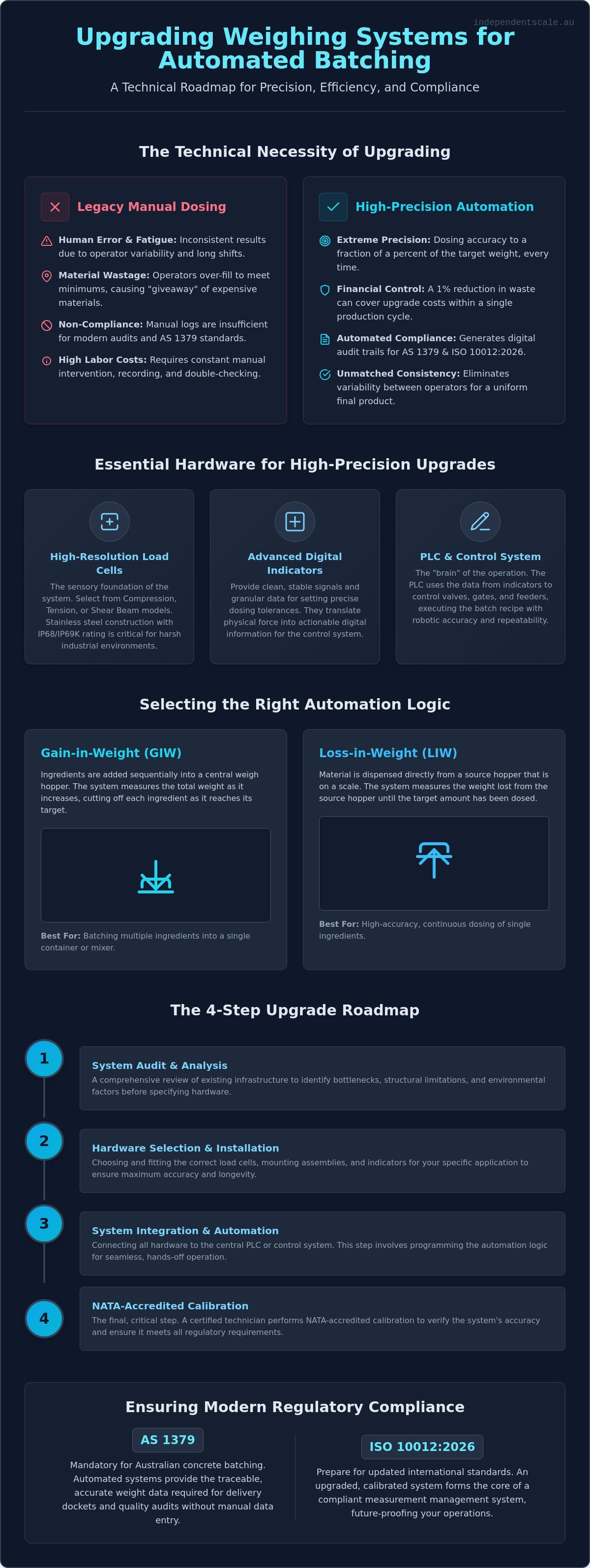
Automated batching replaces manual intervention with a system of integrated load cells and PLC logic to dose materials with high precision. Manual systems frequently fail because they rely on human judgment, which is prone to fatigue and error. These failures manifest as slow cycle times and inconsistent ingredient ratios that compromise the final product. Transitioning from "good enough" manual processes to high-resolution weighing is a technical necessity for modern industrial facilities. It's the difference between guessing your margins and controlling them.
Upgrading weighing systems for automated batching allows for the removal of these variables. A precise system ensures that every ingredient is measured to within a fraction of a percent of the target weight. This level of control is essential for maintaining the integrity of complex formulations. Manual systems typically suffer from several critical flaws:
- Operator fatigue leading to dosing inaccuracies over long shifts.
- Variability between different personnel and production teams.
- An inability to capture real-time data for inventory management.
- High labor costs associated with manual recording and double-checking.
In Batch production, these inconsistencies compound across every shift, leading to significant financial losses over time. Precision isn't just about quality; it's about the financial viability of the operation.
Reducing Material Wastage and Rework
Material "giveaway" is a significant hidden cost in many manufacturing plants. When manual dosing is used, operators often over-fill to ensure they meet minimum requirements, leading to cumulative losses of expensive raw materials. Digital indicators and displays provide the granular data required to set and maintain tighter tolerances. In the chemical and concrete sectors, even a 1% reduction in material wastage can yield a return on investment that covers the cost of hardware upgrades within a single production cycle. Automated systems eliminate the need for rework by ensuring that out-of-spec batches never reach the next stage of production.
Meeting Modern Australian Regulatory Demands
The industrial sector faces increasing pressure to provide verifiable digital audit trails for every batch produced. Manual logs are no longer sufficient to satisfy stringent quality audits. For operations governed by AS 1379 for concrete batching accuracy, the ability to record and report precise weights is mandatory. Legacy analog systems lack the communication protocols needed for modern compliance reporting. By implementing AS 1379 compliant calibration and digital integration, facilities can automate their reporting processes. This ensures that every delivery docket's weight data is accurate, traceable, and ready for regulatory inspection without manual data entry. Upgrading weighing systems for automated batching is the most efficient way to achieve this level of transparency.
Essential Hardware Components for High-Precision Batching Upgrades
Successful automation relies on the hardware's ability to translate physical force into a stable, accurate electrical signal. When upgrading weighing systems for automated batching, the selection of field-level components determines the system's ultimate resolution and repeatability. This process begins with the load cell, but it extends to the mounting assemblies and the signal processing equipment that interfaces with the control system. High-quality hardware ensures that the PLC receives a clean data stream, which is the prerequisite for precise dosing.
Selecting the Right Load Cells for Your Application
Load cells are the primary sensing element. For batching applications, you must choose between compression, tension, or shear beam designs based on the vessel geometry. Compression cells are standard for large silos; tension cells are often preferred for suspended hoppers. In the Australian industrial landscape, environmental resistance is non-negotiable. Stainless steel construction with IP68 or IP69K ratings is necessary to ensure protection against high-pressure washdowns and dust ingress. You can explore our range of industrial load cells to find the specific capacity and rating required for your facility.
Retrofitting Silos and Hoppers
Many providers suggest a full system replacement when moving to automation, but retrofitting existing infrastructure is often more cost-effective. Tank and silo weighing assemblies are designed to integrate directly into existing support structures. These assemblies include internal stay rods that handle lateral forces, which ensures that only the vertical load is measured. For legacy systems with limited space, special purpose shackle pins can replace standard pivot points to add weighing capabilities without major structural modification. This approach maintains structural integrity while providing the high-resolution data needed for PLC logic.
Signal Transmission and PLC Integration
The raw millivolt signal from a load cell is highly susceptible to electromagnetic interference. Using signal conditioners and transmitters is critical for converting these weak signals into robust 4-20mA or digital protocols. This conversion minimizes signal loss over long cable runs and allows for seamless integration with SCADA systems. To protect these sensitive components, high-quality junction boxes and surge arrestors should be installed to mitigate the risk of damage from power surges. If you are unsure which transmitter protocol fits your current PLC, our technical team can assist with selecting the correct interface for your site.
Gain-in-Weight vs. Loss-in-Weight: Selecting the Right Automation Logic
Selecting the correct measurement logic is a critical technical decision when upgrading weighing systems for automated batching. The choice between Gain-in-Weight (GIW) and Loss-in-Weight (LIW) determines the sequence of PLC operations and the specific hardware resolution required. While both methods aim for dosing accuracy, they function on opposing principles of material measurement. Your production volume, material flow characteristics, and the number of ingredients in a single batch will dictate which logic is most effective for your facility.
In many complex industrial environments, a hybrid approach is utilized. This involves using GIW for bulk components to maintain high throughput while employing LIW for minor additives that require extreme precision. Understanding the technical nuances of each ensures that your automation architecture supports your specific quality control objectives.
When to Use Gain-in-Weight Systems
Gain-in-Weight logic is the most common method for high-volume applications, such as concrete batching and bulk aggregate handling. In a GIW setup, multiple feeders deliver material into a single, central weigh hopper. The system measures the increase in weight as each ingredient is added sequentially. This method is highly cost-effective because it requires only one set of load cells and a single high-performance digital indicator to manage multiple raw materials.
When upgrading weighing systems for automated batching using GIW, the primary hardware focus is on hopper capacity and the speed of the control logic. Because ingredients are added one after another, the system must account for "material in flight"—the weight of the material that has left the feeder but hasn't yet landed in the hopper. Robust indicators with high-speed sampling rates are essential to manage these "pre-act" values and prevent over-filling.
The Precision of Loss-in-Weight Feeding
Loss-in-Weight systems are preferred for continuous processes or applications requiring high-accuracy micro-dosing, such as pharmaceutical and fine chemical manufacturing. In this configuration, the entire supply hopper and feeder mechanism are mounted on load cells. The system measures the rate at which weight is depleted from the hopper to control the discharge speed. This provides a continuous, highly controlled flow of material that is ideal for maintaining exact ingredient ratios in real-time.
The technical requirements for LIW are more demanding than GIW. Because the system is measuring the depletion of material, the load cells must have a very high resolution to detect minute changes in weight against a high dead load. Furthermore, the signal transmitters must have a fast response time to allow the PLC to adjust feeder speeds instantaneously. While the hardware investment for LIW is typically higher—requiring independent weighing systems for each ingredient—it offers unparalleled control for sensitive formulations where even a minor dosing error results in a rejected batch.
The Upgrade Roadmap: From System Audit to NATA Calibration
The transition to an automated environment is a multi-stage technical process. Upgrading weighing systems for automated batching requires more than just replacing hardware; it involves a systematic verification of the entire measurement chain. A failure at any stage, from mechanical binding in a silo to electrical noise in the PLC, will compromise dosing accuracy. This roadmap ensures that your investment delivers the precision required for high-stakes industrial processing.
- Step 1: Technical Audit. Every upgrade starts with an inspection of the existing mechanical structure. We evaluate the condition of supports, the presence of lateral forces, and the integrity of the existing electrical infrastructure.
- Step 2: Component Integration. Once the audit is complete, we select and install the appropriate load cells and weighing assemblies tailored to your specific GIW or LIW logic.
- Step 3: Control Integration. This involves wiring transmitters to the PLC and programming the batching sequences. This step ensures that signal data translates into actionable dosing commands.
- Step 4: NATA-Accredited Calibration. This is the final verification step. It provides the legal and technical assurance that the system operates within specified tolerances.
- Step 5: Sustainment. Implementing a preventative maintenance and re-calibration schedule is essential to prevent accuracy drift caused by mechanical wear or environmental shifts.
The Crucial Role of NATA Calibration
An upgrade is technically incomplete without NATA-accredited calibration. NATA accreditation to the ISO/IEC 17025 standard is the benchmark for technical competence in Australia. It ensures that your automated system's measurement data is traceable to national standards, which is a requirement for quality control and international trade recognition. Without this certification, your automated reports lack the authoritative backing needed for high-level compliance. For a deeper understanding of these requirements, consult our Authoritative Guide for Australian Industry.
Achieving AS 1379 Compliance for Concrete
For the concrete sector, the stakes of an upgrade are tied directly to AS 1379. This standard mandates specific batching accuracy for cement, water, and aggregates. Upgrading weighing systems for automated batching allows for the real-time recording of these weights, simplifying the certification process. Manual record-keeping is often the weakest link in a quality audit. Automated systems generate precise digital dockets that satisfy the rigorous audit trails required by major infrastructure projects. Ensure your facility meets these national standards by scheduling concrete batching plant calibration services with a provider that understands the local regulatory landscape.
Maximizing Reliability with Independent Scale Service
Reliability in an automated environment is contingent upon the technical competence of your service partner. Upgrading weighing systems for automated batching is a significant capital investment that requires ongoing technical support to preserve its return on investment. Independent Scale Service provides a comprehensive service model that spans from the initial load cell supply to final NATA-certified calibration. Our focus is on eliminating measurement uncertainty and minimizing operational downtime for serious industrial clients.
Our technical team specializes in the unique demands of Australian industrial environments. We understand that a failure in a high-speed batching plant doesn't just stall production; it compromises entire supply chains. This is why we prioritize responsiveness and precision in every engagement. Whether you're managing a remote aggregate site or a metropolitan chemical facility, our service protocols are designed to keep your systems compliant and your cycle times consistent.
Why Industrial Leaders Trust Independent Scale Service
Industrial leaders across Sydney, Melbourne, and regional Australia rely on our expertise to maintain their competitive advantage. Our NATA accreditation is a core differentiator, providing the highest level of measurement traceability available. This accreditation ensures that every calibration we perform meets the rigorous requirements of ISO/IEC 17025. We don't just supply components; we provide an authoritative stamp of quality that satisfies both internal quality management systems and external regulatory audits.
- Decades of Industry Tenure: We bring deep technical knowledge to every project, ensuring that legacy retrofits are handled with the same precision as new installations.
- Authorized Component Supply: We maintain a robust inventory of premium weighing components and accessories to ensure rapid replacement and repair.
- Specialized Batching Expertise: Our engineers have extensive experience with the complexities of hopper and silo calibration, ensuring that your automation logic receives accurate data.
Next Steps for Your Batching Upgrade
The first step in upgrading weighing systems for automated batching is a comprehensive system audit. This allows us to identify potential mechanical bottlenecks or electrical interference issues before they impact your production. When preparing your site for a weighing system overhaul, ensure that all weighing vessels are accessible and that existing control panels are cleared for technical inspection. We work closely with your site engineers to integrate new hardware with minimal disruption to your existing workflows.
Once the audit is complete, we provide a detailed roadmap for component selection and integration. This includes verifying that your setup meets the specific requirements for AS 1379 compliance if you operate in the concrete sector. To begin your transition to a high-precision automated environment, contact us today for an automated weighing system consultation. Our team is ready to provide the technical expertise required to transform your batching operations.
Optimizing Your Batching Operations for Technical Compliance
The transition from manual dosing to automated precision requires a methodical approach to hardware integration and software logic. By selecting high-resolution load cells and the appropriate Gain-in-Weight or Loss-in-Weight architecture, facilities can significantly reduce material giveaway and improve cycle times. Upgrading weighing systems for automated batching is a strategic investment that ensures long-term operational reliability and data traceability. It's the most effective way to eliminate the hidden costs of human error and inconsistent dosing.
Ensuring your system is NATA Accredited to ISO/IEC 17025 and remains compliant with AS 1379 Standards is critical for maintaining industrial authority. Independent Scale Service provides specialized expertise across Sydney, Melbourne, and regional Australia to help you achieve these technical benchmarks. Our team is ready to assist with every phase of your upgrade, from initial site audits to final accredited calibration. Taking control of your measurement data is a necessary step for any serious industrial operation looking to scale.
Request a Consultation for Your Weighing System Upgrade today to secure your facility's performance. Achieving peak measurement accuracy is a straightforward process when supported by seasoned technical experts.
Frequently Asked Questions
What is the difference between gain-in-weight and loss-in-weight batching?
Gain-in-weight (GIW) measures material as it enters a central weigh hopper, making it ideal for sequential dosing of multiple bulk ingredients. Loss-in-weight (LIW) measures the rate at which material is depleted from a supply feeder, which is necessary for continuous, high-precision micro-dosing. GIW is generally more cost-effective for large-scale production, while LIW offers superior control for sensitive formulations.
How often should an automated batching system be calibrated?
Standard industrial practice requires calibration every 6 to 12 months, though this frequency increases based on throughput and regulatory demands. For facilities governed by AS 1379, calibration is mandatory at least every six months. High-volume plants often implement quarterly verification schedules to maintain tight dosing tolerances and prevent accuracy drift caused by mechanical wear.
Can I upgrade my existing silo into an automated weighing system without replacing the whole structure?
Yes, retrofitting is a standard technical procedure. You can install tank and silo weighing assemblies between the existing vessel legs and the foundation. These assemblies handle lateral forces and thermal expansion while providing high-resolution data. Upgrading weighing systems for automated batching through retrofitting is a cost-effective method to achieve precision without major structural modifications.
What Australian standards apply to concrete batching plant calibration?
AS 1379 is the primary Australian standard governing the specification and manufacture of concrete. It mandates specific accuracy limits for cement, water, aggregates, and chemical admixtures. Compliance requires regular, documented calibration by technically competent providers to ensure every batch meets the required strength and durability profiles for infrastructure projects.
What are the benefits of NATA-accredited calibration for my facility?
NATA accreditation ensures your measurements are traceable to national standards under the ISO/IEC 17025 framework. This provides a legally defensible audit trail that is recognized internationally. For industrial operators, it eliminates measurement uncertainty and provides the authoritative assurance needed to satisfy stringent quality control audits and regulatory inspections.
What hardware is required to connect a load cell to a PLC?
You need a signal conditioner or transmitter to convert the load cell's raw millivolt signal into a robust 4-20mA or digital output like Modbus or Profibus. Additional hardware includes a summed junction box for multi-cell systems and surge arrestors. These components ensure the PLC receives a clean, noise-free signal that is essential for accurate batching logic.
How do I know if my load cells need repair or replacement during an upgrade?
Technicians evaluate load cells for non-linear output, zero-balance shifts, or bridge resistance failures. Physical signs like heavy corrosion or cable damage often indicate that a cell's IP rating has been compromised. When upgrading weighing systems for automated batching, replacing aging or drifted sensors is a technical necessity to ensure the new automation software receives reliable data.
Does Independent Scale Service provide on-site calibration in regional Australia?
Yes, we provide mobile on-site calibration and repair services across Sydney, Melbourne, and regional Australia. Our technicians are equipped to perform NATA-endorsed calibrations directly at your facility to minimize operational downtime. We maintain a commitment to responsiveness, ensuring that regional industrial clients receive the same level of technical expertise as metropolitan sites.
