


Upgrading an Old Weighbridge System: The Complete Technical Guide
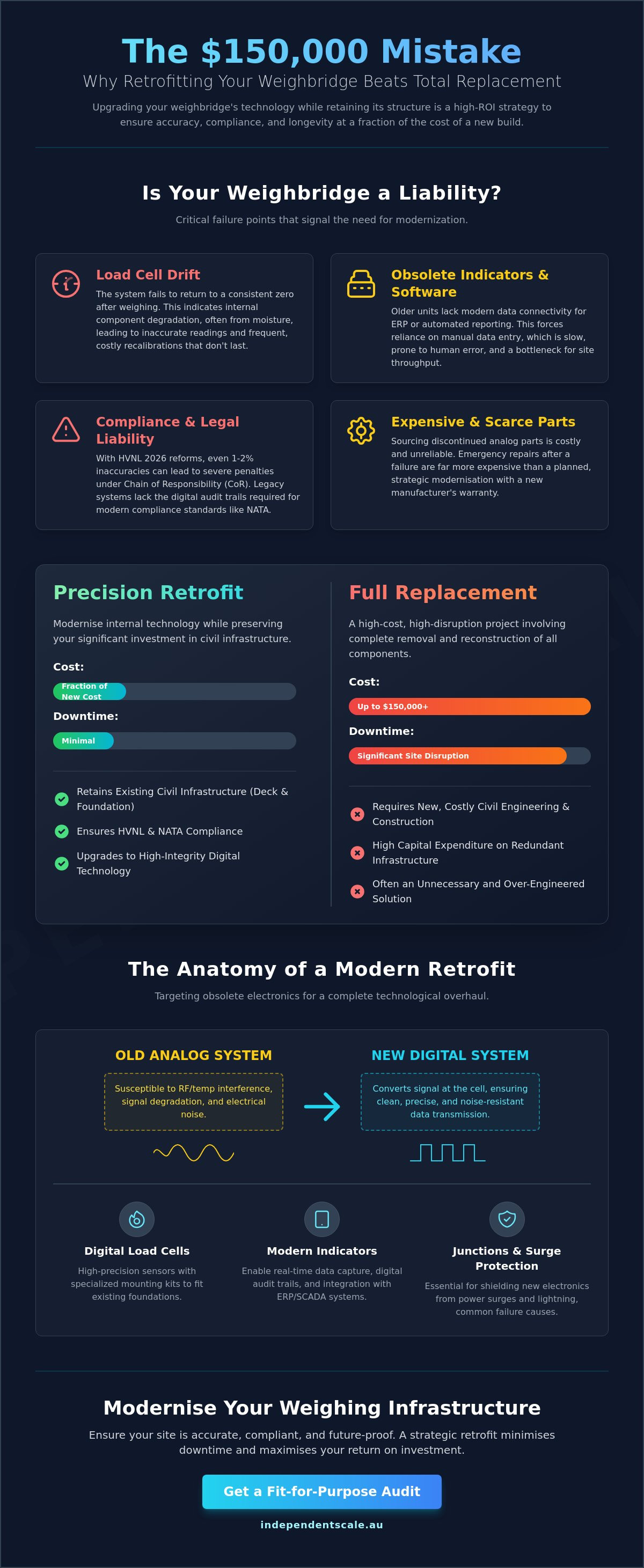
Scrapping a non-functional weighbridge is often a $150,000 mistake that industrial sites don't need to make. While total replacement seems like the only fix for obsolete parts and recurring inaccuracies, a precision-engineered retrofit often delivers a superior return on investment. Upgrading an old weighbridge system allows you to retain your existing civil infrastructure while modernising the internal technology to meet current industrial demands.
It's a significant challenge to manage site delays and compliance risks caused by equipment that no longer holds its calibration. You require a system that guarantees accuracy under the Heavy Vehicle National Law (HVNL) and the major 2026 reforms. This technical guide outlines how to modernise your weighing infrastructure, ensure NATA compliance, and extend equipment life at a fraction of the cost of a new build. We will detail the process of load cell supply integration, digital reporting software transitions, and the specific steps required to meet rigorous Australian weighing standards.
Key Takeaways
- Identify critical mechanical and electronic failure points like load cell drift that necessitate upgrading an old weighbridge system rather than full replacement.
- Understand the technical transition from analog to digital load cell technology to ensure superior signal integrity and long-term data accuracy.
- Learn how to conduct a "Fit for Purpose" structural audit to evaluate deck fatigue and foundation stability before investing in electronic retrofits.
- Navigate mandatory regulatory requirements including NATA accreditation to ISO/IEC 17025 and adherence to AS 1379 standards for trade verification.
- Implement a structured five-step modernisation process designed to minimise site downtime through strategic pre-wiring and hardware preparation.
Signs Your Old Weighbridge System Needs a Technical Upgrade
Upgrading an old weighbridge system is a strategic engineering retrofit. It involves replacing obsolete electronic components while retaining the structurally sound deck and foundations. This process targets the parts most susceptible to environmental wear and technological obsolescence, specifically the load cells, junction boxes, and digital indicators. By focusing on the "brains" of the system, operators can restore factory-level precision without the capital expenditure required for a full civil reconstruction.
A primary indicator of failing hardware is "Load Cell Drift." This technical failure manifests when the weighbridge system fails to return to a consistent zero-point after a vehicle exits the platform. Inconsistent zero-points signal internal component failure, often caused by moisture ingress or the degradation of the internal strain gauges. If your site records frequent "out of tolerance" results during routine testing, the operational ROI is already in decline. You're effectively paying for repetitive calibrations that fail to hold, leading to increased downtime and unreliable data.
Obsolete indicators also present a significant operational risk. Older units lack the necessary data connectivity for modern ERP integration or automated reporting. This creates a reliance on manual data entry, which is prone to human error and slows down site throughput. Transitioning to modern indicators and displays allows for real-time data capture and better integration with digital management software.
When Accuracy Becomes a Compliance Liability
The Heavy Vehicle National Law (HVNL) Amendment Act 2025, which commences in mid-2026, strengthens Chain of Responsibility (CoR) obligations for all parties in the transport chain. Under this reform, even a 1% to 2% inaccuracy in weight readings can lead to significant legal and financial penalties if a vehicle is found to be over mass limits. For sites still operating mechanical lever systems, you have reached the point of no return. These legacy systems cannot provide the high-resolution digital audit trails required by the new General Safety Accreditation (GSA) framework.
The High Cost of Maintaining Obsolete Hardware
Sourcing legacy spare parts for discontinued weighing systems is becoming increasingly difficult and expensive. Manufacturers often cease support for older analog components, forcing sites to rely on refurbished parts with no performance guarantees. An emergency repair following a sudden component failure is consistently more expensive than a planned modernisation. Investing in a fresh load cell supply and electronic suite provides the security of a new manufacturer warranty and ensures that your infrastructure remains compliant with National Trade Measurement Regulations.
The Technical Anatomy of a Weighbridge Retrofit
A successful retrofit requires a systematic replacement of the electronic measurement chain while preserving the structural deck. It isn't just about swapping sensors. It's an engineering process that integrates high-precision load cells, specialized mounting assemblies, and digital indicators into a cohesive unit. When upgrading an old weighbridge system, the transition from analog to digital technology is the most critical step for improving signal integrity. Analog signals are susceptible to interference from radio frequencies and temperature fluctuations. Digital systems convert the signal at the cell, ensuring the data reaching the indicator is precise and resistant to environmental noise.
The hardware configuration also includes critical protection and integration components. High-quality junction boxes and surge arrestors are essential for shielding new electronics from lightning strikes and power surges, which are common causes of system failure in regional Australia. For sites requiring automation, modern conditioners and transmitters allow for seamless PLC and SCADA integration. This enables real-time data flow into inventory management systems. Adhering to standards outlined in The Technical Anatomy of a Weighbridge Retrofit ensures that the upgraded system meets global metrological requirements for trade use.
Digital Load Cell Conversion Kits
One of the primary technical hurdles in a retrofit is the physical footprint of the old sensors. Modern digital load cell conversion kits solve this by using specialized mounting assemblies. These assemblies act as an interface, allowing new load cells to fit perfectly into the existing bolt patterns and height clearances of the old weighbridge. We prioritize stainless steel, hermetically sealed cells for these upgrades. These components carry IP68 or IP69K ratings, providing total protection against the dust and high-pressure wash-down procedures typical of Australian industrial environments. For sites requiring specific automation outputs, reviewing our range of signal conditioners is a recommended first step in the planning phase.
Advanced Indicators and Remote Displays
The final stage of the technical anatomy involves the user interface. Modern indicators and displays have evolved into powerful data hubs. They support multiple output formats, including Ethernet, RS232, and 4-20mA, which are necessary for comprehensive data logging. High-visibility remote displays are also a key safety feature for driver-operated sites. These large-format screens allow drivers to view their weight readings clearly from the cab. This reduces the need for personnel to exit the vehicle in high-traffic areas, which directly improves site safety protocols while upgrading an old weighbridge system.
Evaluating Structural Integrity: Foundation vs. Deck
A "Fit for Purpose" audit is the mandatory first step before any electronic modernization begins. Upgrading an old weighbridge system is only technically viable if the underlying structure can support the precision of modern sensors. This audit involves a scientific assessment of the deck's load-bearing capacity and the foundation's stability. If the platform exhibits excessive deflection or the foundations have shifted, new electronics will fail to provide repeatable results. We treat the weighbridge as a single engineering unit where the deck, foundation, and load cells must work in perfect alignment.
Foundation stability is the primary factor in long-term weighing accuracy. While local standards are the priority, the technical principles found in the UK Weighing Equipment Regulations highlight the necessity of a stable, well-maintained installation environment for trade-legal accuracy. For sites transitioning from mechanical scales, the "lever to load cell" conversion is a critical phase. This involves removing the complex network of knives and pivots and replacing them with high-capacity digital sensors. This conversion eliminates the friction and wear points that cause traditional mechanical systems to drift out of calibration.
Assessing the Concrete or Steel Superstructure
Steel decks are prone to structural corrosion, particularly in the main support beams where moisture traps occur. In concrete decks, we look for "spalling" or signs of rebar corrosion, which weakens the internal matrix of the slab. Excessive deflection under load is a major failure point; if the deck flexes beyond its engineered limits, it introduces side-loading forces that modern sensors cannot accurately process. Similar structural considerations apply to tank and silo weighing assemblies, where the supporting framework must handle significant dead loads without shifting or flexing.
Foundation Requirements for Modern Load Cells
Modern load cells require a significantly more rigid and level mounting surface than old mechanical levers. Any subsidence in the concrete footings will cause the weighbridge to "rock," leading to inconsistent weights. Drainage and debris management are also vital, especially in pit-mounted systems where standing water can damage even hermetically sealed components. Site managers should use the following checklist to evaluate their current pit condition before upgrading an old weighbridge system:
- Debris Clearance: Ensure the gap between the deck and the pit wall is free of packed dirt or stones that cause "binding."
- Drainage Functionality: Verify that pumps or gravity drains are clear and prevent water from reaching the load cell bearing plates.
- Bearing Plate Integrity: Inspect the steel plates where the load cells sit for heavy pitting or uneven wear.
- Wall Stability: Check for cracks or inward movement of the pit walls that could interfere with the platform's free movement.
The Compliance Roadmap: NATA and AS 1379 Standards
Upgrading an old weighbridge system is a technical achievement that is legally incomplete until the equipment is re-verified for trade use. Under the National Trade Measurement Regulations 2009, any weighing instrument used to determine the price of goods or to comply with mass limits must be verified by a servicing licensee after any major modification. A hardware retrofit falls squarely into this category. Without this formal step, the site operator risks significant fines and the potential suspension of operations during a regulatory audit. Legal metrology ensures that the transaction between buyer and seller remains transparent and that all parties meet their Heavy Vehicle National Law (HVNL) obligations.
Post-upgrade documentation is the final pillar of the compliance roadmap. After the installation is complete, you must maintain a comprehensive technical file for the instrument. This file includes calibration reports detailing the "as found" and "as left" results, the servicing licensee’s verification mark, and a record of the accredited technician who performed the work. These records provide a defensible audit trail that proves your infrastructure meets the required Maximum Permissible Error (MPE) limits for industrial use.
Ensuring Accuracy with NATA Accredited Calibration
Calibration after a retrofit isn't a one-time event; it's the start of a new compliance lifecycle. We provide professional weighing scale calibration that strictly adheres to NATA's rigorous requirements. This accreditation to ISO/IEC 17025 is the global benchmark for precision measurement. It confirms the technical competence of the laboratory and the traceability of the results to national standards. Our authoritative guide on calibration services explains the technical nuances of these standards in detail. Independent Scale Service maintains these high standards to provide clients with reliable data that stands up to regulatory scrutiny.
AS 1379 Compliance for Concrete and Construction
Concrete production facilities face additional scrutiny under AS 1379. This Australian standard requires that all weighing equipment used for batching ingredients—including cement, water, and aggregates—maintains specific accuracy levels to ensure structural integrity. Our concrete batching plant calibration services are specifically designed to meet these tolerances. Maintaining these standards is essential for project managers who must prove the quality of their concrete supply to tier-one contractors. Regular verification ensures your site stays operational and compliant with the latest construction industry requirements. If your infrastructure is due for a regulatory audit, contact us for professional weighing scale calibration to ensure full compliance.
Executing the Upgrade: Minimising Site Downtime
Operational disruption is the most significant cost factor in any infrastructure project. When upgrading an old weighbridge system, the difference between a successful retrofit and a costly delay lies in the technical preparation phase. We employ a "pre-wiring" strategy where new digital indicators and transmitters are programmed and tested off-site before the installation window begins. This ensures the electronic measurement chain is ready for immediate integration once the physical platform is accessible. By synchronising the mechanical removal of legacy parts with the arrival of new hardware, we reduce the window of site inactivity from weeks to days.
Long-term reliability after the upgrade depends on the quality of the peripheral hardware. High-quality junction boxes and surge arrestors are non-negotiable components for Australian sites exposed to electrical storms and industrial power fluctuations. These protective devices prevent future electronic failures that often plague poorly executed retrofits. Independent Scale Service specialises in these high-precision engineering projects, ensuring that every component from the load cell to the remote display is selected for its technical competence and durability.
The Turnkey Upgrade Process
A professional modernisation follows a structured, five-step engineering protocol to ensure metrological accuracy and site safety:
- Step 1: Structural and Electrical Audit: A comprehensive assessment of the existing deck, foundations, and cabling conduits to confirm the site's "Fit for Purpose" status.
- Step 2: Removal of Legacy Components: Orderly extraction of obsolete mechanical levers, analog load cells, and discontinued wiring systems.
- Step 3: Installation of Conversion Hardware: Fitting specialised mounting assemblies and new high-precision digital load cells into the existing footprint.
- Step 4: Integration of Indicators and Software: Connecting the new measurement chain to modern indicators and digital reporting platforms for real-time data flow.
- Step 5: NATA Calibration and Certification: Final verification to national standards, providing the legal-for-trade documentation required for site operations.
Why Partner with Independent Scale Service?
We are a trusted authority for industrial weighing across Australia, providing rapid response and technical expertise in Sydney and Melbourne. Our technicians provide 24/7 availability for critical repairs, ensuring that client downtime is kept to an absolute minimum. We maintain a comprehensive inventory across all weighing collections, allowing for the immediate supply of parts that competitors often have on backorder.
Site managers frequently hesitate due to the perceived disruption of a retrofit. However, a planned process for upgrading an old weighbridge system takes significantly less time than an unmanaged breakdown. An emergency failure of an obsolete system can halt site throughput for weeks while waiting for discontinued parts. A planned upgrade eliminates this risk, restoring factory-level accuracy and ensuring your facility remains compliant with the 2026 HVNL reforms.
Securing Your Weighing Infrastructure for the Future
Upgrading an old weighbridge system provides a clear path to modernising site infrastructure without the capital expenditure of a full civil rebuild. By prioritising structural integrity audits and transitioning to digital load cell technology, operators can eliminate the drift and downtime associated with legacy analog components. This guide has detailed the necessity of a structured retrofit process that integrates modern indicators and high-visibility displays for improved site safety and data accuracy.
Maintaining compliance with NATA and AS 1379 standards is vital for avoiding the legal and financial risks associated with the 2026 HVNL reforms. Independent Scale Service is NATA Accredited to ISO/IEC 17025, ensuring every calibration meets the highest national standards for traceability and technical competence. Our expert technicians operate throughout Sydney, Melbourne, and regional Australia to provide the responsive service required for high-volume industrial sites. Contact Independent Scale Service for a Professional Weighbridge Audit to secure the long-term reliability of your weighing operations. Investing in a precision-engineered upgrade today ensures your facility remains compliant and efficient for years to come.
Frequently Asked Questions
How long does a typical weighbridge upgrade take?
A standard technical retrofit typically takes between two and five business days to complete. The exact timeline depends on the condition of the existing cable conduits and the complexity of the conversion hardware. If the site is properly prepared and pre-wiring is finished off-site, the physical installation of load cells and indicators can be completed rapidly to minimise site downtime.
Can any old weighbridge be upgraded with modern load cells?
Most legacy systems are candidates for modernisation if the platform and footings remain structurally viable. Even very old mechanical lever systems can be converted using specialised load cell mounting assemblies. A "Fit for Purpose" audit is the only way to confirm if the steel or concrete deck can support the precision required by modern digital sensors.
What is the difference between a weighbridge repair and a system upgrade?
A repair addresses a single component failure to restore basic function, whereas upgrading an old weighbridge system involves a wholesale replacement of the electronic measurement chain. Upgrades provide a fresh manufacturer warranty and integrate modern digital reporting features. This proactive approach prevents the repetitive "out of tolerance" issues common with aging analog hardware.
Do I need to recalibrate my weighbridge after an electronics upgrade?
Recalibration is a legal requirement following any major modification to a trade-use instrument. Once the new electronics are installed, the system must undergo NATA accredited calibration to ISO/IEC 17025 standards. This process includes full-capacity testing with certified weights to ensure the system meets National Trade Measurement Regulations for accuracy and repeatability.
Is a digital load cell better than an analog one for my upgrade?
Digital load cells provide significant advantages over analog models in terms of signal integrity and fault diagnostics. They convert weight data into a digital signal at the cell, which eliminates interference from moisture or radio frequencies. This technology also allows technicians to monitor the performance of individual cells remotely, which simplifies future maintenance and troubleshooting.
Will upgrading my weighbridge help with Chain of Responsibility compliance?
Modernising your weighing infrastructure is a critical step in meeting Chain of Responsibility (CoR) obligations under the Heavy Vehicle National Law. Accurate, digital weight records provide a defensible audit trail that proves your site is preventing overloaded vehicles from entering public roads. This reduces the risk of severe financial penalties and legal action during regulatory inspections.
Can I upgrade my weighbridge software without changing the hardware?
Software upgrades are often limited by the capabilities of your existing hardware indicators. While some basic data logging changes are possible, full integration with modern ERP or cloud-based reporting usually requires a modern digital indicator. Upgrading the hardware ensures the system has the processing power and connectivity ports needed for advanced digital reporting.
What is the cost difference between an upgrade and a full replacement?
Upgrading is a more economical choice because it eliminates the need for expensive civil works and concrete demolition. A full replacement requires a complete rebuild of the foundations and the deck, which often accounts for the majority of a project's budget. By retaining sound structures and only replacing the electronics, you achieve factory-level accuracy at a lower capital cost.
