


Industrial Scale Breakdown Service and Response Times
A scale failure can interrupt production, dispatch and stock control, so response time matters. An industrial scale breakdown service assesses the reported fault, site location and equipment details to plan a suitable response; arrival times are estimates, not a fixed timeframe. The issue may involve mechanical components, load cells, cabling or electrical controls.
It’s reasonable to want a clear picture of how soon a technician may arrive and what can be addressed during a service visit. This article explains how breakdown response and estimated arrival times are determined, outlines common mechanical and electrical faults, and describes what industrial and commercial scale servicing can cover, including calibration, repair and performance checks.
You’ll also learn which details help a technician assess the fault and plan the next step. This makes it easier to understand the service process and decide when specialist scale support is appropriate.
Key Takeaways
- Response and arrival estimates depend on the reported fault, equipment details and site location. Clear information helps the service team assess the issue and plan its response.
- Mechanical wear and electrical faults can both affect weighing performance. The fault type guides the diagnostic and repair work.
- Scale servicing can address more than a breakdown, including calibration and checks on equipment performance.
- Match the service to the equipment and its operating requirements, including industrial scales, batching plants, hoppers and silos.
Breakdown response and estimated arrival times
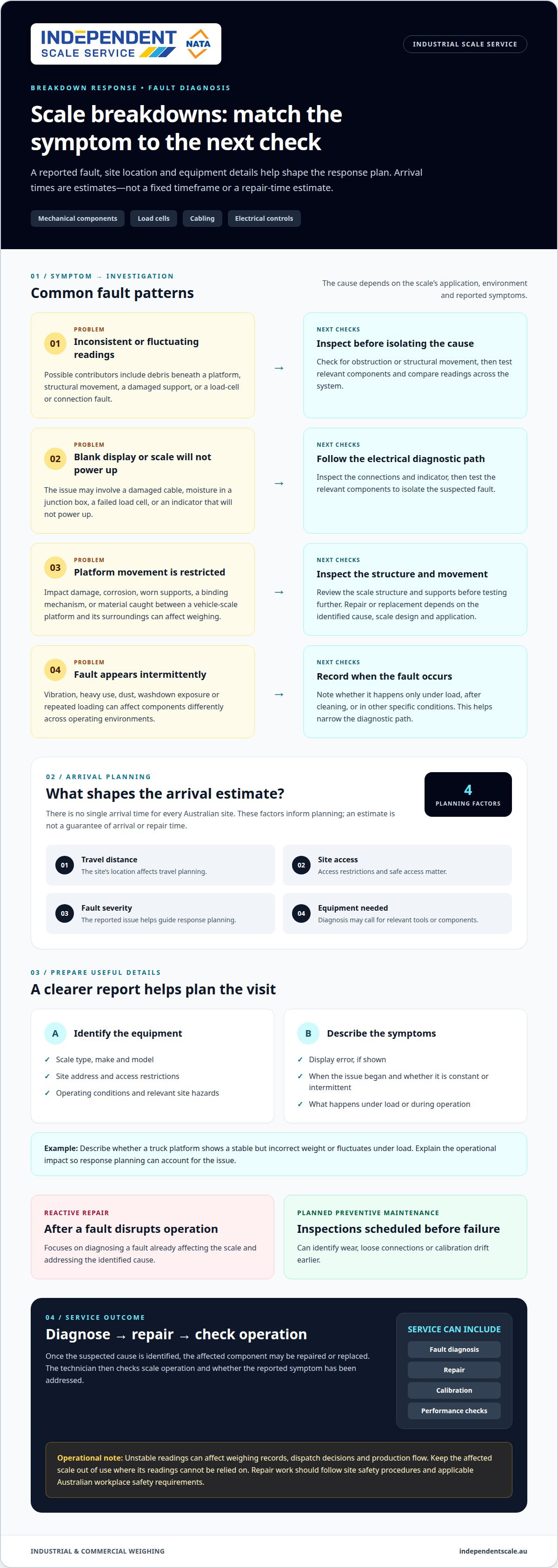
An industrial scale breakdown service starts by assessing the equipment, reported symptoms and site location. A technician’s estimated arrival depends on travel distance, site access, fault severity and the equipment needed for diagnosis. There is no single arrival time for every Australian site. A fault affecting a truck platform scale during dispatch may need different planning from an intermittent reading on a production-floor scale.
Response planning also depends on whether the fault can be described clearly. A display showing an error code, a platform that gives inconsistent readings, or a scale that will not power up each points to different checks. The reported issue helps the service team plan the visit and decide what equipment or replacement components may be relevant. An arrival estimate is a planning guide, not a repair-time estimate.
Reactive repairs address a fault after it disrupts operation; planned preventive maintenance schedules inspections and servicing before failure. Preventive work can identify wear, loose connections or calibration drift earlier, while reactive work focuses on diagnosing a fault already affecting the scale.
Industrial repair work should follow the site’s safety procedures and applicable Australian workplace safety requirements. The repair plan may need to account for equipment isolation, vehicle movements around a weighbridge, safe access to a platform and coordination with site personnel. Site hazards and relevant state or territory requirements shape the controls used.
In Australia, round-the-clock industrial breakdown support is provided by businesses that explicitly advertise 24/7 callout coverage. Coverage and response arrangements depend on location and equipment, so a stated 24/7 service should not be taken to mean an identical arrival time for every site.
When reporting a breakdown, provide the scale type, make and model, site address, symptoms, any display error and when the issue began. Note whether the fault is constant or intermittent. For example, explain whether a truck platform shows a stable but incorrect weight or fluctuates under load. Details about access restrictions and operating conditions also help plan the work.
Delaying attention to an unstable reading can affect weighing records, dispatch decisions and production flow. Reduce avoidable downtime by reporting the fault promptly, describing its operational impact and keeping the affected scale out of use where its readings cannot be relied on. For hopper equipment, hopper calibration service addresses weighing performance as part of the broader response to scale issues.
Common mechanical and electrical breakdowns
Industrial scales combine a load-bearing structure with load cells, junction boxes, cabling and an indicator. A fault in any of these parts can cause an incorrect, unstable or absent reading. The likely cause depends on the scale’s application, operating environment and symptoms.
Mechanical faults can include impact damage, corrosion, debris beneath a platform, worn supports or a binding mechanism. On a vehicle scale, material caught between the platform and surrounding structure can restrict movement. A damaged support may also affect how force reaches the load cells, causing inconsistent weights.
Electrical problems may involve a damaged cable, moisture in a junction box, a failed load cell or an indicator that won’t power up. Vibration and heavy use can expose intermittent connections in manufacturing settings. A blank display requires a different diagnostic path from one that powers on but shows fluctuating readings.
Diagnosis begins with reviewing the symptoms and inspecting the scale’s structure, connections and indicator. The technician then tests relevant components to isolate the suspected fault and compare readings across the system. Once the cause is identified, the affected component can be repaired or replaced, followed by checks of the scale’s operation.
For example, a platform that reads inconsistently may require inspection for obstruction or structural movement before electrical testing. If the readings point to a load-cell fault, load cell calibration and repair addresses the measurement component. The repair approach depends on the scale design and application.
Across Australian industries, scales operate in settings ranging from manufacturing lines to vehicle weighing. Dust, washdown exposure, vibration and repeated loading can affect components differently. Recording when the fault occurs, such as only under load or after cleaning, helps narrow the diagnosis.
After repairs, the technician checks whether the scale responds consistently and the reported symptom has been addressed. A service record can document the fault and work performed, supporting maintenance planning and follow-up if operating conditions change.
Industrial and commercial scale servicing
Servicing can combine fault diagnosis, repairs and calibration, depending on the scale’s condition and application. The work for a vehicle weighbridge may differ from that for a manufacturing process scale.
Comparing Breakdown Service Providers
Assess whether a specialist understands your scale type and operating conditions, such as vehicle traffic, production demands or washdown exposure. Compare the diagnostic steps, repair scope, service coverage and records provided after work. Ask how the provider handles an intermittent fault, not only a complete failure. A clear explanation should connect the reported symptom with the proposed inspection and repair process.
Australian businesses can compare providers by matching those details to the site’s actual requirements. For example, a weighbridge used for truck dispatch needs assessment suited to its platform and operating environment.
Pricing and Maintenance Contract Costs
Breakdown repair costs depend on the equipment, fault complexity, travel, parts and work required. Maintenance costs depend on the equipment covered, service scope and planned visit requirements. The price depends on the case and is provided after a quote request. A damaged indicator may require different work from a fault involving several load cells or platform components.
For a useful comparison, distinguish reactive repairs from scheduled maintenance and identify which tasks each arrangement includes. A service plan covering inspections and calibration differs from one focused on breakdown repairs.
Included Breakdown Service Work
Service work commonly begins with reviewing the fault, inspecting the scale and testing components linked to the symptoms. The technician may assess the platform, load cells, junction box, cabling and indicator, then repair or replace affected components as needed. Checks after the repair help determine whether the reported reading problem has been addressed.
Calibration may be relevant when readings need assessment after a repair. For example, a concrete batching application requires weighing performance suited to its process. The work scope should identify the fault, actions taken and any follow-up requirements, creating a useful service record.
What does an industrial-scale breakdown service include in Australia?
An industrial scale breakdown service typically follows a sequence: fault review, equipment inspection, diagnosis, repair and operational checks. The exact work depends on the scale design and reported symptoms. A vehicle platform scale with unstable readings needs a different inspection from a production scale with a blank indicator.
The technician considers the scale’s construction and operating environment, including the platform, load cells, junction box, cabling and display. Inspection can identify visible damage, debris restricting platform movement or signs of moisture around electrical connections. The reported symptoms help direct further testing.
After inspection, relevant components are tested to isolate the cause. For example, unstable readings may require checks of the load cells, signal path and indicator. A scale that won’t power up calls for a different diagnostic sequence. Once the fault is identified, the work may include repairing or replacing affected parts.
- Fault assessment: Review symptoms, operating conditions and scale configuration.
- Component checks: Inspect mechanical structure and test relevant electrical connections.
- Repair work: Address the diagnosed fault and affected components.
- Operational checks: Confirm the scale responds consistently after work.
Calibration may be appropriate when a repair affects measurement performance or readings need assessment. Requirements depend on the equipment’s application and the records the business needs. A scale used to record production batches, for example, has different operational demands from a vehicle scale used for dispatch.
A service record can document the reported fault, diagnostic findings and work completed. This gives maintenance teams a reference for recurring issues, such as intermittent readings during a particular production process. It can also help identify whether operating conditions or equipment changes warrant further attention.
For help with scale performance and repair requirements, arrange industrial scale servicing suited to your equipment and application.
Independent Scale Service: Industrial Weighing Scales
Independent Scale Service supplies industrial weighing scales and supports weighing equipment through calibration and repair services. Turn to the team when industrial weighing equipment needs specialist attention or its measurement performance requires assessment.
Relevant capabilities include load cell calibration and repair, concrete batching plant calibration, and hopper and silo calibration. These services address weighing requirements across different equipment types, from load-cell systems to batching applications. Independent Scale Service is NATA accredited to ISO/IEC 17025 and compliant with AS 1379.
For a scale fault, share the equipment type, symptoms and operating application so the issue can be understood in context. Contact Independent Scale Service to discuss your industrial weighing requirements.
Keep Weighing Decisions on Track
A scale fault is an opportunity to consider how weighing supports production, inventory and dispatch decisions—whether in heavy manufacturing or daily parcel dispatch for online retailers like incaltamintelamod.ro. The next step is not simply restoring a display, but ensuring the equipment and its measurement role continue to meet operational needs.
Independent Scale Service supplies load cells and provides load cell calibration and repair, as well as force gauge calibration. These services support businesses dealing with load cell faults or measurement equipment that needs calibration. For an industrial scale breakdown service, the equipment type and its role in the process help define the support required.
Consider whether changes to the application or operating conditions have affected how the scale is used. This context can guide future servicing decisions and keep measurement requirements visible across your operation.
Contact Independent Scale Service to discuss your weighing equipment requirements and determine a practical next step.
Frequently Asked Questions
How long will I have to wait?
Arrival timing depends on your site location, the fault’s operational impact, access arrangements and the equipment required. A scale affecting a critical production process may need different prioritisation from equipment with a backup available. Give the service team the scale type, fault symptoms and site access details when reporting the issue. These details help establish a practical response plan and distinguish travel time from repair duration.
What industries and types of equipment are covered by industrial breakdown services?
Coverage depends on the equipment and service provider’s capabilities. Independent Scale Service supports industrial weighing applications involving weighing scales, load cells, concrete batching plants, and hoppers and silos. For example, a concrete producer may need calibration for batching equipment, while a facility using a hopper system may need its weighing performance assessed. Force gauges are another relevant application, with calibration available for measurement requirements.
How quickly do industrial breakdown technicians respond, and what service levels are offered?
The response plan depends on the fault’s impact, site access and diagnostic requirements. Service work can involve fault assessment, repair, calibration or planned servicing. These are distinct stages: a technician’s arrival does not determine how long diagnosis or parts replacement will take. Describe the operational effect and equipment type to support service planning and clarify the work required.
