


Convincing Your Team on Calibration by Reducing Errors and Rework
Unreliable measurements can lead to errors, rejected work and avoidable rework. Convincing your team on calibration importance starts with showing how measurement accuracy affects product quality, process decisions and repeat work. Calibration gives leaders a practical way to assess whether equipment is measuring as expected.
Teams know that errors cost time and disrupt production. The challenge is making calibration part of operational accountability, not treating it as an isolated technical task. Clear records and consistent expectations help explain why equipment needs attention and how measurement issues can lead to rework.
This article explains calibration’s purpose, its operational benefits and how leaders can make the case to their teams. It also shows how consistent measurement practices can help reduce errors and rework. The focus is on practical controls: understanding what is measured, recognising unreliable readings and using results to guide decisions.
Key Takeaways
- Explain calibration as a way to check measurement reliability and support consistent operational decisions.
- Connect reliable measurements with fewer avoidable errors, less rework and clearer production expectations.
- Use documented evidence and defined responsibilities to make calibration part of leader accountability.
- Identify where calibration can support your equipment and processes, then prioritise the areas most affected by measurement errors.
1. Purpose of performance calibration
Performance calibration aligns managers on rating criteria before employee assessments are finalised. The goal is consistent reasoning, not identical ratings across teams or review periods. Managers discuss evidence about their direct reports, compare how they interpret expectations and address challenges in applying the same criteria.
For example, a manager proposing a rating of 3 can explain which results meet expectations. Another manager can compare that evidence with a rating of 3 plus, then discuss whether the distinction reflects documented performance or different standards. This creates a clearer basis for assessing fairness and helps leaders identify high performance and possible promotion readiness.
Use specific examples: completed projects, outcomes, demonstrated behaviours and responsibilities. A rating should reflect evidence against agreed criteria, not confidence, visibility or a manager’s personal preference. Comparing employees with the criteria, rather than with one another, also avoids imposing the same rating distribution across departments.
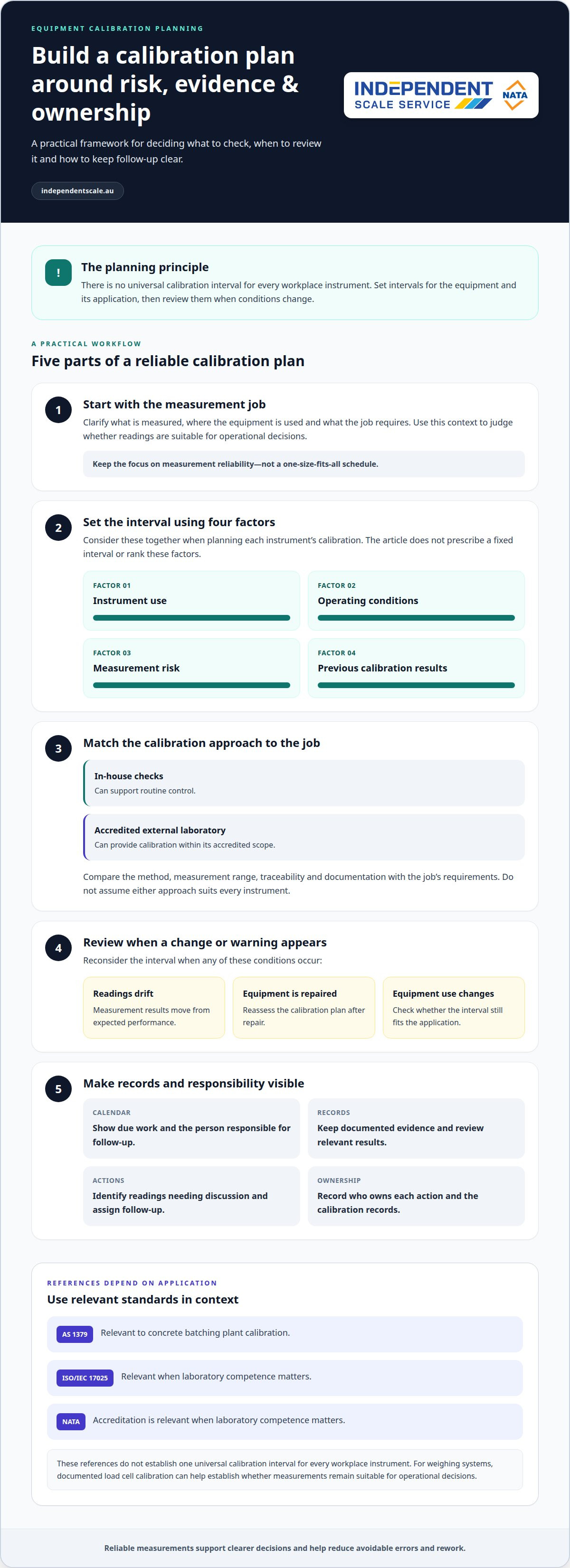
Equipment calibration is a separate process from employee rating discussions. In-house checks can support routine control, while an accredited external laboratory can provide calibration within its accredited scope. Compare the method, measurement range, traceability and documentation with the job’s requirements, rather than assuming either approach suits every instrument.
Australian requirements depend on the equipment and its application. AS 1379 is relevant to concrete batching plant calibration; ISO/IEC 17025 and NATA accreditation are relevant when laboratory competence matters. These references do not establish one universal calibration interval for every workplace instrument.
Set equipment intervals using factors such as instrument use, operating conditions, measurement risk and previous calibration results. Review the interval when readings drift, equipment is repaired or its use changes. For weighing systems, documented load cell calibration can help establish whether measurements remain suitable for operational decisions.
A study cited on employee performance reviews found that 85 percent of employees would consider quitting if they felt their review was unfair. Concrete examples and clear reasoning support appraisals, but calibration sessions intended to make performance and compensation reviews less subjective can still be affected by bias, including affinity bias that leads managers to favour their own direct reports.
When employees cannot see how calibration decisions were made, they may feel the review process was unfair. Managers may also be more likely to use calibration to deflect responsibility in difficult conversations.
2. Benefits of calibration sessions
Regular equipment calibration supports dependable readings for production, quality checks and operational decisions. For example, a weighing error can affect recorded material quantities, prompting teams to investigate discrepancies and repeat work. Calibration helps identify measurement issues before they undermine those decisions.
A calibration session also gives people in different roles a practical way to share information. Operators can describe equipment behaviour, while managers consider its effect on production and evaluation processes. Discussing a specific issue, such as readings that vary between checks, helps the group agree on its impact and next steps.
For employee performance reviews, shared sessions help managers apply evaluation criteria consistently. A useful format has two parts: discuss key trends first, then review cases participants consider controversial. Managers can bring supporting evidence, explain their ratings and hear other perspectives before decisions are finalised.
Scheduling sessions in advance gives managers time to prepare and makes follow-up more manageable. Performance calibration meetings are recommended at least twice a year, ideally four times a year. For equipment, plan calibration around each instrument’s use, operating conditions, risk and previous results. A calendar should identify due work and the person responsible for follow-up.
Keep each session focused on decisions. Review relevant records, identify readings or ratings that need further discussion, assign actions and record who owns them. This turns discussion into practical work with a clear outcome. Managers can then explain the operational value in terms employees and leaders recognise: reliable measurements, informed decisions and less avoidable disruption.
For weighing processes, weighing scale calibration can provide a concrete focus for a session about measurement control. Linking the discussion to equipment used in daily operations helps teams connect calibration with production requirements.
When product team members share knowledge and expertise, they can build collective intelligence. In one teaching example, educators used common proficiency scales with clear success criteria to create a shared understanding of proficiency.
Product team calibration involves aligning members’ skills, goals and expectations to improve efficiency and collaboration. Matching skills to project needs helps prevent duplicated work. A calibrated team can allocate time and budget more effectively by assigning tasks to appropriate resources. Encouraging different perspectives can also support innovative solutions and better decisions.
3. How calibration supports leader accountability
Calibration gives leaders a structured way to examine decisions and the evidence behind them. In employee reviews, a senior leader can chair the discussion, while HR facilitates and reviewing managers explain proposed ratings. This makes each manager accountable for their reasoning, rather than presenting a final rating as an unsupported judgement. For equipment, leaders also need clear ownership of calibration records and follow-up actions.
Preparation makes accountability visible. Managers complete appraisals for their direct reports before the session and arrive ready to discuss their ratings. HR can prepare aggregate and historical business data, including average ratings, performance distributions and outliers. Comparing a manager’s evidence with these patterns can prompt questions about how criteria were applied. For equipment, a similar review can identify overdue actions or recurring measurement concerns.
Convincing your team on calibration importance means explaining how evidence informs decisions. A manager should connect an employee’s rating to specific achievements, projects and demonstrated behaviours. If participants disagree, they can identify the evidence supporting each view and what remains unclear. If they do not reach consensus, a follow-up with the manager can support a final decision and help explain differing perspectives.
Accountability continues after discussion. Managers may use the 24-48 hours after a calibration meeting to adjust their evidence and ratings. A clear record of agreed actions, responsible managers and decision rationale helps prevent unresolved issues from disappearing between review stages. Participants should also be reminded that calibration discussions and outcomes are confidential. This structure gives leadership a traceable basis for follow-through.
Convincing your team on calibration importance also means linking technical evidence to operational ownership. If a weighing instrument’s results prompt a review, the responsible manager can document the issue, its potential impact and the action taken. This keeps accountability clear without shifting responsibility onto an individual operator, helping teams make informed decisions about measurement concerns.
4. Reducing errors and rework
Calibration supports dependable measurement, but its evidence matters most when teams connect results to production outcomes. If a batching system records an inaccurate material quantity, the mix may fail to meet requirements and need investigation or repeat work. Comparing calibration results over time can help identify measurement drift before teams rely on questionable readings.
Consistent methods also reduce variation between individuals. In one assessment example, five teachers who calibrated together produced similar score distributions, while a teacher who missed the session graded more harshly. This example concerns grading, not industrial instruments, but it shows why shared criteria and evidence matter when different people make evaluations.
For equipment, use a defined process: record the instrument and its intended use, document calibration results, assess discrepancies, then assign corrective action. Standardised workflows help teams apply the same expectations across shifts. Clear roles also reduce duplicated checks and missed follow-up, both of which can add rework.
Uncalibrated equipment can produce readings that do not reliably represent the measured quantity. Decisions based on those readings may lead to incorrect adjustments, rejected output, repeat measurements or avoidable production delays. Across automated manufacturing processes, reliable sensing hardware is similarly critical for preventing costly interruptions, as illustrated by insights from contrinex.com on preventing production downtime. The consequences depend on the instrument, process and use of its results, so teams should assess operational risk rather than assume a fixed cost.
Calibration evidence can show whether an instrument meets its stated measurement requirements at the time of testing. This supports quality decisions and can inform safety controls when measurements affect a safety-related process. Calibration alone does not establish that an entire product or process is safe; teams must also consider operating procedures and other relevant controls.
Use meetings to review out-of-tolerance results, recurring discrepancies and corrective actions. Record the evidence, the decision and the person responsible, then check whether the action resolved the issue. For weighing processes, review concrete batching plant calibration as part of controlling measurement-related errors and rework.
To address measurement concerns in your operation, plan your calibration requirements around the equipment and its role in production.
Independent Scale Service
Independent Scale Service supports Australian industrial teams with calibration services for equipment such as force gauges, concrete batching plants, weighing scales, hoppers and silos. Turn to the team when measurement results affect production decisions, recurring discrepancies need attention or equipment calibration is part of your quality controls.
Its work includes Force Gauge Calibration, Concrete Batching Plant Calibration, Industrial Weighing Scales, and Hopper and Silo Calibration. These services give leaders a practical way to connect calibration requirements with the equipment and processes their teams rely on. Independent Scale Service is NATA accredited to ISO/IEC 17025 and compliant with AS 1379.
Contact Independent Scale Service to discuss your equipment calibration requirements.
Make calibration part of the next operational decision
Convincing your team that calibration matters is an ongoing leadership task. Keep the discussion connected to the equipment people use, the decisions its measurements inform and the steps taken when results raise concerns. This helps employees see calibration as part of operational control, not an isolated technical requirement.
For Australian industrial operations, Independent Scale Service offers Load Cell Supply, Load Cell Calibration and Repair, and Force Gauge Calibration. These services support teams dealing with load-cell measurement concerns or force-gauge accuracy requirements. The right next step depends on the equipment and its role in your process.
Discuss your requirements and the equipment involved with Independent Scale Service. A focused conversation can help your team define its calibration needs and decide how to address them. Use that discussion to build a practical, evidence-led approach to measurement reliability.
Frequently Asked Questions
What needs to happen before the meeting?
Before a calibration meeting, set a clear agenda and give participants the information they need to make decisions. For a performance review, circulate the rating framework and relevant evidence beforehand, then flag cases needing discussion. For an equipment-focused meeting, gather the instrument’s identification, intended use and recent measurement concerns. This helps the group focus on specific decisions, such as whether a reading discrepancy affects a production batch.
What is calibration and why is it important for teams?
Equipment calibration assesses an instrument’s readings against a reference to determine whether its measurements are suitable for use. Teams rely on this information to make consistent operational decisions. For example, if a weighing system supports material batching, unreliable measurements can affect recorded quantities and downstream work. Calibration records give teams a basis for evaluating measurement performance and deciding whether an instrument needs attention before its readings guide further decisions.
