


Silo Weighing System Accuracy: The Industrial Guide to Precision and Compliance
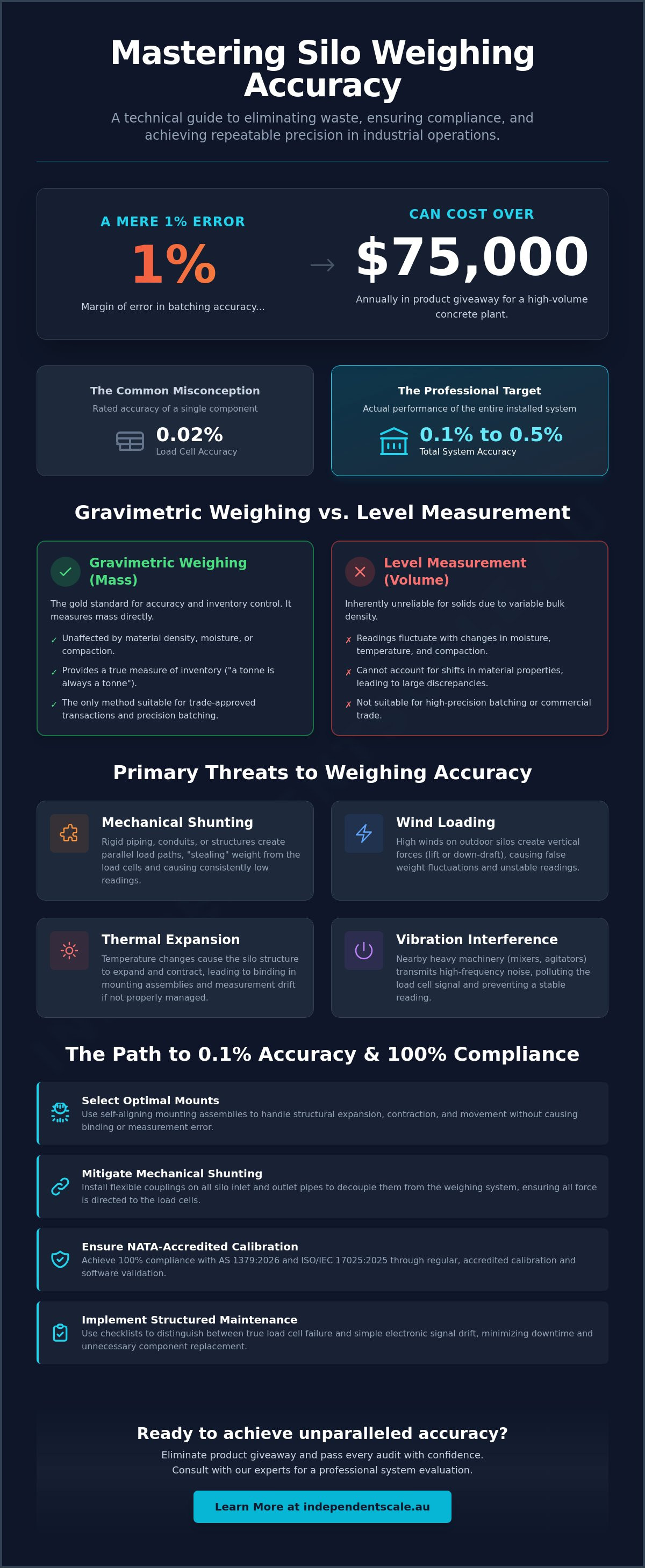
Did you know that a 1% margin of error in batching accuracy can cost a high-volume Australian concrete plant over $75,000 in product giveaway every year? For industrial operators, silo weighing system accuracy isn't just a technical specification; it's the difference between profitable operations and significant inventory loss. You likely understand the frustration of load cell drift or the stress of an impending NATA audit. Maintaining precision in harsh environments is a constant engineering battle against mechanical interference and environmental forces.
This guide provides the technical framework you need to achieve repeatable 0.1% accuracy and ensure 100% compliance with the updated AS 1379:2026 standard. We'll examine the critical factors that cause measurement errors, from improper mounting to software validation requirements under ISO/IEC 17025:2025. By the end of this article, you'll have a clear roadmap for eliminating material waste and passing every regulatory inspection with confidence.
Key Takeaways
- Understand the critical distinction between load cell rated accuracy and total system performance to eliminate hidden measurement errors.
- Identify and mitigate mechanical shunting and environmental factors like wind loading that compromise silo weighing system accuracy.
- Select optimal load cell configurations and self-aligning mounting assemblies designed to handle structural expansion and movement.
- Ensure 100% compliance with AS 1379:2026 and ISO/IEC 17025:2025 standards through NATA-accredited calibration and software validation.
- Implement structured maintenance checklists to distinguish between load cell failure and electronic signal drift, minimizing system downtime.
What Defines Silo Weighing System Accuracy?
Precision in industrial storage depends on more than just high-quality components. It's a calculation of total system performance. Many operators mistake the rated accuracy of a single load cell for the cumulative accuracy of the entire installation. While a high-grade sensor might have a rated error of 0.02%, the actual silo weighing system accuracy typically ranges between 0.1% and 0.5% of full scale in a professional setup. This discrepancy arises because the silo structure, pipework, and environmental conditions all introduce mechanical interference.
Industrial benchmarks vary by sector. For Australian concrete batching plants operating under AS 1379:2026, strict tolerances are mandatory to ensure structural integrity and regulatory compliance. Grain and chemical silos often target 0.25% accuracy for inventory management. Achieving these figures requires understanding how load cells work to convert physical force into a measurable electrical signal, and how that signal is processed by the system electronics.
Gravimetric Weighing vs. Level Measurement
Gravimetric measurement remains the gold standard for inventory control because it measures mass directly. Ultrasonic and radar sensors measure volume, which is inherently unreliable for solids. Bulk density in materials like cement or grain changes based on moisture content, compaction, and temperature. A volume-based sensor cannot account for these shifts, leading to significant inventory discrepancies. Weighing is the only method suitable for trade-approved transactions and high-precision batching because a tonne of material is always a tonne, regardless of its volume or density. Professional hopper calibration service ensures this mass reading remains consistent over time.
Understanding System Linearity and Hysteresis
Accuracy is not a static number. It fluctuates across the weighing range. Linearity defines the system's ability to provide consistent readings from an empty state to full capacity. If a system is accurate at 10 tonnes but drifts at 50 tonnes, the linearity is compromised. Hysteresis represents the difference in readings taken when increasing weight versus decreasing weight. This is particularly critical in silos that undergo frequent partial fills and discharges. High-quality conditioners and transmitters are essential to minimize these errors, ensuring the digital output accurately reflects the mechanical force applied to the load cells and tank silo weighing assemblies.
Mechanical and Environmental Factors Affecting Accuracy
Achieving high silo weighing system accuracy requires more than selecting a precise load cell. The physical structure and its surroundings often introduce forces that the system can't distinguish from the weight of the material. Mechanical shunting is a frequent issue where rigid piping or electrical conduits act as parallel load paths. These connections "steal" weight from the load cells, leading to readings that are consistently lower than the actual inventory. This problem is particularly prevalent in retrofitted silos where existing pipework wasn't designed for a weighing application.
Environmental forces pose a significant threat to precision, especially in the variable Australian climate. Wind loading is a primary concern for outdoor silos. High winds create a vertical force component that can either lift the silo or push it down, creating false weight fluctuations. Thermal expansion also causes measurement drift; as the silo structure heats up, it expands, which can cause binding in the mounting assemblies if they aren't properly aligned. Standards like the NIST Handbook 44 provide guidelines on tolerances, but maintaining these in the field requires active mitigation of these external factors.
Vibration interference is another common culprit. Heavy machinery, mixers, or agitators operating near the silo can transmit high-frequency noise through the ground or the silo frame. This noise pollutes the load cell signal, making it difficult for the indicator to settle on a stable reading. While digital filtering can help, the most effective solution is mechanical isolation or the use of specialized mounting hardware designed to dampen these vibrations before they reach the sensor.
Solving the 'Mechanical Shunt' Problem
Eliminating mechanical interference starts with the installation of flexible couplings on all silo inlet and outlet pipes. These couplings decouple the silo from the surrounding infrastructure, ensuring that 100% of the weight is transferred to the load cells. Stay rods and check links, which are necessary for structural stability against wind and seismic events, must be adjusted so they don't restrict vertical movement. A mere 1% mechanical bind in a system can result in a 10% measurement error when processing smaller batches. If your readings seem erratic during discharge, it's often a sign that the structure is binding or that pipework is under tension.
Environmental Protection and Thermal Stability
Uneven heating of silo legs can cause the structure to tilt or bind, leading to significant drift. Using sunshields or high-quality insulation on the legs helps maintain thermal equilibrium across the support structure. Electrical integrity is equally vital. Lightning strikes or power surges can permanently damage sensitive electronics or cause subtle signal degradation. Installing robust junction boxes and surge arrestors protects the signal path from interference and physical damage. For facilities struggling with consistent drift, a professional hopper calibration service can identify whether the issue is mechanical binding or environmental interference.
Selecting Load Cells and Mounting Assemblies for Precision
Engineering a reliable system starts with selecting hardware that matches the structural requirements of the vessel. For optimal silo weighing system accuracy, you must account for the "dead load", which is the weight of the empty silo, and the "live load", representing the maximum material weight. A standard industry rule is to size the total load cell capacity with a 25% to 50% safety margin. This buffer prevents sensor damage from shock loading or uneven material distribution while maintaining high resolution for precision measurement.
Australian industrial sites often face extreme dust and high-pressure washdowns. Load cells must feature hermetic sealing with IP68 or IP69K ratings. Anything less risks moisture ingress, which leads to signal drift and eventual component failure. Stainless steel construction is preferred over alloy steel for long-term corrosion resistance in chemical or coastal environments. Precision measurement is only as reliable as the mechanical interface between the silo and the ground. Self-aligning mounting assemblies are mandatory for handling structural movement caused by thermal expansion or wind. These assemblies allow the load cell to remain perfectly vertical even if the silo leg deflects slightly, preventing side-loading errors that compromise accuracy.
Compression vs. Tension Weighing Modules
Compression weighing modules are the preferred choice for large-scale outdoor silos. These units support the silo legs directly, providing a stable base that handles both vertical and horizontal forces. Conversely, tension-based systems are ideal for suspended hoppers or bins where gravity-fed discharge is required. These configurations eliminate the risk of the vessel tipping and are often easier to isolate from floor vibrations. You can select the correct configuration for your vessel geometry by reviewing our tank and silo weighing assemblies.
The Role of High-Resolution Indicators
The raw signal from a load cell is a low-voltage output that is highly susceptible to interference. High-resolution indicators and displays are necessary to translate this millivolt signal into actionable data. These devices use advanced filtering algorithms to strip away "noise" generated by wind or mechanical agitators. This signal processing is a core requirement of the NIST Handbook 44, which sets the technical parameters for weighing device performance. Modern indicators also facilitate seamless integration with plant-wide PLC systems via protocols like Modbus or Ethernet/IP, ensuring real-time inventory visibility without data loss.
Calibration Standards: NATA, ISO 17025, and AS 1379
Maintaining silo weighing system accuracy requires a verification framework that withstands regulatory scrutiny. In Australia, the National Association of Testing Authorities (NATA) provides the primary benchmark for technical competence. Accreditation to ISO/IEC 17025:2025 is the industry gold standard. This latest version of the standard introduces mandatory requirements for digital calibration data and software validation. For industrial operators, a NATA-endorsed report is the only way to prove to auditors that your measurement uncertainty is within acceptable limits.
Calibration for large-capacity silos presents unique logistical challenges. While "Full Mass" calibration using certified weights is ideal, it's often impractical for silos exceeding 50 tonnes. In these cases, the "Substitution Method" is used. This process involves applying a known mass of certified weights, recording the reading, and then substituting that weight with a material like water or gravel to reach the next test point. This cycle repeats until the full scale is reached. This method ensures linearity across the entire operating range without the need for hundreds of tonnes of physical test weights.
Calibration frequency depends on your production volume and the financial risk of inaccuracy. High-volume plants often require quarterly or bi-annual verification to mitigate the cumulative cost of batching errors. A 1% error might seem negligible on a single batch, but it results in significant material giveaway over a fiscal year. Regular calibration cycles ensure that environmental drift and mechanical wear are corrected before they impact your bottom line.
NATA Accredited Calibration Procedures
A NATA-compliant calibration follows a rigorous, documented process. It begins with a pre-calibration inspection to identify mechanical binding or load cell damage. The technician then performs a series of loading and unloading tests to determine the "Uncertainty of Measurement." This figure is critical; it represents the statistical range within which the true weight lies. Understanding this value on your report is essential for high-precision applications. You can view the specific requirements for these procedures on our hopper calibration services page.
AS 1379 Compliance for Concrete Production
The updated AS 1379:2026 standard dictates strict accuracy requirements for concrete batching plants. Cement, water, and aggregates each have specific tolerance levels that must be met to ensure the structural integrity of the final product. Compliance requires precise record-keeping for quality audits and is often a prerequisite for winning major infrastructure project tenders. We provide specialized concrete batching plant calibration to ensure your facility meets these rigorous Australian standards. Ensure your plant remains compliant and operational by scheduling a NATA-accredited weighing scale calibration today.
Troubleshooting and Maintaining Your Weighing System
Maintaining silo weighing system accuracy requires a structured approach to preventative maintenance. Neglecting routine checks leads to cumulative errors that compromise inventory data and batch quality. Plant operators should implement a dual-tier maintenance strategy consisting of daily visual inspections and monthly technical reviews. A daily check ensures the system returns to zero after discharge and that no material buildup is present around the load cell mounts. Monthly reviews should focus on cable integrity and the physical condition of mounting hardware to prevent long-term drift.
The 'Zero Balance' test is the most effective method for quickly identifying mechanical binding. By checking the signal output when the silo is empty, you can determine if the structure is physically restricting the load cells. If the zero reading has shifted significantly since the last calibration, it's a clear indicator of structural interference or sensor fatigue. Differentiating between a failing sensor and electronic drift is essential. Electronics issues often manifest as erratic, jumping numbers, while load cell failure typically presents as a slow, consistent drift in one direction. It's a critical diagnostic step before requesting professional assistance.
Common Fault Diagnosis
Signal integrity is frequently compromised by environmental factors. Moisture ingress in junction boxes is a leading cause of measurement instability, especially on sites that don't use hermetically sealed hardware. Technicians should regularly test load cell insulation resistance using a specialized megohmmeter. A reading below 5,000 megohms usually indicates moisture contamination or cable jacket damage. If cleaning and drying the components doesn't resolve the issue, professional load cell repair or replacement is necessary to restore system precision.
Maximising System Longevity
Longevity depends on keeping the mechanical environment clean and the digital environment updated. Debris buildup in the gap between the load cell and its mounting plate can create a secondary load path, directly impacting silo weighing system accuracy. Regular cleaning protocols are mandatory to prevent this. Furthermore, firmware updates for weighing transmitters are required to ensure compatibility with plant PLC systems and to access improved signal filtering algorithms. Independent Scale Service focuses on minimizing operational interruptions through methodical fault isolation and immediate technical response. We maintain a comprehensive stock of load cells and spare parts to ensure your facility remains compliant with AS 1379:2026 and ISO/IEC 17025:2025 requirements.
Securing Long-Term Precision and Regulatory Compliance
Achieving and maintaining silo weighing system accuracy requires a methodical approach to hardware selection, environmental mitigation, and accredited verification. Precision measurement is the only reliable method for preventing material giveaway and ensuring your facility remains compliant with the rigorous requirements of AS 1379:2026. By addressing mechanical shunting and implementing structured maintenance protocols, you eliminate the technical variables that lead to inventory drift and audit failure.
Independent Scale Service provides the technical expertise and NATA accreditation to ISO/IEC 17025:2025 necessary for high-stakes industrial operations. We deliver AS 1379 compliant services across Sydney, Melbourne, and regional Australia, ensuring your weighing infrastructure meets the highest national standards. Don't let measurement errors impact your production quality or financial bottom line. Request a NATA-Accredited Silo Calibration or Repair Service to verify your system's performance today. Technical competence and reliable data are the foundations of a profitable industrial operation.
Frequently Asked Questions
How accurate can a silo weighing system actually be?
Industrial systems typically achieve a total accuracy between 0.1% and 0.5% of full scale when properly engineered. While individual load cells often have higher rated precision, the installed silo weighing system accuracy is limited by structural factors and mechanical interference. Achieving the 0.1% benchmark requires NATA-accredited calibration and the mitigation of all external forces like pipework tension and wind loading.
What is the difference between NATA and standard calibration?
NATA calibration is performed by a laboratory accredited to ISO/IEC 17025:2025, providing a legally defensible report that includes calculated measurement uncertainty. Standard calibration lacks this formal accreditation and the rigorous audit trail required for compliance. For businesses operating under AS 1379:2026 or ISO quality frameworks, NATA-endorsed certificates are the only acceptable proof of technical competence and traceability to national standards.
How often should I calibrate my concrete batching plant?
Calibration must occur at least every six months to remain compliant with the AS 1379:2026 standard for concrete production. However, high-volume plants or those working on major infrastructure projects often perform quarterly verifications. Regular cycles reduce the risk of significant financial loss from material giveaway, which can exceed $75,000 annually for a 1% batching error in high-capacity facilities.
Can wind really affect my silo weight readings?
Wind creates vertical force components that the weighing system cannot distinguish from actual material weight. On outdoor silos, wind can either "lift" the vessel or push it down, causing erratic fluctuations in the indicator display. Maintaining silo weighing system accuracy in these environments requires specialized mounting assemblies to prevent tipping and advanced digital filtering within the indicator to strip out high-frequency signal noise.
What is mechanical shunting in a weighing system?
Mechanical shunting occurs when rigid connections, such as stiff piping or electrical conduits, act as parallel load paths that "steal" weight from the sensors. This physical interference prevents the full weight of the silo from resting on the load cells, leading to consistently low and inaccurate readings. Installing flexible couplings and ensuring proper clearance around all silo legs is the primary solution for this common engineering fault.
Should I use 3 or 4 load cells for my silo?
A 3-cell configuration is technically superior for most cylindrical silos because it's naturally self-leveling. Since three points define a plane, the weight is always distributed across all sensors regardless of floor irregularities. 4-cell systems are often used for rectangular hoppers but require precise mechanical shimming during installation. Without perfect leveling, one cell may carry less load, which introduces non-linearity and compromises system repeatability.
What happens if a load cell fails in a multi-cell system?
If one load cell fails, the system output becomes erratic or significantly biased, as the weight is no longer distributed correctly across the remaining sensors. While the indicator may still show a value, it won't reflect the true inventory. Modern digital junction boxes can sometimes isolate a failing cell, but immediate professional inspection is necessary to prevent structural damage and restore the integrity of your measurement data.
Is it possible to calibrate a silo without using full test weights?
Yes, the "Substitution Method" is the standard industry practice for calibrating high-capacity silos without transporting hundreds of tonnes of weights. Technicians apply a known mass of certified test weights, record the output, and then substitute that mass with a material like water to reach the next test point. This process repeats until the full scale is reached, ensuring linearity and accuracy across the entire operating range.
