


Mobile Calibration Unit Sydney: An Industrial Buyer’s Guide
Can your equipment be calibrated on-site without disrupting production or compromising the records you need? A mobile calibration unit Sydney visit depends on more than getting equipment to your facility. The calibration scope, site conditions and documentation requirements all need to align before work is scheduled.
To plan an effective visit, identify which equipment needs calibration, how it can be accessed and what records your quality or compliance processes require. This guide explains how to assess the fit for load cells, industrial scales, hoppers and concrete batching plants; prepare site access and timing; and understand how NATA accreditation to ISO/IEC 17025 relates to the calibration activity. You’ll also find practical details to gather before the visit and ways to review the resulting records. The aim is a well-scoped visit, accurate results and documentation suited to your operational requirements.
Key Takeaways
- Assess whether a mobile calibration unit Sydney visit suits your equipment, site conditions and operational priorities.
- Define the calibration scope by identifying equipment, required measurement points and the records your quality system needs.
- Compare planning considerations for industrial scales, load cells, hoppers and batching plant weighing systems before arranging site work.
- Prepare equipment records, site access, key contacts and safe work arrangements to support an efficient visit.
- Check that the applicable NATA-accredited scope covers the calibration activity required, and review the resulting documentation against your requirements.
Why choose a mobile calibration unit in Sydney for industrial weighing equipment?
A mobile calibration unit brings calibration equipment and technical capability to an industrial site, allowing weighing equipment to be assessed in place rather than removed for off-site work. The scope depends on the equipment, required measurement range, site conditions and applicable accreditation scope. Calibration compares an instrument’s performance with suitable reference standards. Read this overview of what calibration means.
For fixed or integrated equipment, on-site work can reduce transport, handling and the coordination involved in removing and reinstalling components. It also lets the site team plan access and production around the work. These are potential benefits, not a guarantee of uninterrupted operation. The work area, process requirements and calibration method determine how the visit fits the site.
Which Sydney operations may benefit from on-site calibration?
On-site calibration is worth considering when equipment is integrated into a production process or difficult to remove. Examples include load cells installed in a structure, hopper weighing systems and weighing systems used in concrete batching plants. Independent Scale Service provides industrial calibration in Sydney, including hopper calibration services.
Site access and production schedules help shape the plan. Consider whether the equipment can be made available, whether the area can be accessed safely and whether the process can pause or be managed during testing. Sharing equipment identification and operating requirements early helps define a practical scope and avoid unnecessary disruption.
When is a mobile calibration visit a poor fit?
A site visit may not suit every instrument, measurement range or requirement. If the work falls outside the available equipment or relevant accredited scope, it needs separate planning. NATA accreditation to ISO/IEC 17025 applies to activities within the accreditation scope, so accreditation alone does not mean every on-site task is covered.
Site conditions matter too. Restricted access, an unsuitable work area or environmental conditions that affect measurement can limit what can be done reliably on-site. Safe working arrangements also need to account for machinery and active production areas.
Before choosing the arrangement, match the equipment and required calibration points to site access, operating schedules and documentation needs. This helps establish whether mobile calibration is practical and how to plan for accurate results and appropriate records.
How mobile calibration works: equipment scope, traceability and accreditation
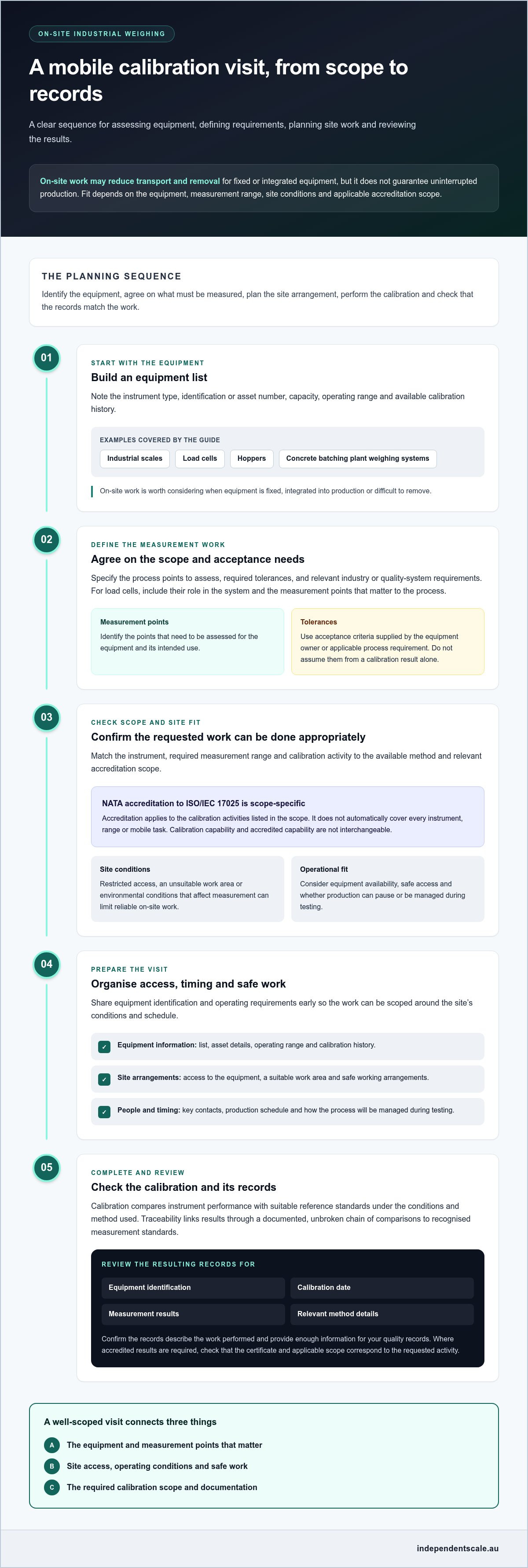
A reliable mobile calibration job follows a defined sequence: identify the equipment, agree on measurement requirements, plan site work, perform the calibration and review the records. For a mobile calibration unit Sydney booking, the equipment list and intended use help establish what needs to be measured and whether the site arrangement suits the scope.
Calibration results show how an instrument performs against reference standards under the conditions and method used. Traceability links measurement results through a documented, unbroken chain of comparisons to recognised measurement standards, with each step contributing to the measurement result. The International Organization of Legal Metrology (OIML) works to harmonise legal metrology internationally, supporting consistent approaches to measurement and measuring instruments.
How to define the equipment and calibration scope
Build an equipment schedule before planning the visit. Record the instrument type, identification or asset number, capacity, operating range and available calibration history. Then specify the process points to assess, required tolerances and relevant industry or quality-system requirements. For load cells, include their role in the system and the measurement points that matter to the process. Independent Scale Service provides load cell calibration as part of its industrial calibration work.
Clear requirements help align the method and site plan with the application. A tolerance is an acceptance criterion supplied by the equipment owner or applicable process requirement. It should not be assumed from a calibration result alone.
What accreditation and calibration records should address
NATA accreditation to ISO/IEC 17025 signifies that a laboratory has been independently assessed as technically competent for the calibration activities listed in its accreditation scope. It does not automatically cover every instrument, range or mobile task. Match the required measurement activity to the applicable scope before treating a result as accredited.
Calibration capability and accredited capability are not interchangeable. Work may be technically possible without falling within a particular accredited scope, so the certificate and scope need to correspond to the requested activity. Keep the intended use in view, especially where internal quality procedures or external requirements specify accredited results.
Review the resulting records for equipment identification, calibration date, measurement results and relevant method details. Confirm that they describe the work performed and provide enough information for your quality records. A scoped equipment list and defined requirements give the site team and calibration technician a clear basis for planning the work and evaluating the results.
Compare mobile calibration options for Sydney sites and equipment
The right approach depends on how the weighing system is installed, accessed and used in production. A mobile calibration unit Sydney visit may suit fixed equipment that is difficult to remove, while accessible equipment may offer more flexibility in how calibration is arranged. Compare the practical requirements before deciding.
| Equipment | Site access | Process impact to plan for | Documentation focus |
|---|---|---|---|
| Industrial platform or floor scales | Access to the weighing surface and room to work around the scale. | Consider how to manage weighing activity while the scale is unavailable or being tested. | Equipment identification, relevant test points and recorded results. |
| Fixed load cells | Access depends on where cells are installed within the structure or weighing system. | Linked machinery or process stages may need to be isolated or coordinated with production. | Identify the cells and system, and specify required operating points and results. |
| Hoppers and silos | Installation, surrounding structures and access to weighing components shape the work area. | Plan around material flow, connected equipment and any production constraints. | Record the system assessed, measurement points and relevant method details. |
| Concrete batching plant weighing systems | Access to the plant’s weighing components and safe work areas affects the visit plan. | Coordinate with batching operations and the plant’s process requirements. | Define the equipment and required records in line with applicable quality or industry requirements. |
Match the calibration approach to the equipment
Fixed load cells are often integrated into a vessel, hopper or plant structure, so access to the installed system can matter more than access to the sensor alone. A platform or floor scale may be easier to approach directly, although its location, connected process and required test points still matter. Independent Scale Service provides hopper calibration services for industrial applications. For scales, define the unit and intended use through the weighing scale calibration service information.
Assess site constraints and production impact
Access, isolation, safe work areas and production scheduling can change the visit plan. A scale in an open area may be straightforward to reach, while cells beneath a loaded structure or components within an operating plant may require coordinated access and process controls. Neither example means one arrangement is always faster or more suitable.
List equipment locations, access restrictions, connected processes and periods when the system can be made available. Then align the proposed work with required measurement points and documentation. This comparison helps determine whether on-site calibration fits the equipment and operation, or whether another arrangement needs to be planned.
Prepare your Sydney site for a mobile calibration visit
Good preparation starts before the visit is scheduled. For a mobile calibration unit Sydney booking, share equipment identification and required calibration points early. This helps define the work, identify access needs and plan around production. Use the checklist below as a starting point, then tailor it to the equipment and site conditions.
What information should be ready before the visit?
Gather the records that describe the equipment and the results your operation needs. Include asset details and acceptance requirements, not just the equipment category.
- 1. Equipment records: Prepare the asset register entry, instrument type, make or model where available, identification number, capacity, operating range and equipment manual.
- 2. Calibration history: Make previous certificates and records available. Note any known issues or changes since the last calibration.
- 3. Required points: List the measurement points to be assessed, applicable tolerances and relevant quality or process requirements. Share these before scheduling site activity.
- 4. Site contact and location: Name the person coordinating access and identify where the equipment is installed. Include site entry, induction and escort procedures relevant to visitors.
- 5. Operating constraints: Record production dependencies, loading or material-flow restrictions, equipment isolation needs and any access limitations around the weighing system.
How to coordinate calibration around site operations
Agree on a work window with the people responsible for production, equipment and site safety. Site entry processes and delivery windows can vary between Sydney facilities, so include gate access, vehicle instructions and any required arrival coordination in the visit plan. Don’t assume equipment will be available simply because a time has been booked.
Before work begins, responsible site personnel should coordinate any isolation arrangements and establish a suitable work area under the site’s safety procedures. For a hopper or batching system, consider connected processes and whether material movement or plant operation affects access. Confirm who can make the equipment available and who will review the calibration records afterward.
Keep the plan practical: identify the work area, agree how equipment access will be managed and allow time for the site team to review the resulting records against its requirements. Clear preparation helps align calibration activity with site operations without assuming every system can remain in service during testing.
Use this checklist to scope your requirements and review industrial calibration services from Independent Scale Service.
Arrange industrial calibration with Independent Scale Service in Sydney
Independent Scale Service provides industrial calibration in Sydney for weighing equipment, including load cells, industrial scales, hoppers and silos, and concrete batching plants. The team scopes the work around the system, its measurement requirements and the conditions at your site. Its calibration services are NATA accredited to ISO/IEC 17025 and compliant with AS 1379 where applicable to the equipment and process.
For a mobile calibration unit Sydney requirement, consider accreditation at the activity level. NATA accreditation applies to the calibrations listed in the applicable scope. It does not mean every instrument, measurement range or on-site activity is accredited. Align the work required with the relevant scope and your organisation’s documentation needs.
Which calibration pages are relevant?
Use the service information that best matches the equipment being assessed. For scale requirements, see the weighing scale calibration service. Load cell, hopper and concrete batching plant requirements can also be scoped according to the equipment and process. Consider how each instrument fits into your site’s industrial calibration programme and record-keeping requirements.
What to include when requesting a Sydney calibration service
Clear information gives the calibration team a practical basis for scoping your requirement. Include:
- Equipment: Type, make or model where available, asset identifier, capacity and operating range.
- Site: Sydney location, equipment position, access procedures and any induction requirements.
- Calibration scope: Required measurement points, relevant standards, acceptance criteria and any applicable quality requirements.
- Operations: Production constraints, access windows, equipment availability and safety arrangements that may affect the work.
- Records: Previous certificates or calibration history, plus the documentation your team needs to review and retain.
These details connect the equipment and measurement requirements with a workable site plan. They also support a clear discussion of applicable accreditation scope and the records expected from the calibration.
Share your equipment details and site constraints to discuss your Sydney calibration requirements with Independent Scale Service.
Plan your next calibration visit with confidence
A mobile calibration unit Sydney visit is best planned around the equipment, required measurement points and site conditions. Match the calibration activity to your operational and documentation requirements, then prepare asset details, access arrangements and production timing before the visit. These steps help clarify whether on-site work suits your equipment and how to coordinate it effectively.
Independent Scale Service provides industrial calibration in Sydney for weighing equipment, including scales, load cells, hoppers and concrete batching plants. Its calibration services are NATA accredited to ISO/IEC 17025 and compliant with AS 1379 where applicable. Accreditation relates to the specific activity within the applicable scope, so align the required work and records with that scope.
Bring your equipment identification, calibration history, required points and site constraints together to start a clear discussion. Discuss your Sydney calibration requirements with Independent Scale Service.
Frequently Asked Questions
What is a mobile calibration unit?
A mobile calibration unit brings calibration equipment and technical capability to an industrial site to assess weighing equipment in place. Unlike off-site calibration, the equipment stays at the facility rather than being removed and transported for the work. The method and setup depend on the instrument, measurement range, access and site conditions. For integrated systems such as load cells or hoppers, the installed configuration can be central to planning.
Can industrial weighing equipment be calibrated on-site in Sydney?
On-site calibration can suit industrial weighing equipment in Sydney, depending on the equipment, required measurement range, site conditions and calibration scope. Load cells, industrial scales, hoppers and concrete batching plant systems each have different access and process considerations. Independent Scale Service provides industrial calibration in Sydney. For a mobile calibration unit Sydney requirement, define the equipment and measurement points alongside access and production constraints to establish a workable plan.
Is mobile calibration NATA accredited?
Mobile calibration is NATA accredited only when the specific calibration activity falls within the provider’s applicable accreditation scope. Independent Scale Service’s calibration services are NATA accredited to ISO/IEC 17025. This accreditation signifies assessed technical competence for activities covered by that scope, not every instrument, range or site activity. Match the required work and any documentation expectations to the relevant scope before relying on an accredited result.
How much does mobile calibration in Sydney cost?
The cost of mobile calibration in Sydney depends on the equipment, calibration scope and site requirements. Factors that shape the work include equipment type and quantity, required measurement points, location, access arrangements and production constraints. No single price applies to every industrial weighing system. Provide these details when discussing your calibration requirement with Independent Scale Service.
What records should I receive after industrial calibration?
Calibration records should identify the equipment and document the results and relevant details of the work performed. Review the asset identification, calibration date, measurement results and method information, then check that the records meet your quality-system or process requirements. If accredited results are required, ensure the calibration activity is within the applicable NATA scope and that the documentation reflects that activity. Keep the records with the instrument’s calibration history.
How should I prepare my site for a mobile calibration visit?
Prepare the equipment identification, previous calibration records, manuals and required calibration points before scheduling site activity. Identify the equipment location, site contact, access and induction procedures, and any safe-work arrangements. Coordinate a practical work window with production personnel, including equipment isolation or process constraints. Preparation varies by instrument and installation, so provide enough detail about the weighing system and its operating conditions to support a suitable site plan.
Does AS 1379 apply to every industrial weighing calibration?
No. AS 1379 relates to concrete and concrete production requirements, so its relevance depends on the equipment and process, such as a concrete batching plant weighing system. It should not be assumed to apply to every industrial scale, load cell, hopper or other weighing application. Identify the standards and acceptance criteria relevant to your operation, and assess their applicability to the specific calibration work and records required.
