


Industrial Weighing Scale Calibration: The Complete Compliance Guide for 2026
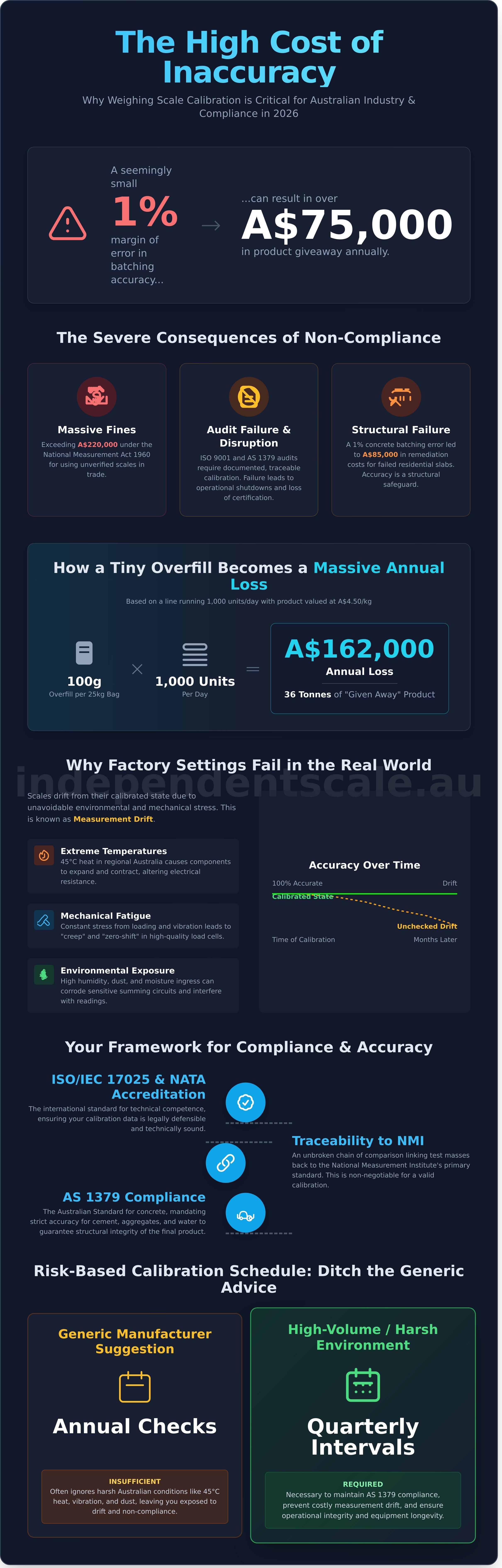
A 1% margin of error in batching accuracy can result in over A$75,000 of product giveaway annually for a high-volume Australian concrete plant. Faulty weighing scale calibration is not merely a technical glitch; it's a financial drain and a primary cause of audit failure under AS 1379. You recognize that precision is the foundation of your operational integrity and trade certification. Maintaining these standards requires more than just a cursory check; it demands a rigorous adherence to National Measurement Institute requirements.
This guide provides the definitive technical framework to master NATA accreditation protocols and ISO/IEC 17025 standards. You'll gain the expertise needed to ensure your industrial systems remain accurate and fully compliant through 2026. We'll detail the implementation of gravimetric method calibration, the role of summing circuits in system stability, and proactive maintenance strategies that eliminate downtime. We'll also examine the specific documentation required for Trade Use certification to ensure your plant avoids the penalties and operational disruptions associated with non-compliance.
Key Takeaways
- Understand the mandatory compliance requirements of ISO/IEC 17025 and NATA accreditation for Australian industrial operations.
- Learn to select the optimal weighing scale calibration method, comparing high-precision gravimetric techniques against traditional known weight standards.
- Identify the financial implications of measurement drift and how to prevent costly overfilling or structural integrity failures.
- Establish a robust maintenance framework using a structured inventory audit and risk-based assessment of your weighing assets.
- Gain technical insights into AS 1379 compliance to ensure your facility meets the specific accuracy benchmarks required for Australian heavy industry.
Understanding the Critical Role of Weighing Scale Calibration in 2026
Industrial calibration is the systematic comparison of a device's performance against a known, traceable standard. According to the formal definition of calibration provided by the BIPM, this process establishes a relationship between the measurement values provided by standards and the corresponding indications of the instrument. For Australian industrial operators in 2026, weighing scale calibration is the baseline for operational solvency. Measurement drift occurs when load cells lose accuracy due to constant mechanical stress. A deviation as small as 0.5% can lead to A$12,000 in lost product over a single quarter for a mid-sized grain handler.
Reliance on factory settings is a common failure point. Standard configurations are calibrated in controlled environments that don't reflect the 45°C heat or high humidity found in regional Queensland or Western Australian mining sites. Load cells are precision transducers that degrade through mechanical fatigue and environmental exposure. Even high-quality stainless steel cells are susceptible to "creep" and zero-shift over time. Temperature fluctuations cause the internal components to expand and contract, which alters the electrical resistance of the strain gauges. Without regular weighing scale calibration, these physical shifts go undetected, resulting in compromised batching accuracy and increased waste.
This isn't just a technical glitch; it's a direct hit to the bottom line. Overfilling a single 25kg bag by 100g across a production line running 1,000 units a day results in 36 tonnes of "given away" product annually. At a market value of A$4.50 per kg, that's a A$162,000 loss that could've been prevented by a standard calibration service. Accuracy is the difference between a profitable year and an unexplainable deficit.
The Consequences of Non-Compliance
Trade-use applications in Australia are governed by strict National Measurement Institute (NMI) regulations. Using unverified scales for commercial transactions can result in fines exceeding A$220,000 under the National Measurement Act 1960. ISO 9001 systems require documented calibration to pass audits. In a 2024 Sydney case, a 1% batching error led to structural failures in three residential slabs, requiring A$85,000 in remediation. Compliance isn't optional; it's a legal and structural safeguard.
Frequency: How Often Should You Calibrate?
Calibration intervals should follow a risk-based approach. Generic manufacturer recommendations often ignore the 45°C heat and dust found in regional Australia. For high-volume sites, quarterly intervals are necessary to maintain AS 1379 compliance. While regulatory standards might suggest annual checks, environmental factors like vibration and moisture in 2026 industrial sites demand more frequent verification to prevent measurement drift and ensure equipment longevity.
NATA Accreditation and Compliance: Navigating ISO/IEC 17025 and AS 1379
In the Australian industrial sector, NATA accreditation is the definitive benchmark for technical competence. It's not just a badge of quality; it's a rigorous validation of a laboratory's ability to produce consistent, accurate results. The cornerstone of this accreditation is ISO/IEC 17025. This international standard governs the general requirements for the competence, impartiality, and consistent operation of laboratories. While ISO 9001 focuses on management, this standard specifically targets technical proficiency. For a professional weighing scale calibration, compliance with these guidelines ensures that the measurement data is legally defensible and technically sound.
Traceability is the most critical component of a valid calibration. Every test mass used during the process must have its own certificate of calibration, linking it back to the national primary standard held by the National Measurement Institute (NMI). Without this unbroken chain of comparison, a calibration certificate holds no weight in a legal or regulatory audit. Independent Scale Service utilizes traceable masses to verify that equipment performs within specified tolerances, protecting businesses from the risks associated with measurement errors.
AS 1379 Compliance for Concrete Batching
AS 1379 serves as the Australian Standard for the specification and supply of concrete. It mandates that all weighing systems within a batching plant operate with high precision to guarantee the structural integrity of the final product. Accuracy requirements for cement, aggregates, and water are strict, often requiring tolerances within ±2%. Integrating concrete batching plant calibration into your annual compliance calendar is the only way to meet these obligations. With over 30 years of experience, we currently service 98% of concrete plants across Sydney. Our technicians conduct periodic verification and independent auditing, providing the documented evidence required to maintain plant certification and satisfy Tier 1 contractors.
The NATA Endorsed Report
A NATA endorsed report provides more than just a "pass" or "fail" result. It includes the "uncertainty of measurement," which is a calculated value representing the range within which the true value lies. This data is essential for high-precision industries where even a 0.1% deviation can lead to significant financial loss. By analyzing these reports over time, plant managers can use calibration data to predict equipment failure. For example, a steady increase in measurement uncertainty often signals a failing load cell or a compromised summing circuit.
Modern compliance management relies on digital record-keeping. Cloud-based tracking allows for instant access to historical certificates, making it easier to demonstrate weighing scale calibration history during snap audits. This level of transparency is vital for companies working on major infrastructure projects where compliance gaps can lead to immediate site bans. If your current documentation doesn't provide this level of detail, it's time to upgrade your calibration service provider to ensure your operations remain fully compliant with Australian standards. Maintaining these records helps avoid the A$10,000+ fines associated with non-compliant measurement equipment in regulated industries.
Technical Methods: Gravimetric vs. Known Weight Calibration
Selecting the correct weighing scale calibration method depends on the system capacity and the physical constraints of the installation. The gravimetric method is the primary solution for high-capacity systems where using physical masses is logistically impossible. This process utilizes water and high-precision flowmeters to determine weight based on mass-volume calculations. It provides a practical way to verify the accuracy of large vessels by measuring the mass of liquid added to the tank. This technique is essential for liquid flowmeter calibration in chemical and concrete processing sectors, where volumetric accuracy directly impacts product quality and AS 1379 compliance.
Traditional known weight calibration remains the industry standard for platform scales, bench scales, and weighbridges. This method uses certified, traceable test weights to verify accuracy across the device's full operating range. Technicians apply these weights in specific increments to identify errors in linearity or repeatability. Adhering to NIST Handbook 44 requirements ensures that these weighing devices meet the strict tolerances required for trade and industrial applications. While gravimetric methods suit large volumes, physical weights offer the highest level of primary traceability for standard industrial equipment.
Effective calibration involves more than just adjusting the digital display. Technicians must perform diagnostic testing on summing circuits and surge arrestors. A faulty summing circuit can cause a 5% to 10% variance between individual load cells, leading to significant batching errors. Surge arrestors are equally critical; they protect sensitive electronics from voltage spikes and lightning strikes, which are common in outdoor silo environments. Testing these components during weighing scale calibration prevents unexpected electronic failures and extends the lifespan of the weighing system.
On-Site vs. Laboratory Calibration
Large-scale tank and silo weighing assemblies require on-site calibration to account for environmental factors like wind loading, thermal expansion, and pipe stiffness. Independent Scale Service (ISS) manages on-site service windows to align with scheduled maintenance, effectively minimising production downtime. For portable indicators or force gauges, sending equipment to a NATA-accredited lab is the preferred route. Lab environments provide the controlled conditions necessary for ISO/IEC 17025 compliance, ensuring the highest precision for high-accuracy instruments. ISS currently services 98% of concrete plants across Sydney, providing the technical expertise required for these complex on-site environments.
Load Cell Integrity and Calibration
Technicians evaluate load cells for three critical performance markers: linearity, hysteresis, and repeatability. Linearity ensures the scale records accurately from zero to full capacity, while hysteresis checks if the scale returns to the same value when weight is removed. Fault diagnosis during the calibration process identifies issues like moisture ingress or internal drift before they cause a total system shutdown. The relationship between mechanical mounting and electronic accuracy is absolute; a misaligned mount or a "bound" assembly can degrade system accuracy by 2% or more. Correcting these mechanical issues is a fundamental part of a professional calibration service.
Building a Proactive Maintenance and Calibration Schedule
Relying on reactive repairs leads to unplanned downtime and regulatory non-compliance. A structured schedule ensures every asset performs within specified tolerances. For Australian concrete producers, adhering to AS 1379 requirements isn't optional; it's a core operational necessity. Follow these five steps to establish a professional calibration framework.
- Step 1: Inventory Audit. Document every weighing asset across the facility, from 20kg laboratory scales to 100-tonne weighbridges. Assign each unit a unique ID and define its required accuracy tolerance based on its specific role in the production chain.
- Step 2: Risk Assessment. Evaluate each asset based on usage frequency and environmental exposure. A scale weighing 500 batches a day in a corrosive environment requires more frequent intervention than a backup unit in a climate-controlled lab.
- Step 3: Pre-Calibration Inspections. Technicians must perform mechanical checks before formal testing. This includes inspecting for load cell binding, debris buildup under platforms, and structural fatigue in the mounting assemblies. Addressing these issues first prevents failed calibrations.
- Step 4: NATA-Accredited Execution. Perform weighing scale calibration using NATA-accredited procedures. Following ISO/IEC 17025 standards provides the technical assurance required for commercial trade and high-stakes industrial applications.
- Step 5: Data Optimization. Review the historical drift of each asset. If a scale consistently remains within 0.1% of its target over 18 months, you may consider extending the interval. If it drifts significantly every quarter, increase the service frequency to prevent out-of-tolerance batches.
This structured approach to maintenance and accuracy isn't limited to industrial machinery. Applying similar principles to personal health and weight management can also yield significant benefits. For those in the UK exploring clinically-supported programs, you can learn more about foundry.
Signs Your Scale Needs Immediate Recalibration
Waiting for a scheduled date is risky if equipment shows signs of failure. Watch for zero-point drifting where the scale fails to return to 0.00 after unloading. Erratic or "hunting" readings on indicators and displays often signal electrical interference or failing components. Physical damage to cable shielding or moisture ingress in junction boxes will cause immediate accuracy loss. If customer complaints regarding short-weight deliveries increase by even 3%, treat it as a systemic weighing failure.
Emergency 24x7 Response Strategy
In heavy industry, an hour of downtime is a direct hit to the bottom line. For a major infrastructure project, a scale failure can cost upwards of A$18,000 per hour in wasted materials, transport delays, and idle labour. This makes a 24x7 emergency response partner a critical business contingency. Don't wait for a breakdown to establish a relationship. Ensure your site is ready for rapid response technicians by maintaining clear access to all weighing vessels and keeping critical spares on-site. Professional weighing scale calibration and repair services should arrive with the equipment necessary to restore operations immediately.
Minimise your downtime and ensure total compliance with our expert team. Book a NATA-accredited calibration audit today.
Why Independent Scale Service is the Partner for Industrial Calibration
Independent Scale Service (ISS) brings over 30 years of specialized experience to the Australian heavy industry sector. We understand that precision isn't just a goal; it's a regulatory requirement. Our team maintains NATA accreditation to ISO/IEC 17025, ensuring every weighing scale calibration meets the highest international standards. We specialize in full AS 1379 compliance, which is a critical factor for the construction and materials handling sectors where batch accuracy determines final product quality and structural integrity.
In the Sydney metropolitan area, 98% of concrete plants rely on ISS for their calibration and maintenance needs. This dominant market share is built on a foundation of reliability and technical competence. We provide a comprehensive service model that covers the entire equipment lifecycle. Our technicians handle the supply, installation, and ongoing calibration of industrial hardware. Because industrial failures don't follow a 9-to-5 schedule, we provide 24x7 emergency repairs to minimize client downtime. If a load cell fails or a system drifts out of tolerance, we deploy immediately to rectify the issue.
Our approach to weighing scale calibration utilizes the gravimetric method and high-precision test masses to ensure absolute accuracy. We don't just provide a certificate; we provide a technical audit of your weighing infrastructure. This includes checking summing circuits, surge arrestors, and mounting assemblies for signs of wear or environmental damage. By identifying these issues during a scheduled calibration, we prevent the catastrophic failures that halt production lines and lead to expensive material waste.
Expertise Across All Industrial Weighing Assets
Our technical capabilities extend across the entire industrial spectrum. We handle everything from hopper calibration for bulk materials to complex, multi-silo weighing systems. For precision engineering and manufacturing environments, we provide NATA endorsed force gauge calibration services. This level of technical rigor is why ISS is the authorized service partner for major industry players like Holcim, Boral, and Hanson. We manage their critical assets to ensure every gram is accounted for and every batch meets Australian Standards.
Get a Professional Calibration Quote Today
Maintaining accuracy in aging infrastructure requires more than routine checks. We provide professional consultations on upgrading legacy weighing systems to modern digital load cells. These upgrades often result in a 15% increase in weighing speed and significant reductions in raw material variance. You can request a site-specific calibration and maintenance proposal that aligns with your specific production volume and compliance needs. Our proposals are transparent, itemized, and focused on long-term asset reliability. Contact Independent Scale Service for NATA-accredited calibration to secure your facility's accuracy and compliance today.
Secure Your Industrial Compliance and Accuracy for 2026
Maintaining rigorous standards for weighing scale calibration ensures your facility remains competitive and fully compliant with the AS 1379 mandate. Precision isn't just about measurement; it's a technical requirement enforced by ISO/IEC 17025 standards that dictate every aspect of industrial output. Independent Scale Service currently manages compliance for 98% of concrete plants across Sydney, delivering the authoritative expertise required for both gravimetric and known weight methodologies. Our technicians understand that equipment failure results in immediate revenue loss. That's why we provide 24x7 emergency support to keep your production lines moving without interruption.
Relying on a NATA-accredited partner guarantees your scheduled maintenance meets every regulatory benchmark. We've spent over 30 years refining our processes to support Australia's most demanding industrial environments, from local sites to major plants. It's time to solidify your maintenance strategy and protect your operation from the high costs of non-compliance. You can depend on our methodical approach to keep your equipment accurate and your business certified. We're ready to help you maintain peak operational performance throughout the year.
Book Your NATA-Accredited Calibration Service
Frequently Asked Questions
What is the difference between scale calibration and verification?
Calibration determines the accuracy of a scale by comparing its readings against a traceable standard, while verification is a legal requirement for trade use. Verification ensures the scale meets National Measurement Institute (NMI) standards for buying and selling goods by weight. ISS provides both services to ensure your equipment remains compliant with Australian trade laws.
How often does AS 1379 require concrete batching plants to be calibrated?
AS 1379-2007 mandates that weighing systems in concrete batching plants undergo calibration at least every 6 months. This 26-week interval is critical for maintaining the structural integrity of concrete mixes. ISS currently services 98% of concrete plants across Sydney, ensuring they meet these strict Australian Standards for accuracy and repeatability.
Can I calibrate my own industrial scales using standard weights?
You can perform internal checks, but a formal weighing scale calibration must be conducted by a NATA-accredited technician to be legally and technically valid. Internal weights often lack the necessary traceability or certification required for ISO/IEC 17025 compliance. ISS technicians use certified Class F1 and M1 weights to provide the precision your industrial operations demand.
What information must be included on a NATA-accredited calibration certificate?
A NATA-accredited certificate must feature the NATA endorsement logo and the laboratory's specific accreditation number. It includes the instrument's serial number, the environmental temperature during the test, and the specific measurement uncertainty. These documents provide the technical proof needed for ISO 9001 audits and regulatory inspections.
How long does a typical on-site industrial scale calibration take?
A standard on-site calibration for a single platform scale typically takes between 45 and 75 minutes. For larger installations like 40-tonne weighbridges or complex batching hoppers, the process extends to 4 or 6 hours. Our 24x7 emergency service team prioritises efficiency to ensure your production downtime remains below 5% during scheduled maintenance.
What happens if my weighing scale fails a NATA calibration test?
If a scale fails, the technician will identify the fault, perform necessary adjustments, and re-test the unit. ISS technicians arrive with fully stocked service vehicles to handle immediate repairs on load cells or summing circuits. We don't leave your site until the equipment provides accurate readings that fall within the specified tolerances.
Is NATA accreditation mandatory for all industrial scales in Australia?
NATA accreditation isn't legally required for every scale, but it's essential for any business operating under ISO/IEC 17025 or AS 1379 frameworks. If your data's used for quality control, safety, or high-precision manufacturing, NATA-endorsed calibration is the only way to prove technical competence to auditors. It's the gold standard for industrial reliability in Australia.
How do environmental factors like heat affect load cell calibration?
Temperature changes cause load cell materials to expand, which creates zero drift and affects measurement linearity. A 15-degree Celsius increase in a warehouse can shift accuracy by significant margins if the system isn't compensated. Regular weighing scale calibration accounts for these environmental shifts, ensuring your load cells maintain a 0.1% accuracy grade regardless of seasonal heat.
