


Concrete Plant Inspection Checklist: What to Check and Record
A clean-looking batching plant can still produce inaccurate batches. A practical concrete plant inspection checklist helps operators look beyond visible condition and spot faults that could affect weighing accuracy or interrupt production.
Routine checks are essential, but they aren’t the same as calibration. An inspection can reveal damaged components, material build-up, unusual readings and other signs that need attention. It cannot, by itself, confirm that a weighing system measures accurately. Keeping those checks distinct makes it easier to decide whether the next step is maintenance, repair or calibration.
This guide sets out a repeatable inspection sequence for key plant equipment and weighing-system components. You’ll learn what to check, what details to record and how to prioritise defects for follow-up. It also explains how to distinguish condition observations from calibration evidence, so inspection records support clear decisions rather than creating false confidence. When findings point to a weighing issue, specialist calibration or repair provides the appropriate technical follow-up.
Key Takeaways
- Use a concrete plant inspection checklist to follow a consistent route across bins, conveyors, mixers and weighing equipment.
- Record observable condition and operating behaviour clearly, without treating routine observations as proof of measurement accuracy.
- Separate condition checks, maintenance diagnosis and calibration evidence so each finding leads to the right next step.
- Document defects with factual notes, assign corrective action and track each item through to close-out.
- Erratic readings, damaged components and recurring faults can indicate a need for specialist calibration or repair.
What a Concrete Plant Inspection Checklist Should Cover
A concrete plant inspection checklist is a structured condition check. It gives operators a consistent way to observe equipment, identify visible defects and note unusual operating behaviour. It is not calibration or certification: completing the checklist does not demonstrate that a weighing system measures accurately or meets a specified standard.
Set the checklist scope around three areas: plant condition, safe operation and weighing-system observations. Follow site procedures and equipment manufacturer instructions, including any limits on access or inspection while equipment is operating. Set inspection frequency according to site procedures, equipment requirements and operating conditions. Don’t assume one schedule applies to every plant. Check the relevant instructions and documented requirements when setting the interval.
Which plant areas belong on the checklist?
Include equipment and material paths that affect batching and production. A concrete plant can have different layouts, so adapt the inspection route to the actual configuration rather than relying on a generic equipment list.
- Aggregate bins and conveyors: Look for visible damage, build-up, obstruction, spillage or abnormal movement that could affect material flow.
- Mixers: Observe accessible components for wear, residue, damage, unusual noise or movement during operation.
- Cement handling and water systems: Check for visible leakage, blockages, contamination or other conditions that may disrupt material delivery.
- Batching controls and weighing equipment: Note display faults, inconsistent or erratic readings, visible damage, and issues around accessible load cells, mounts, cables, enclosures or connections.
Record what is visible without opening enclosures or bypassing safeguards. Inspect guards, access ways and emergency arrangements according to the site safety procedure. If a condition makes the check unsafe, stop and follow the site’s escalation process instead of proceeding.
What an inspection can, and cannot, establish
A visual and operational check can flag deterioration, obstruction, contamination or a change in behaviour. For example, an operator might record that a display fluctuates during a batch, a conveyor appears obstructed or a weighing-system component is visibly damaged. These observations are useful because they show what needs investigation, but they don’t establish the cause or quantify measurement error.
Keep operator notes separate from technical testing, adjustments and formal calibration records. A completed checklist is not evidence that a scale or load cell is within tolerance, nor does it confirm calibration status. Where findings point to a weighing-system concern, specialist concrete batching plant calibration and repair provides technical follow-up. The inspection remains a routine condition check, not a substitute for that work.
Concrete Plant Checklist: Checks for Bins, Conveyors, Mixers, and Weighing Systems
Follow the same route through the plant each time so checks are consistent and omissions are easier to spot. Adapt the route to the plant layout and site procedure. The concrete plant inspection checklist should prompt operators to record observable conditions and behaviour, not make unverified claims about accuracy or acceptable tolerances.
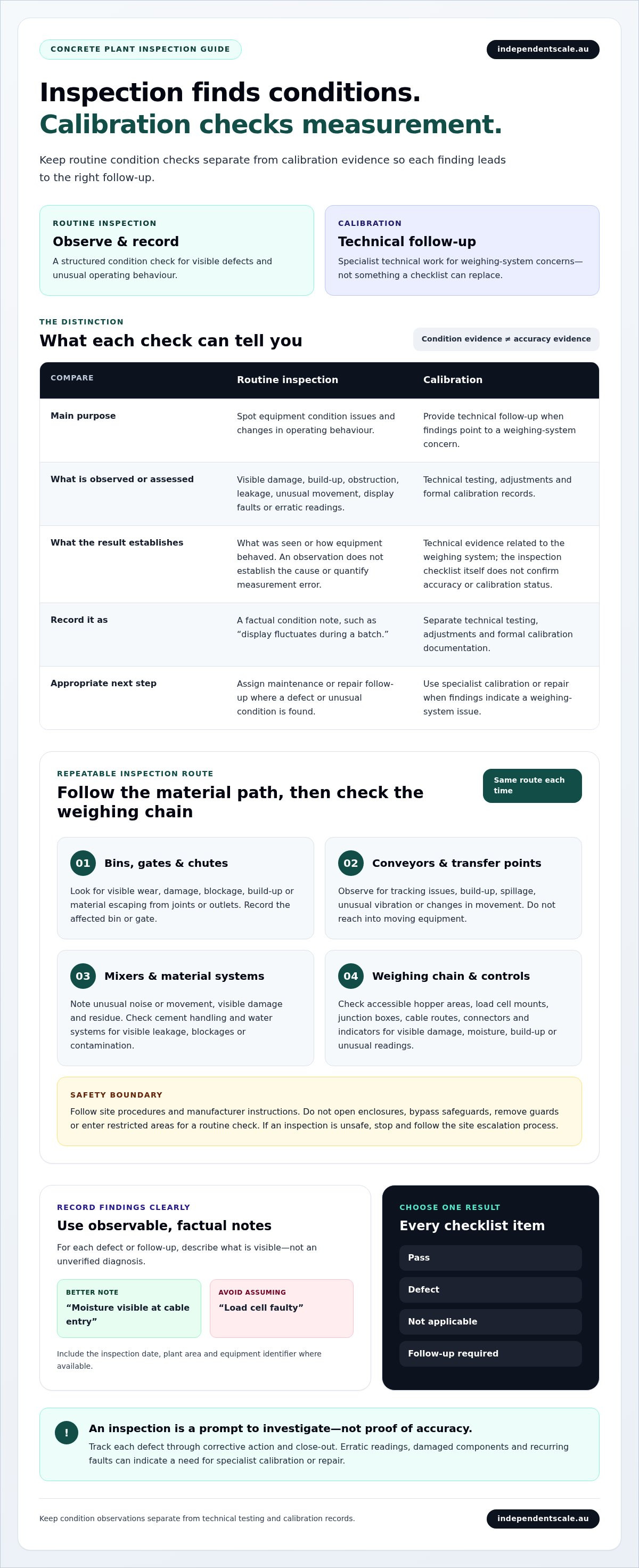
Use a clear result for every item: Pass, Defect, Not applicable or Follow-up required. Add a factual note for any defect or follow-up, such as “moisture visible at cable entry” rather than “load cell faulty”. Include the inspection date, plant area and equipment identifier where available. This gives the next operator or maintenance technician useful context.
Inspect material handling and batching equipment
Work along the material path, from storage through delivery to mixing. Note visible changes and operating behaviour, including dust accumulation, moisture, vibration, material build-up, obstruction or leakage. These conditions may affect operation or warrant closer examination, but an observation alone doesn’t establish the cause.
- Bins, gates and chutes: Look for visible wear, damage, blockage, build-up or material escaping from joints or outlets. Record which bin or gate is affected.
- Conveyors: Observe the belt and accessible transfer points for tracking issues, build-up, spillage, unusual vibration or changes in movement. Don’t reach into moving equipment.
- Mixers: Note unusual noise or movement, visible damage, and residue that may interfere with operation or cleaning.
- Guards and access: Record damaged or displaced guards, obstructed access ways and other hazards through the site’s established safety reporting process.
Inspect equipment only under the conditions permitted by site procedures. Don’t remove guards or enter restricted areas to complete a routine check.
Inspect the weighing chain and visible components
Check accessible parts around hoppers, load cell mounts, junction boxes, cable routes, connectors and indicators. Follow the installation layout and site instructions. The NRMCA plant inspection process provides another reference for plant inspection, including batching systems and measuring devices.
- Note visible damage, fouling, movement, corrosion, moisture ingress or material build-up around weighing components and mounts.
- Look for exposed, pinched or deteriorated cables and signs of damage to accessible enclosures or connectors. Don’t open electrical enclosures as part of a visual check.
- Confirm that indicators and displays power on and show the expected operating information. Record blank screens, error messages, fluctuating displays or other anomalies without assigning a cause.
Identify the affected component in the record so follow-up can be targeted. Operators tracing a finding to the relevant load cell and weighing assembly components can make the inspection note more useful for subsequent technical assessment.
Routine Inspection vs Calibration: What Each Check Can Tell You
A routine check, maintenance diagnosis and calibration answer different questions. A concrete plant inspection checklist helps operators notice and document visible condition or operating changes. It doesn’t prove that a weighing system is accurate. Calibration assesses measurement performance through an appropriate documented process, while maintenance diagnosis investigates a fault and determines what action may be needed.
Use this distinction when deciding how to respond to a finding:
| Activity | What it can establish | What it does not establish |
|---|---|---|
| Routine condition check | Visible damage, build-up, obstruction, unusual behaviour or a change that warrants attention. | Measurement accuracy, the cause of a fault or current calibration status. |
| Maintenance diagnosis | Whether a reported symptom is linked to a component fault or condition requiring corrective work. | Calibration status, unless measurement performance is also assessed and documented through a suitable process. |
| Calibration | Measurement performance assessed and recorded using an appropriate procedure and equipment. | General plant condition, safe access or the condition of unrelated equipment. |
These activities can inform one another, but they aren’t interchangeable. A completed checklist is not calibration evidence or, on its own, proof of compliance. Keep inspection observations, maintenance findings and calibration records distinct so each record shows what was checked and what the result means.
When should an inspection finding trigger technical follow-up?
Escalate inconsistent readings, unstable indications, visible damage around weighing components or faults that recur after being reported. Record the affected component, operating condition, observed symptom and time of discovery. For example, “hopper display fluctuated during batching; observed at start of shift” is more useful than “scale faulty.” Don’t make adjustments or attempt repairs unless authorised and trained to do so under site procedures.
How calibration fits into concrete plant assurance
Calibration focuses on how the weighing system measures. It doesn’t assess guards, access ways or overall plant condition, and it doesn’t replace routine inspection. The appropriate calibration timing depends on applicable requirements, site procedures, equipment instructions and relevant operating conditions. Don’t assume a universal interval. Keep the calibration result and supporting documentation with the site’s records, separate from routine inspection notes.
For concrete batching plants, calibration is a specialist follow-up when scheduled requirements or inspection and operating evidence indicate that measurement performance needs assessment. Independent Scale Service provides concrete plant calibration and repair, with calibration services NATA accredited to ISO/IEC 17025 and concrete plant work compliant with AS 1379. Calibration assesses weighing-system performance, while routine checks remain part of ongoing site practice.
How to Complete, Record, and Escalate Inspection Findings
A repeatable workflow turns an inspection into a record that supports clear decisions. Use the site’s approved paper form or digital system, provided it preserves traceability and follows site procedures. A concrete plant inspection checklist should make clear what was checked, what was observed and who is responsible for follow-up.
- Prepare: Review the inspection route, relevant site procedure and equipment instructions. Identify the plant areas to check and confirm any access or operating restrictions before starting.
- Inspect: Follow the established route. Record the condition observed at each item and mark it as pass, defect, not applicable or follow-up required.
- Record: Enter the date, time, plant or asset identification, inspector and operating status. Describe the observation in plain, factual language.
- Assess: Decide whether the finding presents an immediate safety concern, needs planned maintenance or warrants weighing-system assessment. Follow site risk controls rather than guessing at a fault’s severity.
- Assign: Send the finding to the responsible role, note the required action and track its status through the site process.
- Close out: Record the action taken and evidence that supports closure. Keep repair, retest or calibration results as separate records linked to the original finding.
What information should each checklist record?
Make each entry specific enough for another operator or maintenance technician to understand without a verbal explanation. Identify the asset and location, state the operating condition, then describe what was seen or heard. For example, record “visible moisture at the junction box cable entry” rather than “electrical problem.” Add supporting images only where site procedures permit them, and make sure they identify the relevant component without creating a safety or privacy issue.
Include the responsible role, action status and closure evidence. A paper log or digital record can both work. The essential requirement is that entries remain legible, retrievable and linked to the correct asset and follow-up. Don’t overwrite the original observation when action is completed. Add a dated update so the record preserves the sequence from finding to resolution.
How should teams prioritise and close out defects?
Escalate an immediate hazard through site safety procedures before routine production follow-up. For other defects, use site risk controls, equipment criticality and operational impact to determine priority. A visible guard issue, recurring unstable indication and minor surface build-up may require different responses. Record the reason for the priority and the role assigned, rather than relying on an unexplained label.
Close an item only when the assigned action has been completed and recorded. If a repair is followed by a retest or calibration, retain that outcome separately from the initial inspection note. When a finding concerns weighing performance, concrete plant weighing-system calibration or repair is a technical follow-up to the inspection record.
When Concrete Plant Inspection Findings Need Calibration or Repair
An inspection finding is a signal to assess, not a diagnosis. Unstable readings or damaged weighing components may justify technical investigation, but they don’t automatically prove calibration failure or non-compliance. The right response depends on the symptom, plant configuration and documented requirements. Use checklist notes to show what happened and under what conditions, then route the finding for appropriate assessment.
Consider technical follow-up if an issue recurs, affects batch operation or involves a weighing-system component. A one-off display anomaly may need a different investigation from persistent fluctuation or visible damage to a load cell mount. Compare the finding with the plant’s normal operating behaviour and relevant site records, but don’t infer measurement accuracy from appearance alone.
What weighing-system symptoms deserve investigation?
Record symptoms that suggest the weighing chain may need closer assessment. These include readings that fluctuate unexpectedly, fail to settle or behave differently from normal operation. Note suspected mechanical interference, material caught around a hopper, visible load cell damage, cable deterioration or an indicator fault. State what the display showed and whether the symptom was continuous, intermittent or observed under a particular operating condition.
Don’t alter calibration settings, bypass components or attempt repairs unless the task is authorised and covered by the relevant technical procedure. If the cause isn’t clear, preserve the observation and escalate it to the responsible technical role. A complete concrete plant inspection checklist entry supports that assessment by identifying the affected asset, symptom and circumstances without presenting the operator’s observation as a confirmed fault.
How specialist calibration and repair support plant reliability
Calibration investigates measurement performance through a documented technical process. Repair addresses an identified fault or damaged component. Depending on the evidence, a specialist assessment can establish whether calibration, repair or further investigation is appropriate. Record the outcome separately from the original inspection finding so the site retains a clear account of both the observed symptom and the technical result.
Independent Scale Service provides calibration and repair support for concrete batching plant weighing systems. Its concrete plant calibration and repair work is compliant with AS 1379, and its calibration services are NATA accredited to ISO/IEC 17025. These are distinct points: AS 1379 relates to the described plant service, while NATA accreditation applies to calibration services. Specialist work complements routine inspection; it doesn’t replace it.
When findings indicate that weighing performance needs investigation, concrete plant calibration and repair services provide a technical next step. Keep the inspection record available so the symptom and operating context can inform the assessment.
Discuss concrete plant calibration or repair support when inspection findings point to a weighing-system concern.
Turn Inspection Records Into Your Next Reliability Decision
A consistent inspection record can do more than close out an individual defect. Over time, recurring observations can help your team recognise patterns and decide where technical assessment may be warranted. Use the concrete plant inspection checklist as part of that process, and keep its findings connected to site maintenance and weighing-system records.
If an inspection points to a weighing concern, a specialist assessment can help determine whether calibration or repair is appropriate for the plant and its documented requirements. Independent Scale Service supports concrete batching plant calibration and repair across Sydney, Melbourne and regional Australia.
Arrange concrete plant calibration or repair support when inspection findings need technical follow-up. A clear record and the right assessment help your team make informed decisions about plant operations.
Frequently Asked Questions
How often should a concrete batching plant be inspected?
Set inspection frequency using the plant manufacturer’s instructions, site procedures, operating conditions and any applicable requirements. A plant working in dusty or wet conditions may need a different inspection plan from equipment in a more controlled environment. Document the chosen schedule and its basis, then review it if operating conditions change or defects recur. Don’t assume a single interval suits every plant.
Does AS 1379 specify a concrete plant inspection checklist?
Don’t assume AS 1379 prescribes one universal operator checklist or inspection schedule. The standard is relevant to concrete production, but exact obligations depend on applicable requirements and context. Check the current standard and the plant’s documented procedures before describing a particular checklist item as mandatory. A site may use its own structured form to record condition checks while keeping those records distinct from calibration evidence.
Can a batching plant keep operating if a load cell reading is unstable?
Not automatically. An unstable reading can affect confidence in batching measurements, so follow site operating and escalation procedures and notify the responsible supervisor. The decision to continue, pause or restrict production depends on the symptom, plant configuration, risk controls and documented requirements. Don’t compensate by changing settings or estimating weights. Record the affected hopper and display behaviour so an authorised technical assessment can determine the next step.
What should an operator record when a concrete plant inspection finds a defect?
Record the asset identifier, location, discovery time, operating state and the defect’s observable details. For a hopper issue, note whether it was empty or receiving material and describe where build-up or damage appeared. Include a batch or production reference if site procedures use one to trace potential impacts. Preserve the original entry if the record is updated later, and link follow-up evidence rather than replacing the initial observation.
Can a routine plant inspection confirm that batching measurements are accurate?
No. A concrete plant inspection checklist can identify visible problems or unusual behaviour, but it cannot establish measurement accuracy just because every item is marked satisfactory. For example, an intact load cell mount does not prove that the weighing system is measuring correctly. Accuracy needs to be assessed through an appropriate technical process, with the result documented separately. Use inspection findings to indicate when that assessment may be needed.
What environmental conditions can affect concrete plant weighing equipment?
Dust and material build-up can obstruct moving parts or collect around weighing components. Moisture may contribute to contamination or deterioration, while vibration can coincide with unstable indications or affect equipment behaviour. These conditions don’t prove a fault on their own. Record where and when they’re observed, including whether a symptom changes with plant operation, then follow site procedures for cleaning, maintenance or technical investigation.
What should be checked after weighing equipment has been repaired?
Confirm that the repair has been documented and that any required post-repair functional checks or calibration have been completed by authorised personnel. Review the recorded outcome, equipment identity and any limitations or actions noted in the technical report. Before returning the system to normal use, follow site procedures for release and production checks. Keep the repair record linked to the original defect so the equipment history remains traceable.
