


Concrete Batch Plant Audit Preparation: The AS 1379 Compliance Guide
A single failed audit can halt your entire production line, yet many facilities still rely on non-accredited checks that don't meet the rigorous demands of Australian Standards. Effective concrete batch plant audit preparation requires more than just a cursory review of your logs. It demands verifiable, technical precision across every load cell and weighing system in your facility to ensure you're not losing profit through wasted materials or inaccurate batching.
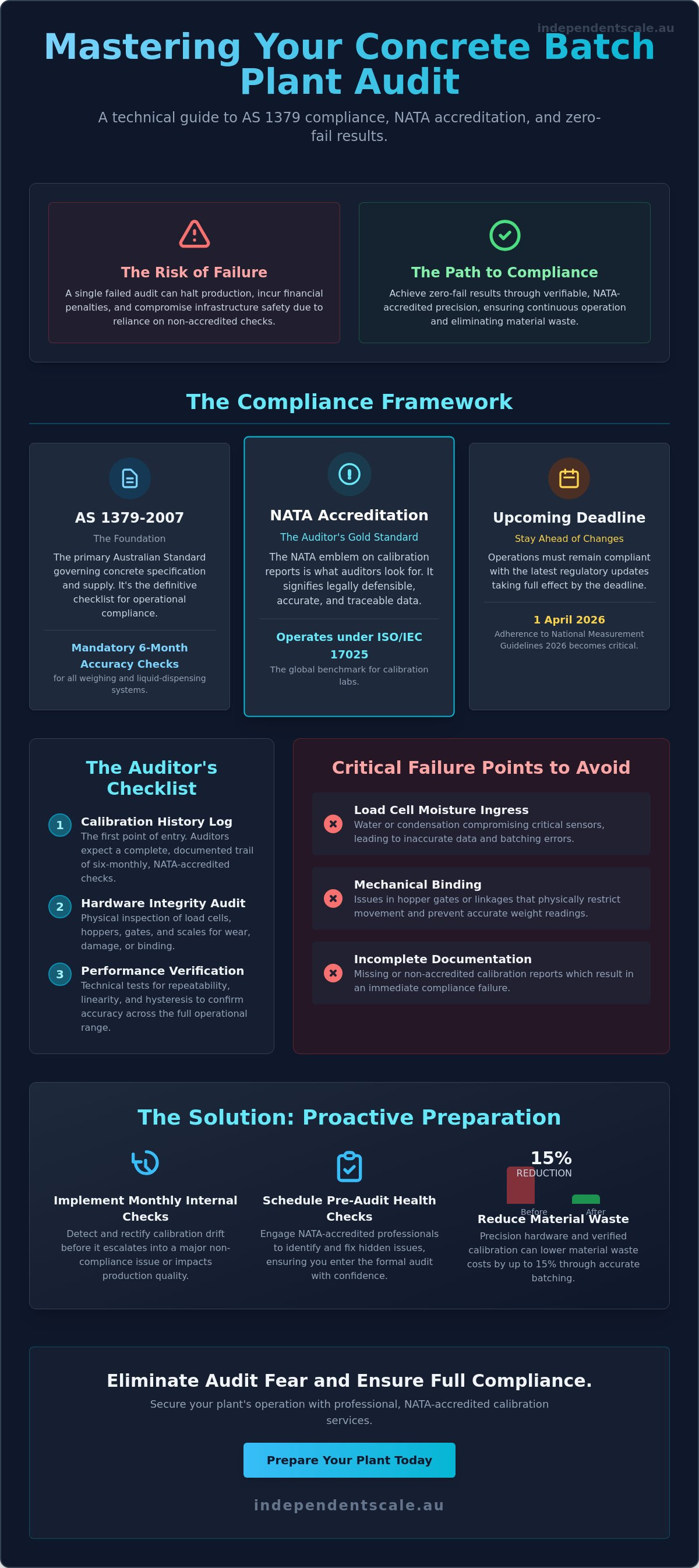
You understand the pressure of maintaining high-volume output while adhering to the mandatory six-month calibration intervals required by AS 1379-2007. This guide provides the technical framework you need to master your next audit through NATA-accredited precision and strict adherence to the National Measurement Guidelines 2026. We'll detail the essential steps for verifying your weighing infrastructure, navigating ISO/IEC 17025 requirements, and securing the accreditation necessary for zero-fail results. By following this methodical approach, you can eliminate the fear of plant downtime and ensure your operations remain fully compliant with the latest regulatory updates taking effect by 1 April 2026.
Key Takeaways
- Understand the technical requirements of AS 1379 and why NATA accreditation is the baseline for verifying weighing accuracy during a plant audit.
- Identify critical hardware failure points, including load cell moisture ingress and mechanical binding in hopper gates, that frequently lead to audit failure.
- Establish a compliant documentation hierarchy by maintaining a comprehensive calibration history log for every scale and dispenser on-site.
- Optimise your concrete batch plant audit preparation by implementing monthly internal checks to detect and rectify calibration drift before it impacts production.
- Learn how pre-audit health checks and professional batching plant calibration can eliminate hidden non-compliance and reduce material waste.
Understanding AS 1379: The Foundation of Australian Concrete Plant Audits
AS 1379-2007 (reconfirmed in 2017) is the primary Australian Standard governing the specification and supply of concrete. It establishes the technical requirements for all materials, plant, and equipment involved in concrete production. For plant managers, this standard serves as the definitive checklist for operational compliance. Adherence isn't merely a quality control preference; it's a regulatory necessity that ensures the structural integrity of every cubic metre of concrete dispatched from your facility. Thorough concrete batch plant audit preparation begins with a technical understanding of how this standard dictates weighing accuracy and equipment maintenance.
The standard mandates that all weighing and liquid-dispensing systems undergo accuracy checks at least every six months. This requirement ensures that Concrete plant components, such as cement weigh hoppers and water meters, function within strictly defined tolerances. Auditors distinguish between "calibration" and "verification" during their inspections. Calibration involves comparing your equipment's measurements against a known reference standard to identify discrepancies. Verification is the subsequent confirmation that the equipment meets the specific legal and technical requirements set out in AS 1379. Without both, your plant cannot demonstrate full compliance.
Key Regulatory Bodies and Accreditations
The National Association of Testing Authorities (NATA) is the authority that auditors rely on to verify technical competence. When an auditor reviews your files, they specifically look for the NATA emblem on your calibration reports. This emblem signifies that the laboratory performing your concrete batching plant calibration operates under the ISO/IEC 17025 standard. ISO/IEC 17025 is the global benchmark for testing and calibration laboratories, ensuring that the data produced is accurate, traceable, and legally defensible. Relying on non-accredited providers creates a significant legal risk, as non-compliant weighing systems can lead to project rejections, financial penalties, and compromised infrastructure safety.
The Audit Cycle: Frequency and Expectations
Third-party auditors from bodies like BSi or QSRMC prioritise the "Calibration History Log" as their first point of entry. They expect to see a documented trail of six-monthly checks that align with the National Measurement Act 1960. While NATA technical assessors may charge an on-site hourly rate of approximately $252.00 for their assessments, the cost of a failed audit is substantially higher due to potential plant downtime. Effective concrete batch plant audit preparation must account for these intervals to avoid last-minute scrambles. AS 1379 compliance in 2026 requires strict adherence to the reconfirmed 2017 standards alongside the updated National Measurement Guidelines 2026 to ensure all dispensing equipment remains within legal tolerances.
The Hardware Audit: Calibrating Hoppers, Scales, and Load Cells
The physical integrity of your weighing systems is the primary focus for any technical assessor. During concrete batch plant audit preparation, you must verify that all mechanical and electronic components are functioning within the narrow tolerances specified by AS 1379. High-precision load cells are the critical sensors in this process. If these sensors provide inaccurate data, the entire batching sequence is compromised, leading to costly material waste or structural non-compliance. Data from industry operations indicates that real-time data analytics and precision hardware can lower material waste costs by up to 15%.
Auditors pay particular attention to hopper calibration because these systems handle the bulk of your raw materials. They look for three specific performance metrics during the testing phase: repeatability, linearity, and hysteresis. Repeatability ensures the scale returns the same value for the same load consistently. Linearity checks the scale's accuracy across its full capacity range. Hysteresis evaluates whether the scale provides consistent readings when loading versus unloading. Any failure in these metrics indicates deep-seated hardware issues or mechanical binding that must be rectified before the audit begins.
Common hardware failure points often stem from the harsh environment of a batch plant. Moisture ingress in cables, damaged insulation, and structural binding caused by concrete buildup are frequent culprits. Regular inspections can identify these issues before they trigger an audit failure or plant downtime.
Load Cell Health and Signal Integrity
Signal "drift" is a common precursor to system failure. This occurs when the zero-point of your scale shifts over time, often due to temperature fluctuations or internal component fatigue. To protect your weighing data, the installation of high-quality junction boxes and surge arrestors is essential. These components shield sensitive electronics from lightning strikes and electrical noise. If a load cell shows signs of permanent deformation or consistent signal instability, immediate replacement is usually more cost-effective than attempted repair to maintain AS 1379 compliance.
Silo and Tank Weighing Assemblies
Outdoor batching plants face unique challenges, specifically thermal expansion. As temperatures rise, steel structures expand; this can apply lateral force to weighing sensors if not properly managed. Ensuring that tank and silo assemblies are free from mechanical interference is vital. You should also inspect shackle pins and special purpose mounts for signs of excessive wear or corrosion. If mechanical binding occurs at the hopper gates, it will create false readings that deviate from the actual material weight. For plants requiring absolute precision, scheduling a professional load cell calibration ensures your hardware remains audit-ready and reliable.
Documentation and the Paper Trail: Meeting Audit Standards
Technical assessors prioritize the "documented system" above all else during an inspection. While hardware performance is vital, if the evidence of that performance isn't recorded correctly, the plant remains non-compliant. Comprehensive concrete batch plant audit preparation relies on a structured hierarchy of documentation: Quality Manuals, Standard Operating Procedures (SOPs), and historical records. Auditors use these files to verify that your facility maintains consistent control over its weighing systems between formal six-monthly calibrations. A missing logbook entry is often treated with the same severity as a mechanical failure.
The "Calibration History Log" is the most critical document in your arsenal. It must contain a chronological record of every scale, meter, and dispenser on-site. When presenting NATA calibration certificates, you must ensure they explicitly state the measurement uncertainty and demonstrate traceability to national standards. Auditors look for the NATA emblem to confirm the data's integrity. They also examine the settings of your digital batching equipment to ensure no unauthorized offsets have been applied to bypass accuracy issues. Modern digital indicators play a dual role here; they provide the operator with real-time data while acting as the primary interface for the digital audit trail.
Standard Operating Procedures (SOPs) for Weighing
Operators must follow a rigid daily zero-check procedure to identify calibration drift before it affects production. This procedure should be documented in your SOPs and signed off daily. Your documentation must also detail a clear fault reporting chain. If a load cell fails, the subsequent repair, recalibration, and verification steps must be logged in sequence. Integrating high-performance indicators and displays into your system simplifies this process by providing clear, loggable data points that satisfy the requirements of the National Measurement Guidelines 2026. Consistency in these records proves to an auditor that your plant is managed methodically rather than reactively.
Traceability and Reference Standards
Traceability is the unbroken chain of comparisons linking your plant's measurements to the Australian primary standards. During concrete batch plant audit preparation, you must verify that any weights used for internal checks are themselves certified. Using uncertified "shop weights" for internal verification is a common pitfall that leads to immediate audit failure. Furthermore, you must maintain precise records of all conditioners and transmitters settings. These components translate raw sensor signals into batching data; any change in their configuration must be documented to maintain the integrity of the weighing chain. If an auditor cannot trace a measurement back to a certified reference, the entire batching history for that period may be called into question.
Common Pre-Audit Pitfalls and How to Rectify Them
Technical compliance often fails not because of major equipment breakdown, but due to minor, overlooked maintenance issues. While the six-monthly NATA-accredited check is a mandatory requirement, concrete batch plant audit preparation must include monthly internal verification to combat "Calibration Drift." This drift occurs when environmental stressors or component aging cause the zero-point of your sensors to shift. If your operators lack a basic understanding of weighing scale calibration, they may fail to identify these shifts until an auditor identifies a significant non-conformance. Internal checks using certified test weights act as an early warning system for your facility.
Mechanical binding is a frequent cause of failed audits that often goes unnoticed during daily operations. This happens when aggregate, cement dust, or hardened concrete buildup prevents a hopper or scale from moving freely through its full range of motion. Environmental factors also play a critical role during the testing phase. High winds can exert lateral force on outdoor silos, while vibration from nearby heavy machinery can destabilize readings on high-precision load cells. You must ensure the plant environment is controlled and all mechanical structures are clear of interference before the technical assessor arrives on-site.
The "Cleanliness" Factor in Weighing Accuracy
Maintaining a clean weighing environment is a technical necessity. You must remove all concrete buildup from load cell mounts, stay bars, and check rods. These structures are designed to stabilize the hopper, but debris can turn them into mechanical bypasses that divert weight away from the sensors. Additionally, inspect all pneumatic lines to ensure they remain flexible and do not exert unintended force on the scale structure. A mere 5mm of hardened debris between a hopper frame and its support can cause a 2% weighing error, which is enough to exceed the strict tolerances of AS 1379.
Electrical and Signal Interference
Signal integrity is just as important as mechanical alignment. Inspect your conduits for moisture ingress and check all cabling for frays or damage. Moisture inside a junction box creates high-resistance paths that mimic signal drift and cause erratic readings. Radio Frequency Interference (RFI) from onsite radios and Electromagnetic Interference (EMI) from large electric motors can also destabilize digital weighing indicators. Implementing proper cable management and ensuring all shields are correctly grounded prevents these issues. To ensure your hardware meets all regulatory requirements, schedule a comprehensive concrete batching plant calibration to identify and rectify hidden signal faults before your next audit.
Streamlining Audit Prep with Independent Scale Service
Independent Scale Service provides the technical expertise required for rigorous concrete batch plant audit preparation. Our team understands that compliance with AS 1379-2007 is non-negotiable for industrial suppliers. We offer specialized concrete batching plant calibration services that meet the exact requirements of NATA and the National Measurement Institute. By engaging our technicians for a pre-audit "health check," you can identify hidden non-compliance issues, such as signal interference or mechanical binding, before they result in a failed audit.
With established service hubs in Sydney and Melbourne, we provide rapid response repair and calibration services to minimize your plant's downtime. We maintain a comprehensive inventory of NATA-ready weighing components to ensure immediate replacement when hardware fails. This proactive approach ensures your facility remains operational and compliant with the updated National Measurement Guidelines 2026. We don't just provide a service; we deliver the technical assurance that your plant will pass its next inspection with zero non-conformances.
Our AS 1379 Compliance Process
Our methodical process begins with a comprehensive site assessment and hardware diagnostic. We inspect every component of the weighing chain, from the physical mounts to the digital conditioners. Following this, we perform precision calibration using certified test weights traceable to national standards. The process concludes with the delivery of audit-ready NATA documentation. These reports clearly demonstrate your plant’s adherence to the mandatory six-month accuracy checks required by Australian Standards. This documentation hierarchy is vital for concrete batch plant audit preparation and serves as your primary evidence of technical competence.
Ongoing Maintenance for Continuous Compliance
Relying solely on the six-monthly audit window is a high-risk strategy for any high-volume facility. We implement scheduled maintenance programs designed to prevent "audit-day surprises" and maintain batching accuracy year-round. Our experts provide ongoing support for load cell testing and digital indicator programming to ensure your systems are optimized for maximum efficiency. Maintaining this level of technical proficiency can lower material waste costs and enhance overall quality control across your production line. Consistency in maintenance leads to consistency in audit results.
Ensure your plant is audit-ready with our NATA-accredited calibration services.
Secure Your Plant's Technical Compliance Status
Success in a regulatory environment depends on the intersection of hardware precision and rigorous documentation. You've seen how AS 1379-2007 requires verifiable six-monthly accuracy checks and how minor mechanical binding can lead to significant weighing errors. Effective concrete batch plant audit preparation ensures your facility is ready for the technical assessor well before they arrive on-site. By maintaining a clear calibration history log and addressing signal drift through monthly internal checks, you eliminate the risk of unexpected plant downtime.
Independent Scale Service is NATA Accredited to ISO/IEC 17025 and brings deep expertise in AS 1379 standards to every site visit. We service Sydney, Melbourne, and regional Australia, providing the specialized calibration and repair services required to maintain your operational edge. Don't leave your accreditation to chance. Book Your AS 1379 Compliance Audit Preparation Now to ensure your weighing systems meet every regulatory benchmark. Your commitment to precision today guarantees a seamless audit tomorrow.
Frequently Asked Questions
What is the difference between AS 1379 and ISO 17025 for concrete plants?
AS 1379 is the product standard for concrete supply, while ISO/IEC 17025 is the laboratory standard for calibration providers. A plant follows AS 1379 to ensure batching accuracy and equipment performance. To prove this accuracy, the plant must use a service provider accredited to ISO/IEC 17025. This ensures that the calibration results are technically valid, legally defensible, and traceable to national measurement standards.
How often should a concrete batching plant be calibrated for compliance?
All weighing and liquid-dispensing equipment must be checked for accuracy at least every six months. This is a mandatory requirement under AS 1379-2007. Regular intervals prevent calibration drift and ensure your concrete batch plant audit preparation is always up to date. Missing this six-month window is a common cause of major audit non-conformances that can halt production across your entire facility.
Can I perform my own calibration for an official audit?
You cannot perform your own calibration for official compliance purposes. Auditors require a NATA-endorsed certificate provided by an accredited laboratory to verify technical competence and traceability. While plant operators should perform daily zero-checks and monthly internal verifications as part of a robust maintenance program, these don't replace the formal six-monthly requirement for third-party NATA calibration. Using uncertified weights for official checks leads to immediate audit failure.
What happens if my concrete plant fails an AS 1379 audit?
Failing an audit usually results in a non-conformance report that requires immediate technical rectification. The plant may lose its certification or be prohibited from supplying concrete to major state or federal infrastructure projects until a successful re-audit occurs. This downtime leads to significant financial losses and reputational damage. Proper concrete batch plant audit preparation identifies these technical risks and hardware failures before the auditor arrives on-site.
Are all load cells NATA accredited by default?
Load cells are hardware components and are not accredited by default. Accreditation applies to the calibration service provided by a specific laboratory. To meet audit standards, your load cells must be calibrated by a provider that holds NATA accreditation to ISO/IEC 17025. This ensures the hardware's performance is verified through a recognized, traceable process that meets the legal requirements of the National Measurement Act.
What specific weighing records does an auditor need to see?
Auditors require the Calibration History Log, NATA-endorsed calibration certificates, and evidence of daily operator zero-checks. They also examine records of any repairs or adjustments made to digital indicators, conditioners, or transmitters. All documentation must demonstrate a clear, unbroken chain of traceability to Australian national standards. If the paper trail is incomplete or lacks the NATA emblem, the plant will fail the audit.
How long does a full plant calibration take to complete?
A full plant calibration generally takes between four and eight hours to complete on-site. This timeframe depends on the total number of hoppers, cement silos, and liquid meters requiring verification. Sites with complex weighing assemblies or restricted access for test weights may require more time. Our technicians focus on efficiency to minimize production downtime while ensuring all components meet the accuracy tolerances specified by AS 1379.
Does Independent Scale Service provide on-site calibration in regional Australia?
Independent Scale Service provides comprehensive on-site calibration services across Sydney, Melbourne, and regional Australia. We understand the logistical challenges faced by regional plants and provide the same level of NATA-accredited expertise to remote sites. Our technicians travel with certified test weights and specialized equipment to ensure your regional facility meets all AS 1379 and National Measurement Act requirements without compromise.
