


Common Concrete Batching Errors: Causes, Checks and Corrective Actions
What if the batch weights are wrong for a reason that has nothing to do with the scales? Common concrete batching errors can stem from material moisture, inconsistent water dosing, equipment faults or incorrect control settings, as well as weighing-system problems. Treating every variation as a calibration issue can send an investigation in the wrong direction and prolong production delays.
When batch weights or concrete consistency change unexpectedly, start by comparing batch records and settings. Then check material condition and equipment for visible issues, following site procedures and safety requirements. These steps can help narrow down whether the likely cause is materials, plant operation, the indicator or the weighing system.
This article outlines frequent batching errors, their likely causes and practical checks operators can make safely. It also explains when an issue may call for load cell testing, indicator diagnosis, concrete batching plant calibration, repair or specialist technical service, so you can escalate with clearer evidence rather than guesswork.
Key Takeaways
- Common concrete batching errors can arise from recipe selection, weighing, material flow or control settings. Classifying the error helps focus the investigation.
- Compare target and delivered quantities to identify whether the pattern points to an incorrect mix selection, outdated setpoint or material-delivery fault.
- Calibration verifies measurement performance, but it may not resolve recipe, flow or control problems. Look for repeatable patterns before deciding what needs attention.
- Use a documented, safety-led investigation: contain affected work, preserve batch records and complete only approved operator checks before escalating.
- Reduce repeat faults by keeping maintenance and configuration records, then setting calibration intervals according to risk, operating conditions, history and applicable requirements.
Common concrete batching errors: symptoms that signal a process problem
A batching error is a deviation in the quantities selected, measured or delivered for a batch. It may begin with an incorrect recipe selection, a data-entry mistake or an outdated control setting. A weighing error occurs when the measured quantity differs from the intended target. Material-flow faults, such as bridging or leakage, can also prevent the target quantity from being delivered as expected.
Concrete plants bring together batchers, storage equipment, mixers and control systems, as outlined in this Concrete plant overview. A fault in one part of the process can produce symptoms elsewhere. An alarm, unusual ingredient use, inconsistent batch records or changing concrete consistency is a reason to investigate, not proof of a specific cause or a compliance breach.
Which concrete batching symptoms should operators record?
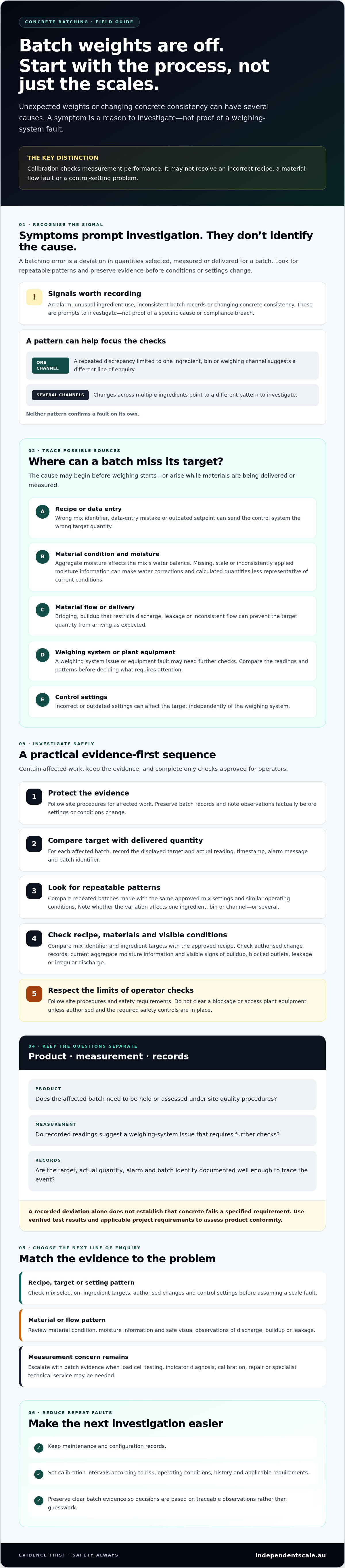
Preserve useful evidence before settings or conditions change. For each affected batch, record the displayed target and actual reading, timestamp, alarm message and batch identifier. Compare repeated batches made with the same approved mix settings and similar operating conditions. Note whether the variation is limited to one ingredient, bin or weighing channel, or appears across multiple channels.
Patterns help narrow the investigation. A repeated discrepancy on one channel suggests a different line of enquiry from changes affecting several ingredients, but neither pattern confirms a fault on its own. Keep observations factual and follow site procedures for recording and reporting production issues.
Why batching errors matter beyond one inconsistent load
Separate the immediate product-quality question from the measurement and documentation questions:
- Product: Does the affected batch need to be held or assessed under site quality procedures?
- Measurement: Do recorded readings suggest a weighing-system issue that requires further checks?
- Records: Are the target, actual quantity, alarm and batch identity documented well enough to trace the event?
Changing consistency may be connected to batching, but it doesn’t identify which ingredient or system is responsible. A recorded deviation alone also doesn’t establish that concrete fails a specified requirement. Use verified test results and applicable project requirements to assess product conformity. Treat symptoms as prompts to investigate, then gather evidence before assigning a cause or deciding on corrective action.
Where concrete batching errors begin: materials, equipment and settings
A batch can miss its target before weighing starts. The wrong mix identifier, a data-entry error or an outdated setpoint can send the control system the wrong target quantity. If several ingredients are affected in a similar way, check recipe selection and authorised change records before assuming the weighing equipment is at fault.
Material delivery can also differ from the target. Cement or aggregate may bridge above an outlet, buildup can restrict discharge, and leakage or inconsistent flow can cause material to arrive unpredictably. Aggregate moisture adds another variable because water held in the aggregate affects the mix’s water balance. If moisture information is missing, stale or applied inconsistently, the water correction and calculated batch quantities may not reflect current material conditions.
Material-flow and mix-design errors
Weighing-system and control-setting errors
Compare indicated weights with zero, tare and loading behaviour using the plant’s approved procedure. A recurring discrepancy on one channel may point to a local issue, while similar symptoms across channels may warrant checking shared settings or control processes. These are diagnostic clues, not proof. Load cells, junctions, indicators, communications or wiring may be involved, but faults in these components require qualified diagnosis. Operators shouldn’t adjust load cells or wiring without authorisation.
Check indicator configuration, communications and setpoints against approved settings and change records. If readings behave unexpectedly, preserve the displayed information and report the pattern rather than making unapproved changes. This helps distinguish a control or configuration issue from a possible measurement fault. Common concrete batching errors can have more than one contributing factor, so assess settings, material condition and weighing behaviour together.
Keep the investigation focused on evidence: which recipe was selected, which ingredient varied, what the display showed, and whether the issue followed a specific bin or channel. If approved checks point to a persistent weighing-system or plant-calibration concern, consider specialist concrete batching plant calibration and repair as part of the wider diagnosis.
Is every batching error a calibration problem? Separate symptoms from causes
No. Calibration checks how a weighing system performs against appropriate reference standards under defined conditions. It can identify measurement error, but it won’t clear a blocked outlet, repair a damaged component or correct a recipe that was selected or entered incorrectly. Treat common concrete batching errors as process symptoms first, then use records and suitable tests to establish the cause.
Use the pattern of the fault to guide the next check. These clues can focus an investigation, but they don’t confirm a diagnosis:
- Persistent zero or repeatability changes: Possible weighing-system drift or a component fault. Record readings and loading behaviour under the approved procedure, then escalate for qualified weighing-system investigation if the change persists.
- Stable displayed weights, inconsistent batches: Consider material flow, aggregate moisture, gate operation, recipe selection or water correction. Compare batch records and approved settings, then escalate through site quality or production procedures if the cause remains unclear.
- One channel behaves differently: A local issue may be involved, including its load cell or signal path. Document the affected channel and alarms. Don’t adjust wiring or components without authorisation.
- Several ingredients show similar variation: Review shared settings, communications and change records. Escalate for technical diagnosis if approved checks don’t explain the pattern.
How to distinguish weighing drift from a batching-process fault
A repeated shift in zero or inconsistent readings under comparable loading conditions can justify investigation of the weighing system. By contrast, stable indications alongside changing batch results make material flow, moisture, gate behaviour or recipe control worth checking. Product appearance alone can’t establish weighing accuracy or identify a fault. Use documented checks and appropriate test methods to confirm what’s happening.
What calibration can confirm, and what it cannot fix
Calibration compares instrument indications with suitable reference standards under defined conditions and records the results. It can help establish whether the measurement system performs as expected during the test. It doesn’t repair a damaged load cell, correct an indicator configuration, clear material buildup or validate an incorrect mix selection. If results point to a fault, repair or further diagnosis may be needed before calibration can verify performance.
For more detail on the relationship between plant calibration and applicable requirements, read this guide to concrete batching plant calibration. Confirm the applicable AS 1379 requirements and edition for your work, and verify that any calibration service’s stated scope matches the measurement task. Calibration records, batch data and the plant’s change history together provide a stronger basis for deciding what to do next.
How to investigate common concrete batching errors safely
Use a controlled sequence to protect product quality, preserve evidence and avoid introducing new faults. Before inspecting equipment, follow your site’s safety, quality and production procedures. Don’t bypass guards or protections, or access equipment unless you’re authorised and the required controls are in place.
A practical first-response checklist for plant teams
- Contain affected work. Identify potentially affected batches and follow site procedures to hold, review or further assess them. Don’t assume a batch is acceptable or non-conforming from one symptom alone.
- Capture the evidence. Record batch identifiers, mix or recipe selection, target and indicated quantities, timestamps, alarm messages and the affected ingredient or channel. Note recent maintenance, configuration or recipe changes.
- Complete approved checks only. Review accessible displays, records and visible conditions within your role and site procedures. Don’t open guarded areas, clear blockages or alter settings without authorisation.
- Compare the pattern. Check whether the issue is isolated to one batch, ingredient or channel, or recurs across batches. Compare batch logs with mix records, alarm history and maintenance records to help locate the process stage involved.
- Escalate and verify. Share the evidence with the responsible supervisor or technical specialist. Document authorised corrective changes and retest through approved procedures before normal operation resumes.
This sequence turns an unexplained variation into a traceable investigation. For example, an alarm tied to one channel and a recent maintenance entry gives the technical team more useful context than a report that “the batch looked different.”
When to escalate to calibration, repair or technical diagnosis
Escalate recurring or unexplained measurement symptoms, particularly when readings are inconsistent, zero behaviour changes or multiple channels are affected. If evidence points to the weighing system, qualified technicians can assess whether load cell, indicator or wiring diagnosis is appropriate. Calibration may be needed to assess measurement performance, while repair may be required if a component is damaged. Neither should be assumed to resolve a recipe or material-flow problem.
Keep the escalation focused: provide the affected batch identifiers, recorded readings, alarm history, mix records and recent change or maintenance details. This supports a broader plant investigation and helps distinguish a weighing fault from a process issue. If the evidence suggests specialist plant work is appropriate, review concrete batching plant calibration and repair services as a practical next step.
Prevent repeat batching errors with verified weighing equipment and records
Prevention depends on a traceable control process, not calibration alone. Keep documented operator checks, maintenance history and configuration records alongside batch data. This makes it easier to identify whether recurring common concrete batching errors follow a particular ingredient channel, instrument, maintenance event or setting change.
Calibration intervals should suit the equipment’s risk, operating conditions, performance history and applicable requirements. A fixed interval may not reflect changes in plant use or a history of stable performance. Set the interval through a documented review, and reassess it after repairs, repeated discrepancies or changes that could affect measurement. Verify the relevant requirements for the plant and work rather than assuming one interval or standard applies in every case.
Which records help prevent recurring concrete batching faults?
Maintain records that connect the symptom to the equipment and corrective action. Useful entries include the batch identifier, instrument or channel identification, check results, calibration and repair reports, alarms, configuration changes and follow-up test results. Record who reviewed unresolved faults and who confirmed that corrective actions were completed. A clear trail prevents the same unexplained issue from being treated as a new event each time.
Review records for repeat patterns. For example, a discrepancy associated with one channel and a maintenance event may warrant a different investigation from variation that began after a recipe or setpoint change. Keep changes controlled and documented so operators can compare current plant settings with approved configurations.
When specialist calibration or repair is the right next step
Seek qualified support when approved checks indicate persistent drift, unstable readings, component damage or a fault that operators can’t explain. Depending on the evidence, the next step may involve load cell performance checks, indicator assessment, calibration or repair. Specialist weighing work can verify the measurement system, but it doesn’t replace controls for recipe selection, material flow, moisture information or routine plant maintenance.
Before making compliance claims, confirm the applicable AS 1379 requirements and edition, and check that a service provider’s stated accreditation scope covers the work being considered. If the investigation points to load cell performance, review the load cell calibration service as a relevant specialist option. If a damaged or unsuitable component needs replacement, Independent Scale Service also supplies load cells. Retain resulting reports with the instrument and batch records, then document authorised corrective actions and follow-up checks. This closes the loop between diagnosis and prevention.
Turn batching evidence into reliable corrective action
Common concrete batching errors can originate in mix selection, material flow, control settings or weighing equipment. The most effective response is to preserve batch and alarm records, follow approved safety and quality procedures, then use recurring patterns to guide the investigation. Calibration can assess weighing performance, but it won’t correct every process fault.
Independent Scale Service provides concrete batching plant calibration and repair, with service coverage across Sydney, Melbourne and regional Australia. The business is NATA accredited to ISO/IEC 17025. Confirm that the current accreditation scope covers the specific work required, and check applicable AS 1379 requirements and edition before making compliance decisions.
If your checks point to a weighing-system issue or plant fault, contact Independent Scale Service to discuss your concrete batching plant calibration or repair requirements.
Frequently Asked Questions
What are the most common concrete batching errors?
Common concrete batching errors include selecting the wrong mix, entering incorrect targets, inaccurate weighing, inconsistent material flow and failing to account for aggregate moisture. Outdated control settings or water corrections can also affect quantities. Record the recipe identifier, target and actual readings, alarms, timestamps and affected ingredient. These symptoms help direct an investigation, but they don’t confirm a particular fault or establish that a batch fails its requirements.
Can faulty load cells cause incorrect concrete batches?
Yes. A faulty or unstable load cell can cause a weighing channel to display quantities that don’t reflect the load correctly, potentially affecting ingredient proportions. Similar symptoms can also result from indicator settings, connections, material flow or a recipe issue. Record repeated zero or reading changes and follow approved checks. If the evidence points to the weighing system, arrange qualified load cell diagnosis rather than adjusting components or wiring without authorisation.
How do I know whether a concrete batching plant needs calibration?
Recurring differences between expected and indicated weights, unstable zero readings or poor repeatability can justify a weighing-system investigation and may indicate calibration is appropriate. First compare batch records, targets, alarms and settings, and check for material-flow or recipe issues using approved procedures. Product appearance alone can’t confirm measurement accuracy. Suitable testing against appropriate reference standards helps establish performance and whether calibration, repair or another corrective action is needed.
What happens if aggregate moisture is not accounted for during batching?
Aggregate moisture contributes water to the batch. If current moisture information isn’t recorded or applied consistently, the calculated water addition may not reflect the aggregate’s actual condition. This can change the mix’s water balance and contribute to variation in fresh concrete properties. Check how moisture information is obtained, entered and used for corrections, and retain those records with batch data. Don’t infer a specific defect or non-conformance without appropriate testing and verified requirements.
Can an incorrect mix recipe cause inconsistent concrete?
Yes. Selecting the wrong approved mix, entering a target incorrectly or using an outdated setpoint can change the quantities the plant is instructed to batch. Check the mix identifier and ingredient targets against approved records, and review authorised recipe or configuration changes. If displayed weights match the selected targets but batches still vary, investigate other factors such as moisture and material flow. A recipe discrepancy alone doesn’t establish whether a load meets its requirements.
How often should a concrete batching plant be calibrated in Australia?
There isn’t one calibration interval that can be recommended for every Australian plant from the information available here. Set an interval based on measurement risk, operating conditions, equipment history, previous results and applicable project or industry requirements. Review it after repairs, repeated discrepancies or relevant changes to the plant. Confirm the applicable AS 1379 requirements and edition for the work, and ensure any service scope and accreditation claims are verified for the calibration required.
Who can diagnose concrete batching plant weighing faults in Australia?
A qualified weighing-system technician can investigate recurring or unexplained measurement symptoms, using batch records and suitable tests to assess whether load cells, indicators or other weighing components need attention. Independent Scale Service offers concrete batching plant calibration and repair, as well as load cell calibration and repair, with coverage in Sydney, Melbourne and regional Australia. Confirm the relevant service scope and current NATA accreditation coverage for the specific work before relying on accreditation claims.
